Key Identification Features
- Female flowers have tepals less than 1 mm in length, another diagnostic feature of the species.
For instant identification in the field, use the iNature app — AI-powered, works offline.
Restionaceae is a plant family in the Plantae kingdom, order Poales, class Liliopsida. The family contains 67 accepted species worldwide.
For instant identification in the field, use the iNature app — AI-powered, works offline.
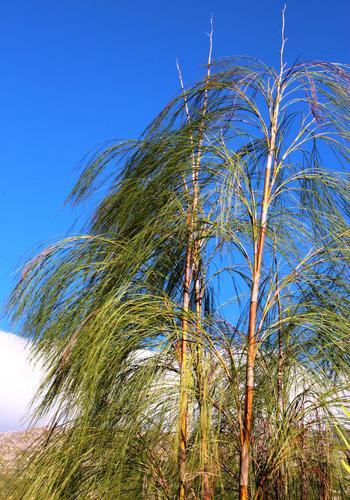
Cannomois grandis H.P.Linder
Cannomois grandis is an ornamental rush-like flowering plant native to South Afr…
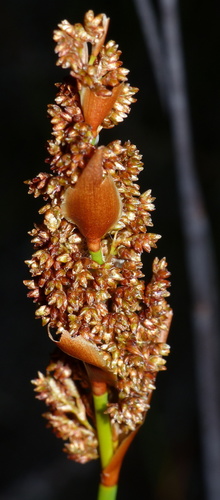
Elegia equisetacea (Mast.) Mast.
Elegia equisetacea is a reed-like South African flowering ornamental plant that …
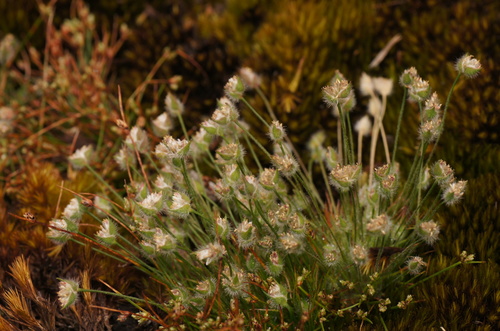
Centrolepis strigosa (R.Br.) Roem. & Schult.
Centrolepis strigosa (hairy centrolepis) is an annual tufted Restionaceae herb f…
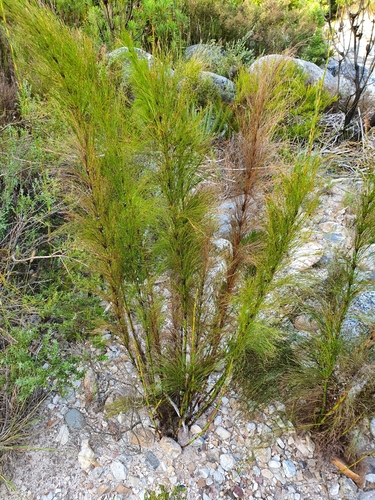
Restio subverticillatus (Steud.) Mast.
Whorled restio (Restio subverticillatus) is an ornamental dioecious flowering pl…
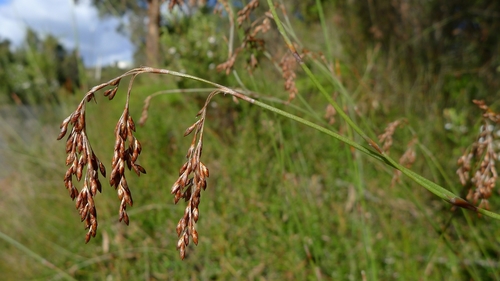
Leptocarpus tenax (Labill.) R.Br.
Leptocarpus tenax is a perennial dioecious Restionaceae herb native to moist are…
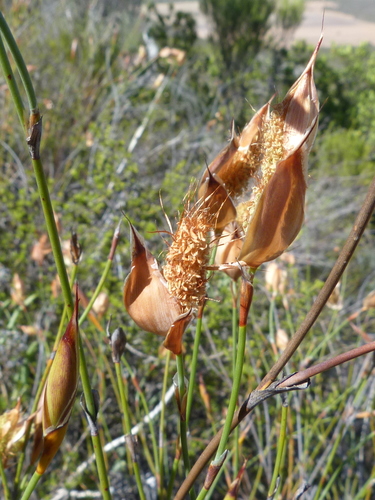
Willdenowia incurvata (Thunb.) H.P.Linder
Willdenowia incurvata is a Fynbos-endemic flowering plant species common in Sout…
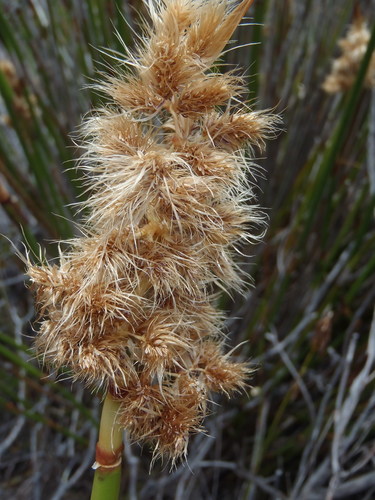
Ceratocaryum argenteum Nees ex Kunth
Ceratocaryarym argenteum is a South African restio with unusual dung beetle-dece…

Empodisma minus (Hook.f.) L.A.S.Johnson & D.F.Cutler
Empodisma minus is a Restionaceae species native to Australia and New Zealand, d…
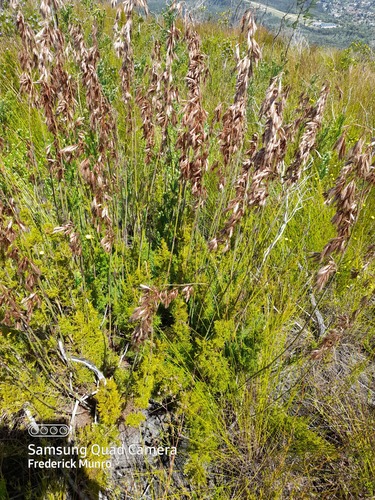
Thamnochortus cinereus H.P.Linder
Thamnochortus cinereus is a tufted, rush-like restio that looks like a miniature…
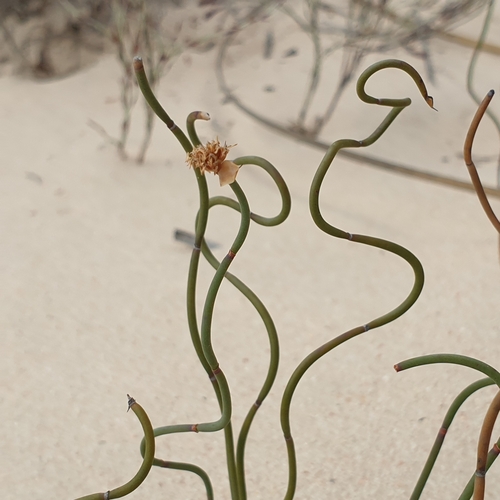
Lepidobolus drapetocoleus F.Muell.
Lepidobolus drapetocoleus is a plant species native to South Australia and Victo…

Hypolaena fastigiata R.Br.
Hypolaena fastigiata is a dioecious perennial herb native to Australia, with eco…
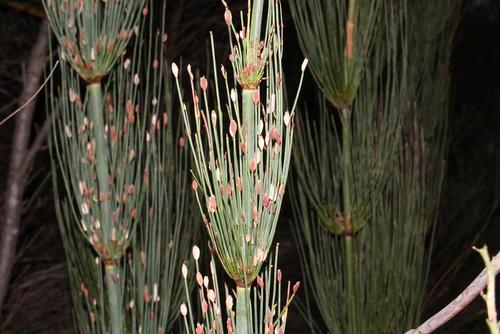
Elegia capensis (Burm.f.) Schelpe
Elegia capensis, the horsetail restio, is a grass-like flowering plant native to…
Restionaceae plants belong to the Poales order in the Plantae kingdom. Female flowers have tepals less than 1 mm in length, another diagnostic feature of the species. For instant identification, use the iNature app — AI-powered and works offline.
Restionaceae is classified in the order Poales, class Liliopsida, phylum Tracheophyta. The family contains 67 accepted species worldwide.
Sources: GBIF, iNaturalist, Wikipedia · Disclaimer
Download iNature for free. 10 identifications on us. No account needed. No credit card required.
Download Free on App Store
