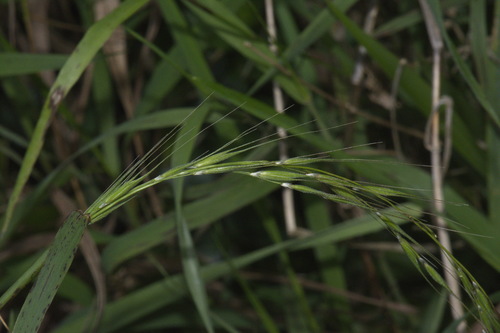
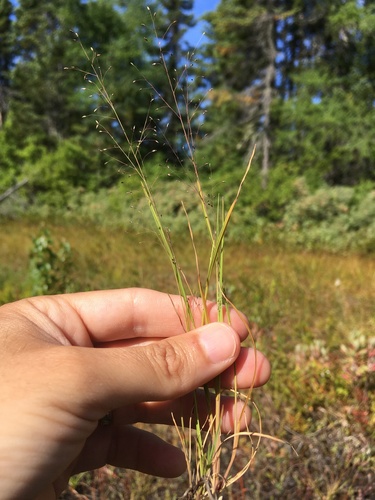
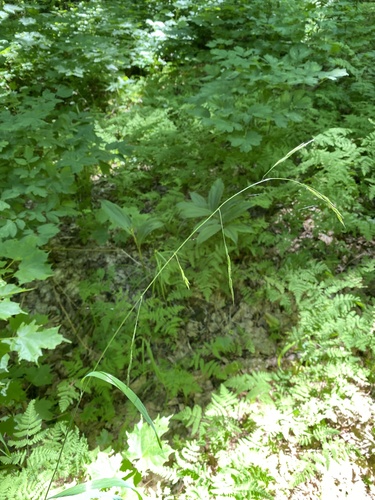
How to Identify Poaceae — Grass Family

Poaceae (Grass Family) is a plant family in the Plantae kingdom, order Poales, class Liliopsida. The family contains 1,057 accepted species worldwide. Some species in this family are toxic — exercise caution when handling unknown specimens.

Key Identification Features

For instant identification in the field, use the iNature app — AI-powered, works offline.
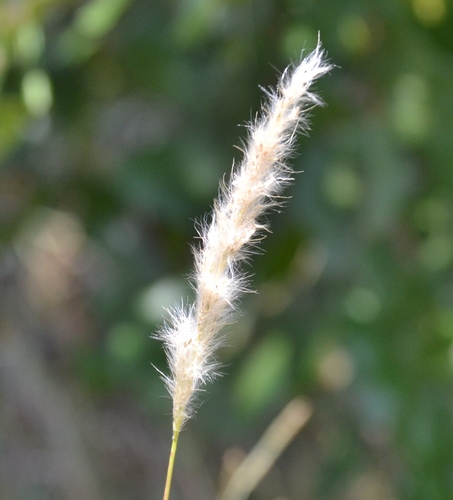
Representative Poaceae Species

How to identify Bothriochloa laguroides (DC.) Herter

Bothriochloa laguroides (DC.) Herter

Bothriochloa laguroides (DC.) Herter

Silver beard grass (Bothriochloa laguroides) is a Poaceae grass species native t…

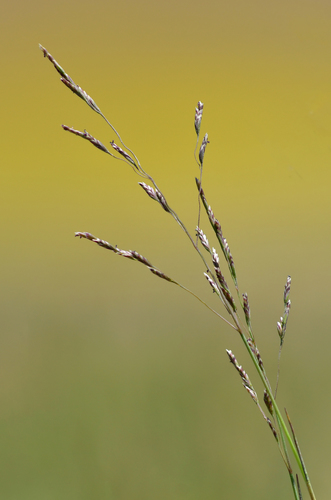
How to identify Puccinellia nuttalliana (Schult.) Hitchc.

Puccinellia nuttalliana (Schult.) Hitchc.

Puccinellia nuttalliana (Schult.) Hitchc.

Puccinellia nuttalliana, or Nuttall's alkaligrass, is a native North American ha…

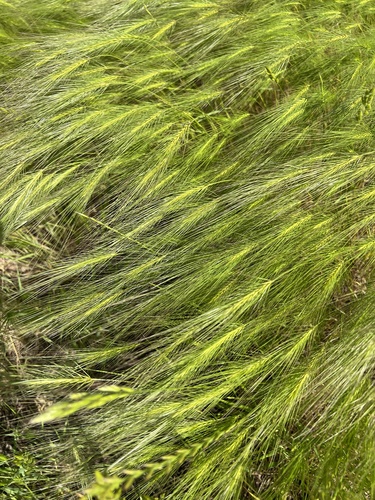
How to identify Taeniatherum caput-medusae (L.) Nevski

Taeniatherum caput-medusae (L.) Nevski

Taeniatherum caput-medusae (L.) Nevski

Taeniatherum caput-medusae, medusahead, is an adaptable invasive winter annual g…

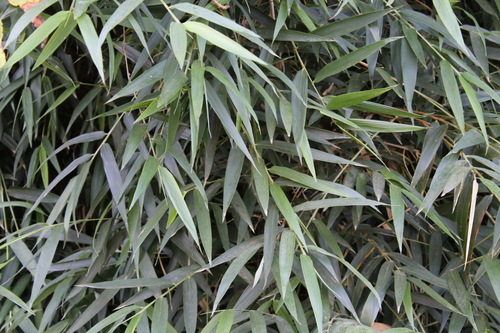
How to identify Chusquea quila Kunth

Chusquea quila Kunth

Chusquea quila Kunth

Chusquea quila is a solid-culmed perennial bamboo native to the temperate forest…

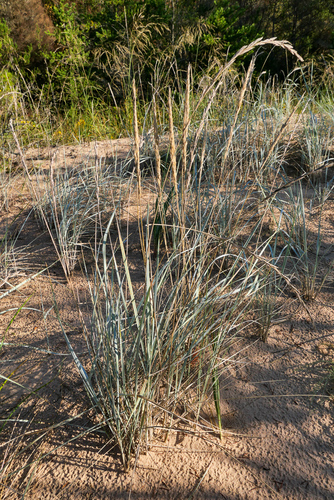
How to identify Elymus lanceolatus (Scribn. & J.G.Sm.) Gould

Elymus lanceolatus (Scribn. & J.G.Sm.) Gould

Elymus lanceolatus (Scribn. & J.G.Sm.) Gould

Elymus lanceolatus is a polymorphic North American native grass used for forage,…

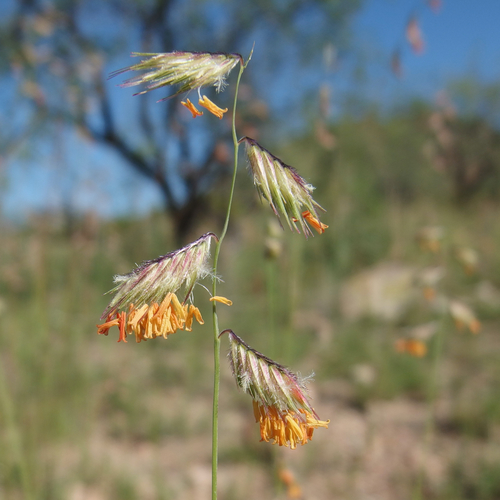
How to identify Bouteloua chondrosioides (Kunth) Benth. ex S.Watson

Bouteloua chondrosioides (Kunth) Benth. ex S.Watson

Bouteloua chondrosioides (Kunth) Benth. ex S.Watson

Sprucetop grama is a drought-tolerant bunchgrass found in the southwestern US an…

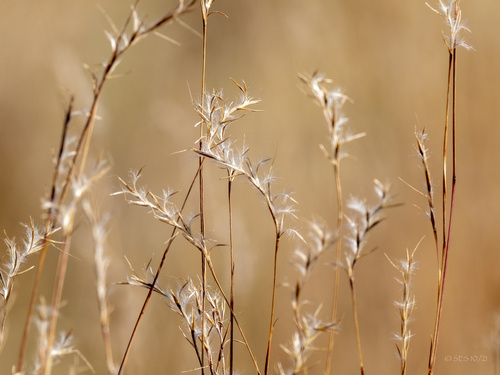
How to identify Schizachyrium scoparium (Michx.) Nash

Schizachyrium scoparium (Michx.) Nash

Schizachyrium scoparium (Michx.) Nash

Schizachyrium scoparium, or little bluestem, is a drought-tolerant North America…

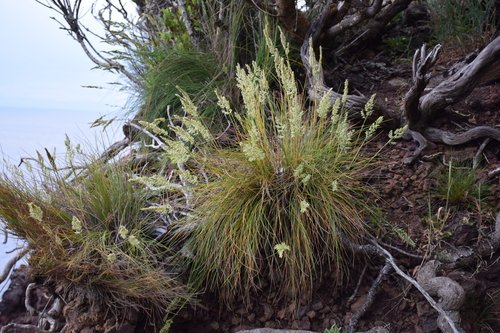
How to identify Festuca petraea Guthnick ex Seub.

Festuca petraea Guthnick ex Seub.

Festuca petraea Guthnick ex Seub.

Festuca petraea is an Azores-endemic grass species found on coastal cliffs and r…

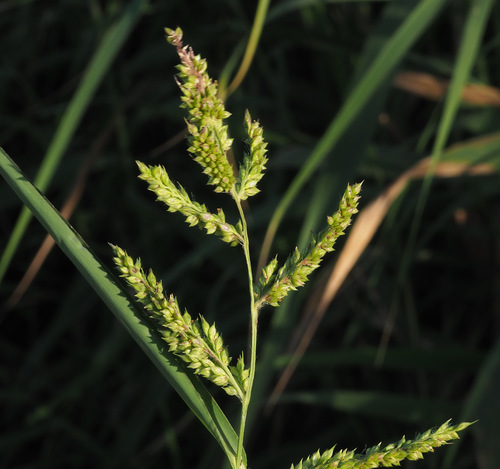
How to identify Echinochloa crus-galli (L.) P.Beauv.

Echinochloa crus-galli (L.) P.Beauv.

Echinochloa crus-galli (L.) P.Beauv.

Echinochloa crus-galli, common barnyard grass, is a widely distributed invasive …

How to identify Microlaena stipoides (Labill.) R.Br.

Microlaena stipoides (Labill.) R.Br.

Microlaena stipoides (Labill.) R.Br.

Microlaena stipoides is a perennial Australian grass used for pasture, turf, and…

How to identify Muhlenbergia uniflora (Muhl.) Fernald

Muhlenbergia uniflora (Muhl.) Fernald

Muhlenbergia uniflora (Muhl.) Fernald

Muhlenbergia uniflora is a small non-rhizomatous perennial tufted grass with pur…

How to identify Melica smithii (Porter ex A.Gray) Vasey

Melica smithii (Porter ex A.Gray) Vasey

Melica smithii (Porter ex A.Gray) Vasey

Melica smithii is a purple-spikelet grass that grows in deciduous North American…

Browse all 1,057 Poaceae species →

Frequently Asked Questions

How do you identify Poaceae?

Poaceae plants belong to the Poales order in the Plantae kingdom. This distinct phenological pattern can be used to help manage this invasive species. For instant identification, use the iNature app — AI-powered and works offline.

What are the key characteristics of Poaceae?

Poaceae is classified in the order Poales, class Liliopsida, phylum Tracheophyta. Its flowers are spicate, with distinctive bright orange anthers, and are produced from July through August.

⚠️ Are any Poaceae species poisonous?

Yes, some Poaceae species are toxic or poisonous. Always exercise caution with unknown specimens. View poisonous Poaceae species or browse the full poisonous species guide.

Sources: GBIF, iNaturalist, Wikipedia · Disclaimer

Start Exploring Nature Today

Download iNature for free. 10 identifications on us. No account needed. No credit card required.

Download Free on App Store