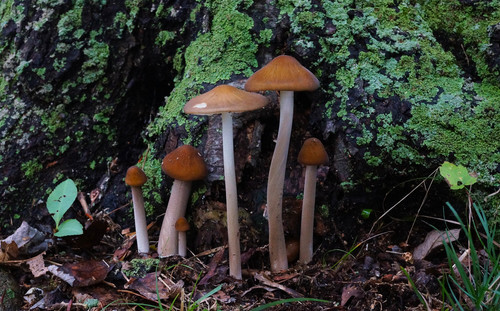
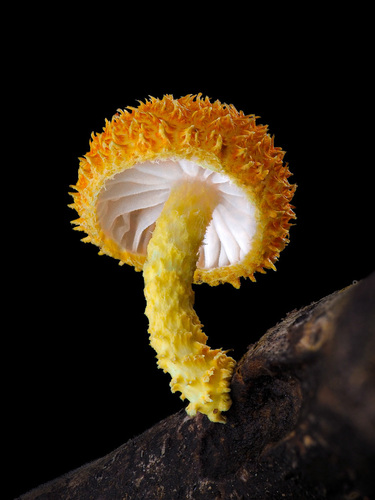
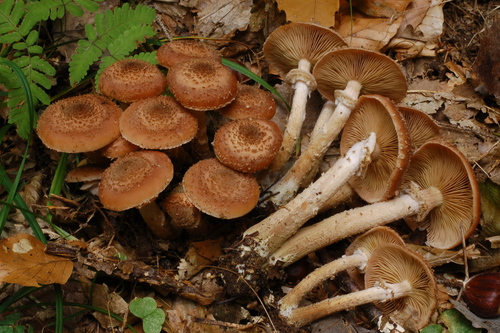
How to Identify Physalacriaceae

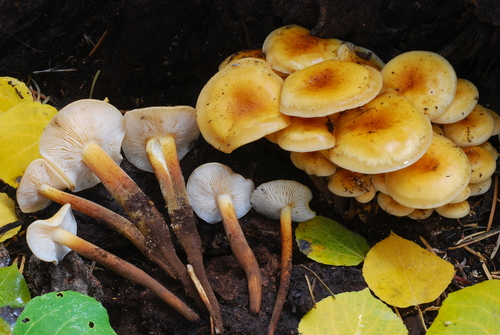
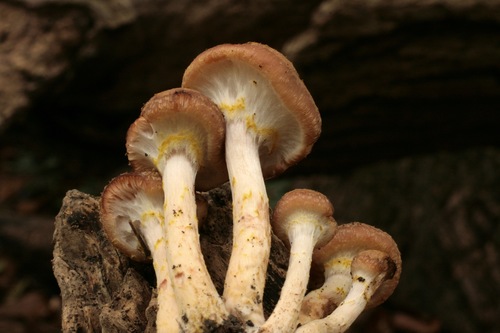
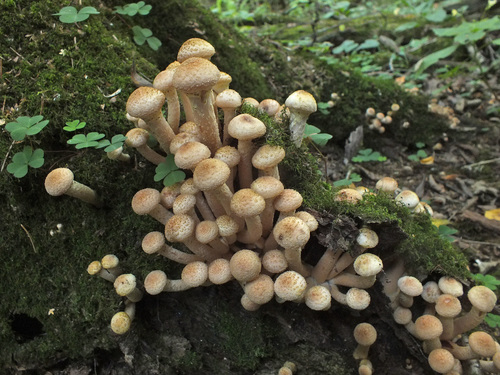
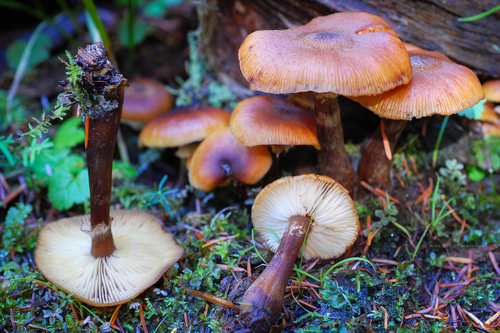
Physalacriaceae is a fungus family in the Fungi kingdom, order Agaricales, class Agaricomycetes. The family contains 51 accepted species worldwide.

Key Identification Features

For instant identification in the field, use the iNature app — AI-powered, works offline.
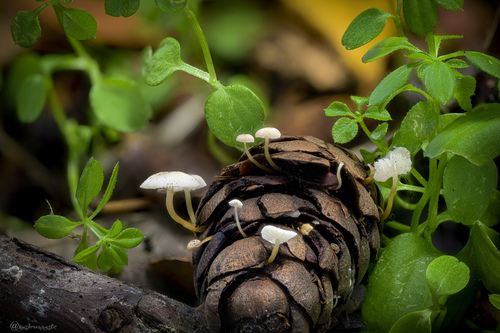
Representative Physalacriaceae Species

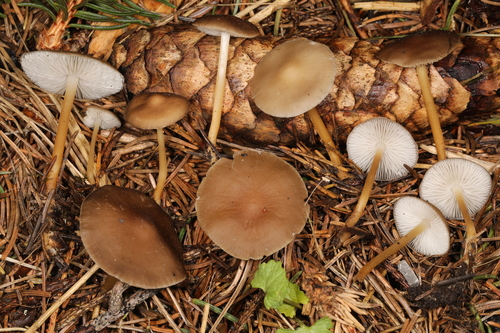
How to identify Strobilurus trullisatus (Murrill) Lennox

Strobilurus trullisatus (Murrill) Lennox

Strobilurus trullisatus (Murrill) Lennox

Strobilurus trullisatus is a small mushroom that grows clustered on Douglas-fir …

How to identify Flammulina populicola Redhead & R.H.Petersen

Flammulina populicola Redhead & R.H.Petersen

Flammulina populicola Redhead & R.H.Petersen

Flammulina populicola is an edible winter mushroom found mainly in northern Euro…

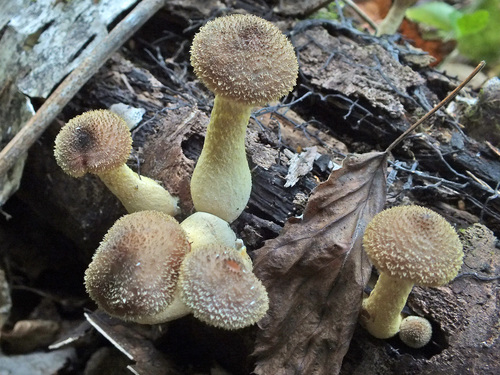
How to identify Armillaria gallica Marxm. & Romagn.

Armillaria gallica Marxm. & Romagn.

Armillaria gallica Marxm. & Romagn.

Armillaria gallica is a widely distributed fungus with specific morphological tr…

How to identify Armillaria borealis Marxm. & Korhonen

Armillaria borealis Marxm. & Korhonen

Armillaria borealis Marxm. & Korhonen

Armillaria borealis is a mushroom in Physalacriaceae, closely related to A. soli…

How to identify Armillaria nabsnona T.J.Volk & Burds.

Armillaria nabsnona T.J.Volk & Burds.

Armillaria nabsnona T.J.Volk & Burds.

Armillaria nabsnona is a bioluminescent fungus found in North America, Hawaii, a…

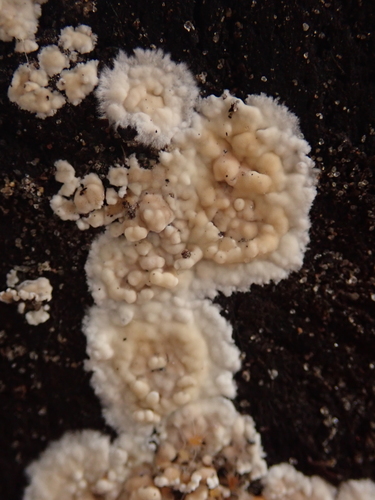
How to identify Cylindrobasidium laeve (Pers.) Chamuris

Cylindrobasidium laeve (Pers.) Chamuris

Cylindrobasidium laeve (Pers.) Chamuris

Cylindrobasidium laeve is a Physalacriaceae fungus used as an active ingredient …

How to identify Armillaria cepistipes Velen.

Armillaria cepistipes Velen.

Armillaria cepistipes Velen.

Armillaria cepistipes Velen. is a weakly pathogenic, bioluminescent wood-rotting…

How to identify Strobilurus esculentus (Wulfen) Singer

Strobilurus esculentus (Wulfen) Singer

Strobilurus esculentus (Wulfen) Singer

Strobilurus esculentus is a fungus with detailed morphological traits for its ca…

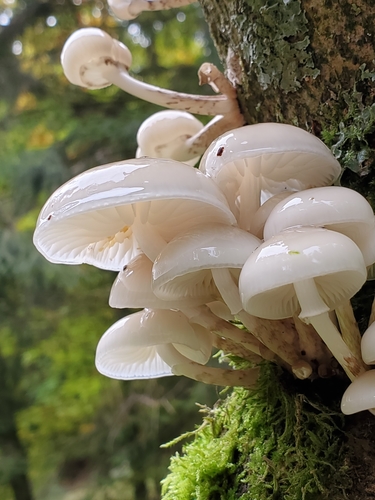
How to identify Mucidula mucida (Schrad.) Pat.

Mucidula mucida (Schrad.) Pat.

Mucidula mucida (Schrad.) Pat.

Mucidula mucida, the porcelain mushroom, is a common European fungus mostly asso…

How to identify Hymenopellis furfuracea (Peck) R.H.Petersen

Hymenopellis furfuracea (Peck) R.H.Petersen

Hymenopellis furfuracea (Peck) R.H.Petersen

Hymenopellis furfuracea is a North American mushroom that grows from dead hardwo…

How to identify Cyptotrama asprata (Berk.) Redhead & Ginns

Cyptotrama asprata (Berk.) Redhead & Ginns

Cyptotrama asprata (Berk.) Redhead & Ginns

Cyptotrama asprata is an inedible saprobic mushroom that grows on decaying wood …

How to identify Armillaria ostoyae (Romagn.) Herink

Armillaria ostoyae (Romagn.) Herink

Armillaria ostoyae (Romagn.) Herink

Armillaria ostoyae is a pathogenic edible fungus famous for including one of the…

Browse all 51 Physalacriaceae species →

Frequently Asked Questions

How do you identify Physalacriaceae?

Physalacriaceae funguss belong to the Agaricales order in the Fungi kingdom. The common feature of these mechanisms is asymmetric cell division, in which a group of slowly dividing cells is maintained, so these cells are less prone to replication errors that cause mutations. For instant identification, use the iNature app — AI-powered and works offline.

What are the key characteristics of Physalacriaceae?

Physalacriaceae is classified in the order Agaricales, class Agaricomycetes, phylum Basidiomycota. This feature becomes less visible as the hymenium matures, when neighboring basidia expand and grow crowded together.

Sources: GBIF, iNaturalist, Wikipedia · Disclaimer

Start Exploring Nature Today

Download iNature for free. 10 identifications on us. No account needed. No credit card required.

Download Free on App Store