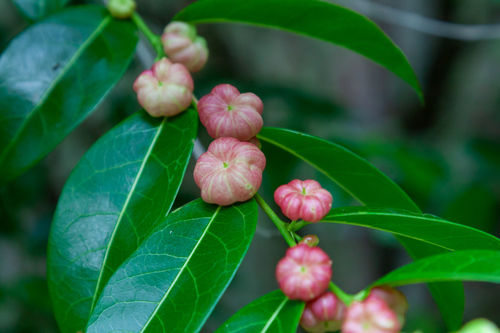
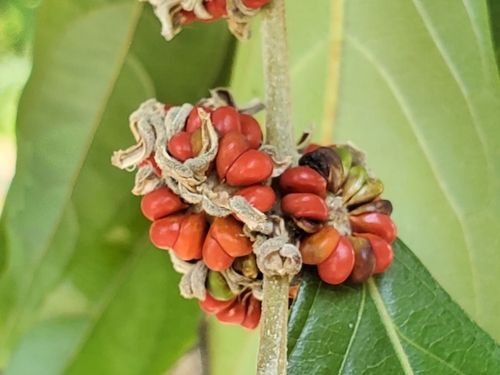
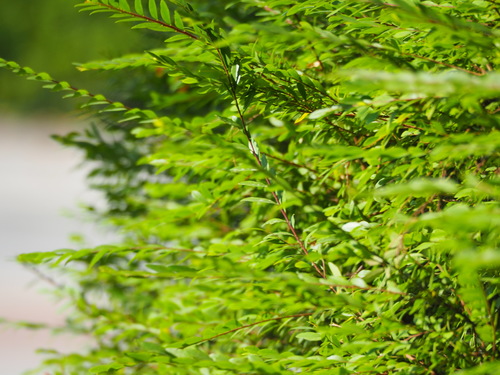
How to Identify Phyllanthaceae

Phyllanthaceae is a plant family in the Plantae kingdom, order Malpighiales, class Magnoliopsida. The family contains 83 accepted species worldwide. Some species in this family are toxic — exercise caution when handling unknown specimens.

Key Identification Features

For instant identification in the field, use the iNature app — AI-powered, works offline.
Representative Phyllanthaceae Species

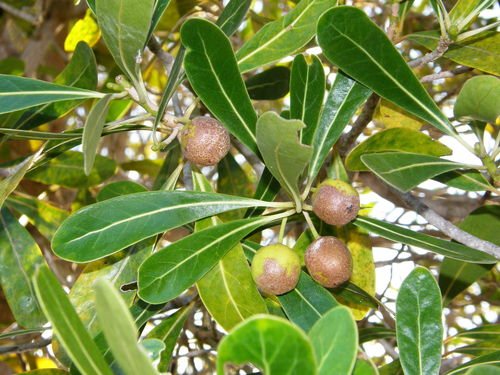
How to identify Breynia oblongifolia (Müll.Arg.) Müll.Arg.

Breynia oblongifolia (Müll.Arg.) Müll.Arg.

Breynia oblongifolia (Müll.Arg.) Müll.Arg.

Breynia oblongifolia, the coffee bush, is a common native shrub found across Aus…

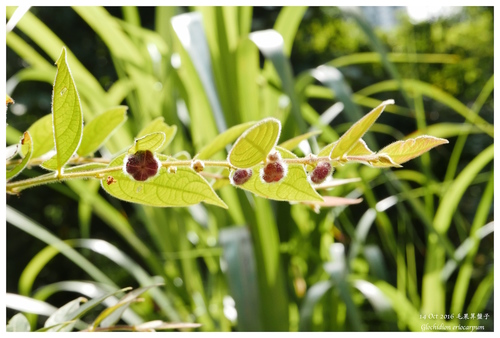
How to identify Glochidion eriocarpum Champ. ex Benth.

Glochidion eriocarpum Champ. ex Benth.

Glochidion eriocarpum Champ. ex Benth.

Glochidion eriocarpum is a Phyllanthaceae bush or tree from East Asia, collected…

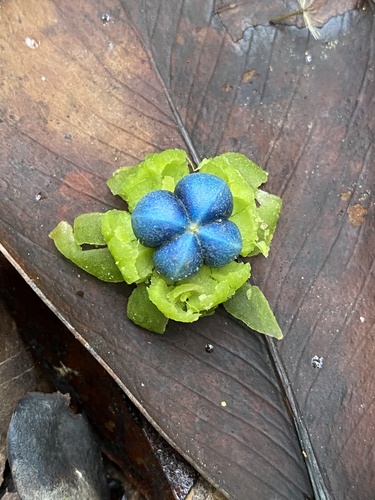
How to identify Margaritaria nobilis L.f.

Margaritaria nobilis L.f.

Margaritaria nobilis L.f.

Margaritaria nobilis, bastard hogberry, is a fruit-bearing plant with striking i…

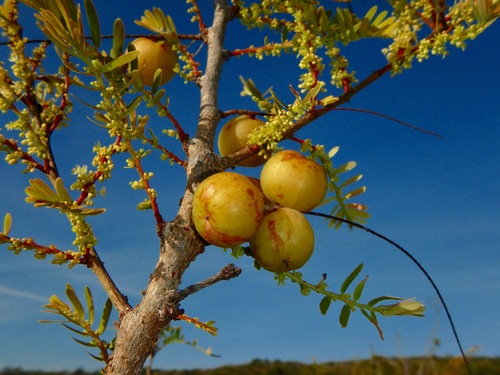
How to identify Phyllanthus emblica L.

Phyllanthus emblica L.

Phyllanthus emblica L.

Phyllanthus emblica L. is a small to medium tree whose fruits are a common const…

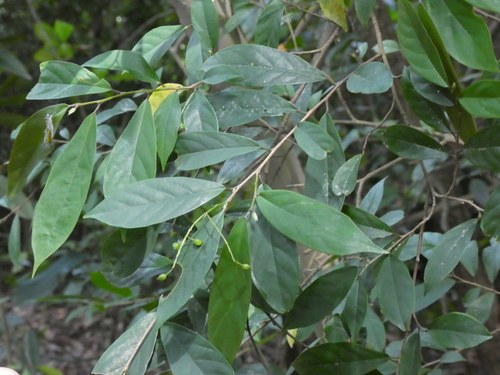
How to identify Antidesma japonicum Siebold & Zucc.

Antidesma japonicum Siebold & Zucc.

Antidesma japonicum Siebold & Zucc.

Antidesma japonicum is an East and Southeast Asian plant with edible fruit, used…

How to identify Uapaca bojeri Baill.

Uapaca bojeri Baill.

Uapaca bojeri Baill.

Uapaca bojeri (tapia) is a Madagascan endemic tree that forms its own woodland t…

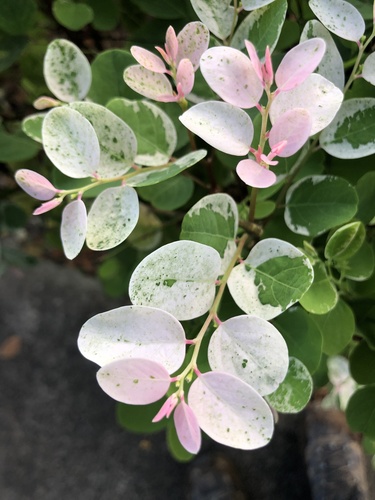
How to identify Breynia disticha J.R.Forst. & G.Forst.

Breynia disticha J.R.Forst. & G.Forst.

Breynia disticha J.R.Forst. & G.Forst.

Breynia disticha (snowbush) is a Phyllanthaceae plant native to the western Paci…

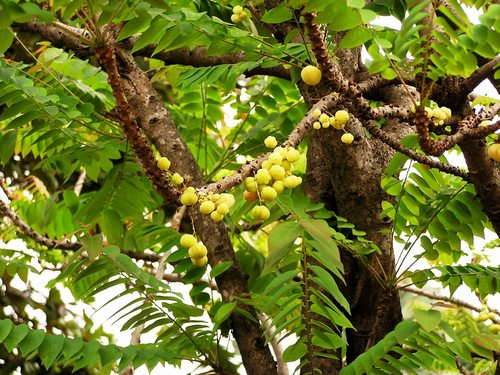
How to identify Phyllanthus acidus (L.) Skeels

Phyllanthus acidus (L.) Skeels

Phyllanthus acidus (L.) Skeels

Phyllanthus acidus (Otaheite gooseberry) is a tropical small tree grown for food…

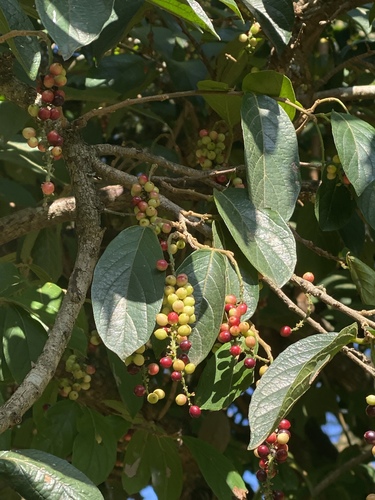
How to identify Antidesma venosum E.Mey. ex Tul.

Antidesma venosum E.Mey. ex Tul.

Antidesma venosum E.Mey. ex Tul.

Antidesma venosum (tassel-berry) is a small dioecious tree native to Africa, Chi…

How to identify Glochidion ferdinandi (Müll.Arg.) F.M.Bailey

Glochidion ferdinandi (Müll.Arg.) F.M.Bailey

Glochidion ferdinandi (Müll.Arg.) F.M.Bailey

Glochidion ferdinandi, the cheese tree, is a woody shrub or small tree native to…

⚠️ Poisonous
How to identify Glochidion philippicum (Cav.) C.B.Rob.

Glochidion philippicum (Cav.) C.B.Rob.

Glochidion philippicum (Cav.) C.B.Rob.

Representative specimens of Glochidion philippicum were examined from multiple l…

How to identify Phyllanthus myrtifolius (Wight) Müll.Arg.

Phyllanthus myrtifolius (Wight) Müll.Arg.

Phyllanthus myrtifolius (Wight) Müll.Arg.

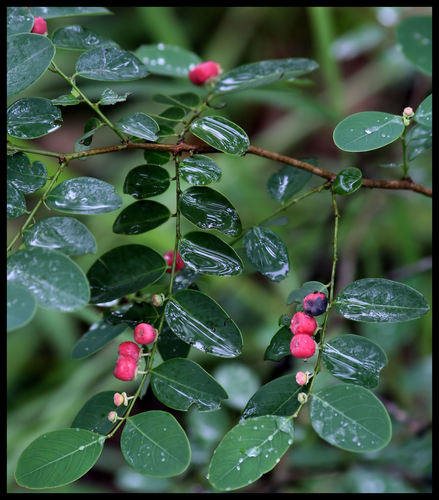
Phyllanthus myrtifolius is a small shrub that grows along forest watercourses an…

Browse all 83 Phyllanthaceae species →

Frequently Asked Questions

How do you identify Phyllanthaceae?

Phyllanthaceae plants belong to the Malpighiales order in the Plantae kingdom. Its taste is sour, bitter and astringent, and it has a distinctly fibrous texture. For instant identification, use the iNature app — AI-powered and works offline.

What are the key characteristics of Phyllanthaceae?

Phyllanthaceae is classified in the order Malpighiales, class Magnoliopsida, phylum Tracheophyta. It differs most clearly from the nominate variety in that its leaf midrib is distinctly raised on the adaxial, upper surface of the leaf.

⚠️ Are any Phyllanthaceae species poisonous?

Yes, some Phyllanthaceae species are toxic or poisonous. Always exercise caution with unknown specimens. View poisonous Phyllanthaceae species or browse the full poisonous species guide.

Sources: GBIF, iNaturalist, Wikipedia · Disclaimer

Start Exploring Nature Today

Download iNature for free. 10 identifications on us. No account needed. No credit card required.

Download Free on App Store