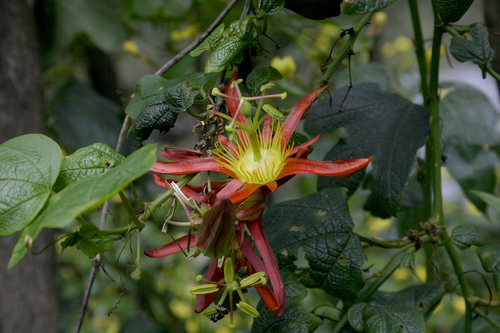
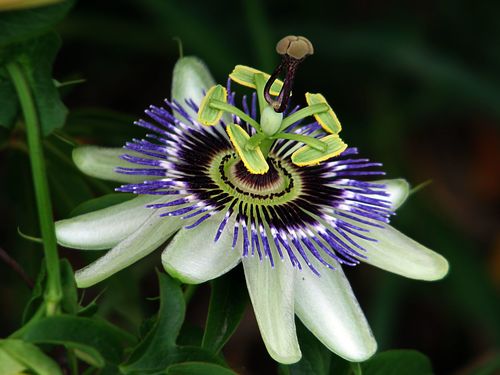
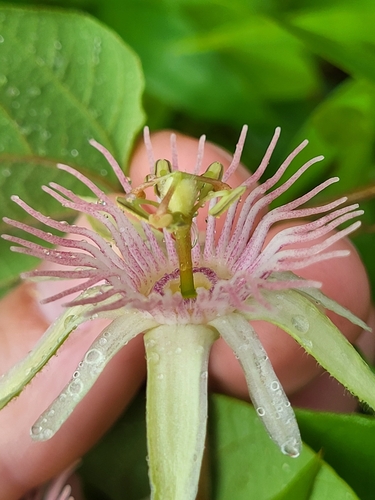
How to Identify Passifloraceae

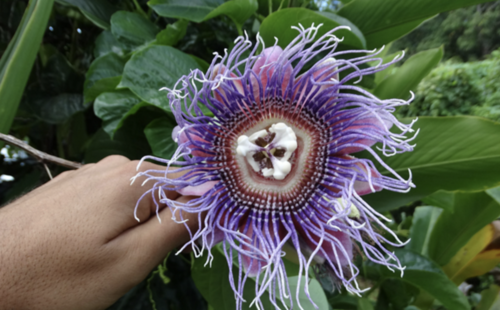
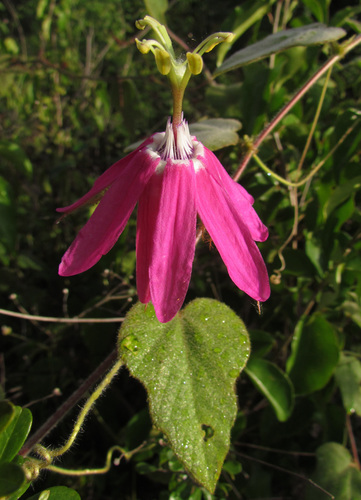
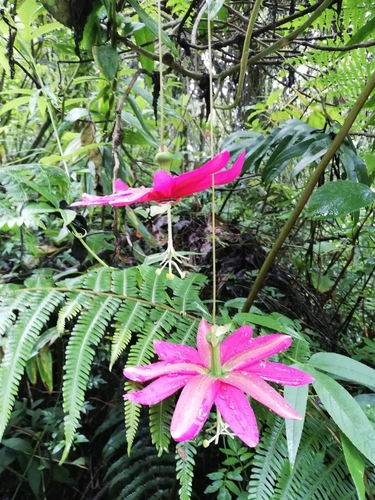
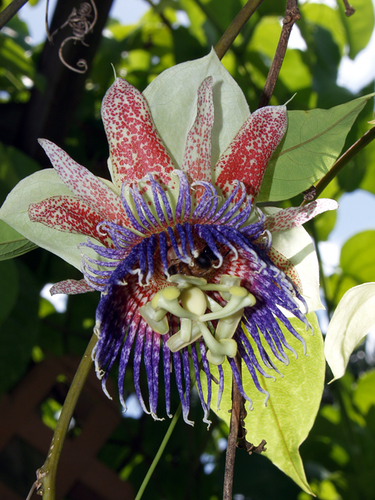
Passifloraceae is a plant family in the Plantae kingdom, order Malpighiales, class Magnoliopsida. The family contains 95 accepted species worldwide. Some species in this family are toxic — exercise caution when handling unknown specimens.

Key Identification Features

For instant identification in the field, use the iNature app — AI-powered, works offline.
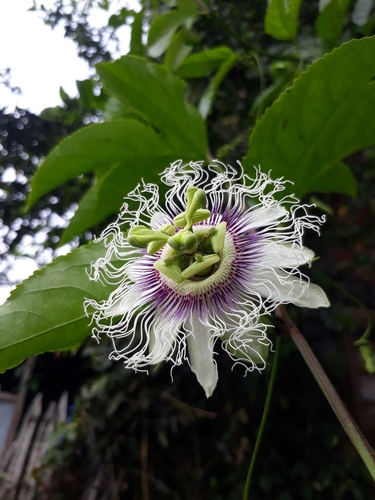
Representative Passifloraceae Species

How to identify Passiflora edulis Sims

Passiflora edulis Sims

Passiflora edulis Sims

Passiflora edulis Sims, the passion fruit vine, has two main fruiting varieties,…

How to identify Passiflora quadrangularis L.

Passiflora quadrangularis L.

Passiflora quadrangularis L.

Passiflora quadrangularis L. is an evergreen perennial climber grown ornamentall…

How to identify Passiflora sublanceolata (Killip) J.M.Mac Dougal

Passiflora sublanceolata (Killip) J.M.Mac Dougal

Passiflora sublanceolata (Killip) J.M.Mac Dougal

Passiflora sublanceolata is a hummingbird-pollinated climbing passionflower vine…

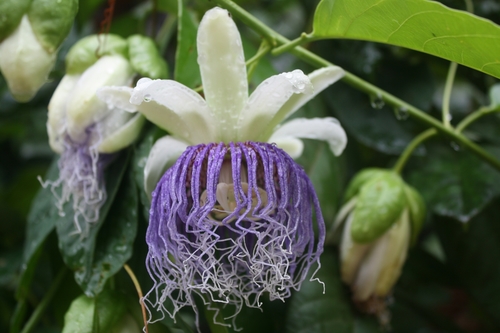
How to identify Passiflora antioquiensis H.Karst.

Passiflora antioquiensis H.Karst.

Passiflora antioquiensis H.Karst.

Passiflora antioquiensis, red banana passionfruit, is a Colombian flowering pass…

How to identify Passiflora maliformis L.

Passiflora maliformis L.

Passiflora maliformis L.

Passiflora maliformis is a climbing evergreen passionfruit species grown for its…

How to identify Passiflora aurantia G.Forst.

Passiflora aurantia G.Forst.

Passiflora aurantia G.Forst.

Passiflora aurantia, the orange-petaled passion flower, is an edible-fruited Pas…

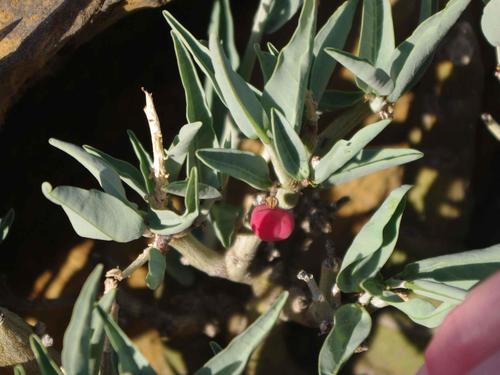
How to identify Adenia pechuelii (Engl.) Harms

Adenia pechuelii (Engl.) Harms

Adenia pechuelii (Engl.) Harms

Adenia pechuelii is a Namibia-endemic Passifloraceae plant currently rated a spe…

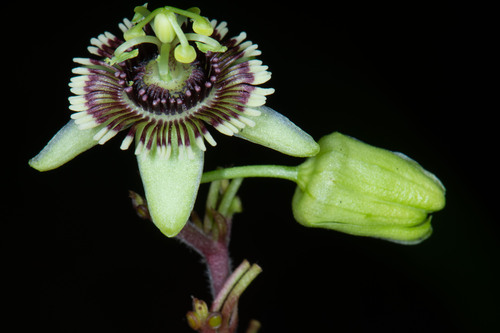
How to identify Passiflora coriacea Juss.

Passiflora coriacea Juss.

Passiflora coriacea Juss.

Passiflora coriacea is a fast-growing tropical vine in Passifloraceae, named for…

How to identify Passiflora nitida Kunth

Passiflora nitida Kunth

Passiflora nitida Kunth

Passiflora nitida, the bell apple, is an underrated edible tropical passion frui…

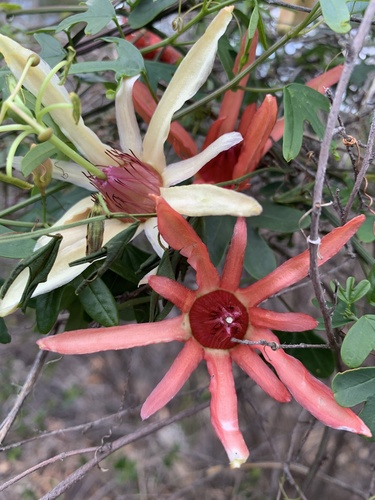
How to identify Passiflora cinnabarina Lindl.

Passiflora cinnabarina Lindl.

Passiflora cinnabarina Lindl.

Passiflora cinnabarina, or red passionflower, is a climbing vine native to south…

How to identify Passiflora caerulea L.

Passiflora caerulea L.

Passiflora caerulea L.

Passiflora caerulea L. is a hardy woody vine widely cultivated for gardens, with…

How to identify Passiflora rubra L.

Passiflora rubra L.

Passiflora rubra L.

Passiflora rubra, or Dutchman's laudanum, is a Passifloraceae species native to …

Browse all 95 Passifloraceae species →

Frequently Asked Questions

How do you identify Passifloraceae?

Passifloraceae plants belong to the Malpighiales order in the Plantae kingdom. The styles bend backward, and the stigmas located at the tip of each style have a very distinct head. For instant identification, use the iNature app — AI-powered and works offline.

What are the key characteristics of Passifloraceae?

Passifloraceae is classified in the order Malpighiales, class Magnoliopsida, phylum Tracheophyta. This is a fast-growing species, with distinct two-lobed leaves that resemble bat wings, and produces oval-shaped purple ornamental fruits.

⚠️ Are any Passifloraceae species poisonous?

Yes, some Passifloraceae species are toxic or poisonous. Always exercise caution with unknown specimens. View poisonous Passifloraceae species or browse the full poisonous species guide.

Sources: GBIF, iNaturalist, Wikipedia · Disclaimer

Start Exploring Nature Today

Download iNature for free. 10 identifications on us. No account needed. No credit card required.

Download Free on App Store