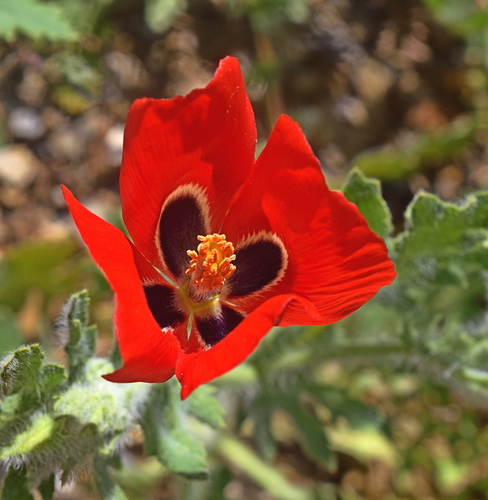
How to Identify Papaveraceae

Papaveraceae is a plant family in the Plantae kingdom, order Ranunculales, class Magnoliopsida. The family contains 151 accepted species worldwide. Some species in this family are toxic — exercise caution when handling unknown specimens.

Key Identification Features

For instant identification in the field, use the iNature app — AI-powered, works offline.
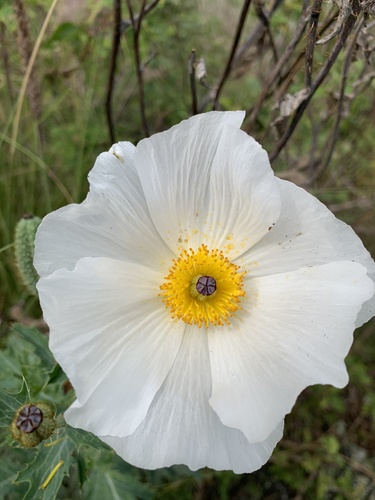
Representative Papaveraceae Species

How to identify Argemone glauca (Nutt. ex Prain) Pope

Argemone glauca (Nutt. ex Prain) Pope

Argemone glauca (Nutt. ex Prain) Pope

Argemone glauca, the Hawaiian poppy or pua kala, is a native Hawaiian perennial …

How to identify Corydalis micrantha subsp. australis (Chapm.) G.B.Ownbey

Corydalis micrantha subsp. australis (Chapm.) G.B.Ownbey

Corydalis micrantha subsp. australis (Chapm.) G.B.Ownbey

Corydalis micrantha subsp. australis is a southern US annual herb subspecies, en…

How to identify Corydalis incisa (Thunb.) Pers.

Corydalis incisa (Thunb.) Pers.

Corydalis incisa (Thunb.) Pers.

Corydalis incisa is an annual plant that grows up to 2 feet tall and inhabits wa…

How to identify Dicentra pauciflora S.Watson

Dicentra pauciflora S.Watson

Dicentra pauciflora S.Watson

Dicentra pauciflora is a short perennial wild bleeding-heart native to mountain …

How to identify Roemeria argemone (L.) C.Morales, R.Mend. & Romero García

Roemeria argemone (L.) C.Morales, R.Mend. & Romero García

Roemeria argemone (L.) C.Morales, R.Mend. & Romero García

Roemeria argemone is an annual flowering pale poppy native to parts of Africa, E…

How to identify Corydalis ambigua Cham. & Schltdl.

Corydalis ambigua Cham. & Schltdl.

Corydalis ambigua Cham. & Schltdl.

Corydalis ambigua is an East Asian Papaveraceae species that provides tetrahydro…

How to identify Pseudofumaria lutea (L.) Borkh.

Pseudofumaria lutea (L.) Borkh.

Pseudofumaria lutea (L.) Borkh.

Pseudofumaria lutea (yellow corydalis) is a low-growing, self-seeding plant that…

How to identify Papaver californicum A.Gray

Papaver californicum A.Gray

Papaver californicum A.Gray

Papaver californicum is an annual herb with orange, green-based four-petaled flo…

How to identify Corydalis caucasica DC.

Corydalis caucasica DC.

Corydalis caucasica DC.

Corydalis caucasica DC. is a small tuberous spring ephemeral perennial suitable …

How to identify Dicentra uniflora Kellogg

Dicentra uniflora Kellogg

Dicentra uniflora Kellogg

Dicentra uniflora Kellogg is a small low-growing flowering plant that grows in o…

How to identify Glaucium corniculatum (L.) Rudolph

Glaucium corniculatum (L.) Rudolph

Glaucium corniculatum (L.) Rudolph

Glaucium corniculatum is an annual hairy red-flowered poppy family plant found i…

How to identify Corydalis micrantha (Engelm. & A.Gray) A.Gray ex J.M.Coult.

Corydalis micrantha (Engelm. & A.Gray) A.Gray ex J.M.Coult.

Corydalis micrantha (Engelm. & A.Gray) A.Gray ex J.M.Coult.

Corydalis micrantha is an annual North American herb divided into three subspeci…

Browse all 151 Papaveraceae species →

Frequently Asked Questions

How do you identify Papaveraceae?

Papaveraceae plants belong to the Ranunculales order in the Plantae kingdom. 2 in) across, and feature pale blue anthers and 4 to 6 stigmas. For instant identification, use the iNature app — AI-powered and works offline.

What are the key characteristics of Papaveraceae?

Papaveraceae is classified in the order Ranunculales, class Magnoliopsida, phylum Tracheophyta. The flower sits atop a mostly bare stem, and typically has four petals.

⚠️ Are any Papaveraceae species poisonous?

Yes, some Papaveraceae species are toxic or poisonous. Always exercise caution with unknown specimens. View poisonous Papaveraceae species or browse the full poisonous species guide.

Sources: GBIF, iNaturalist, Wikipedia · Disclaimer

Start Exploring Nature Today

Download iNature for free. 10 identifications on us. No account needed. No credit card required.

Download Free on App Store