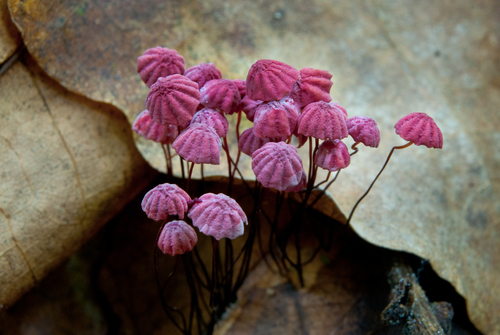
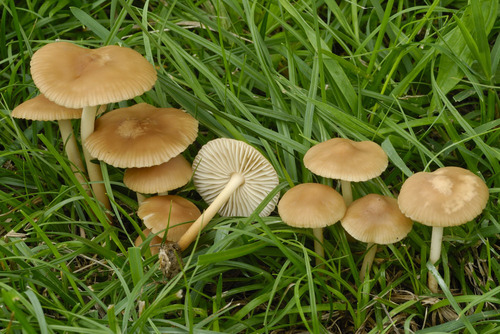
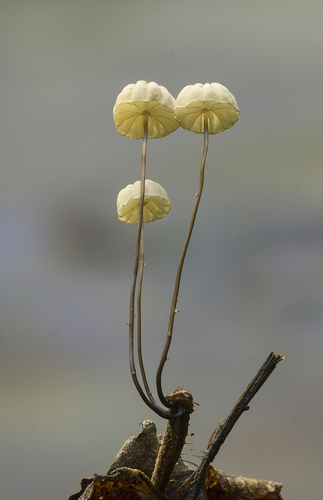
How to Identify Marasmiaceae

Marasmiaceae is a fungus family in the Fungi kingdom, order Agaricales, class Agaricomycetes. The family contains 44 accepted species worldwide.

Key Identification Features

For instant identification in the field, use the iNature app — AI-powered, works offline.
Representative Marasmiaceae Species

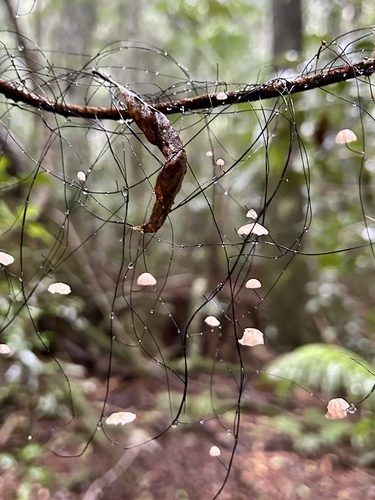
How to identify Marasmius crinis-equi F.Muell. ex Kalchbr.

Marasmius crinis-equi F.Muell. ex Kalchbr.

Marasmius crinis-equi F.Muell. ex Kalchbr.

Marasmius crinis-equi, the horse hair fungus, is a plant pathogen that grows on …

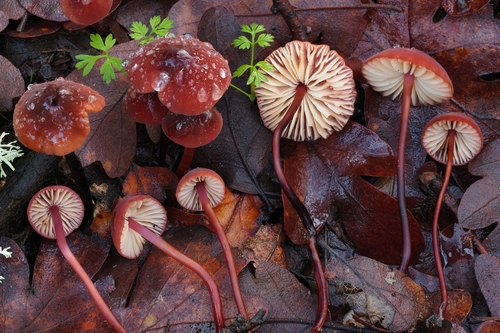
How to identify Marasmius plicatulus Peck

Marasmius plicatulus Peck

Marasmius plicatulus Peck

Marasmius plicatulus Peck, the red pinwheel, is the largest North American West …

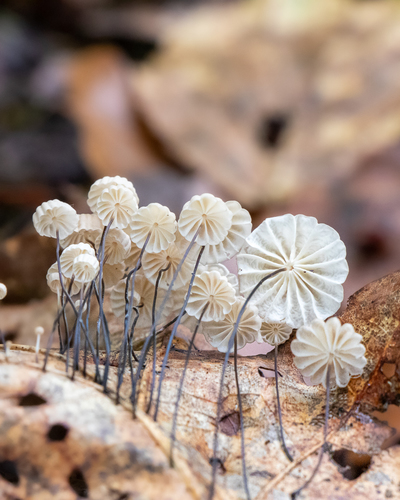
How to identify Marasmius capillaris Morgan

Marasmius capillaris Morgan

Marasmius capillaris Morgan

Marasmius capillaris is a small North American saprobic agaric fungus that grows…

How to identify Marasmius cohaerens (Pers.) Cooke & Quél.

Marasmius cohaerens (Pers.) Cooke & Quél.

Marasmius cohaerens (Pers.) Cooke & Quél.

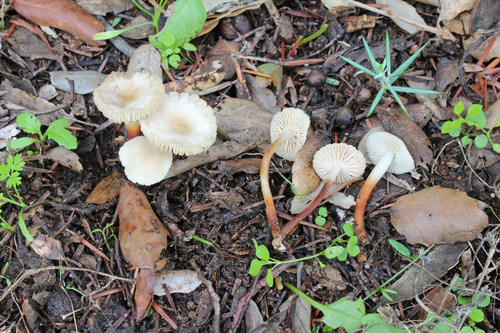
Marasmius cohaerens is a saprobic mushroom widespread across Europe, eastern Asi…

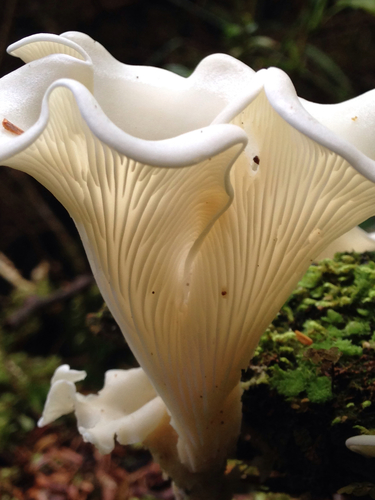
How to identify Pleurocybella porrigens (Pers.) Singer

Pleurocybella porrigens (Pers.) Singer

Pleurocybella porrigens (Pers.) Singer

Pleurocybella porrigens is a white Northern Hemisphere wood-rotting mushroom now…

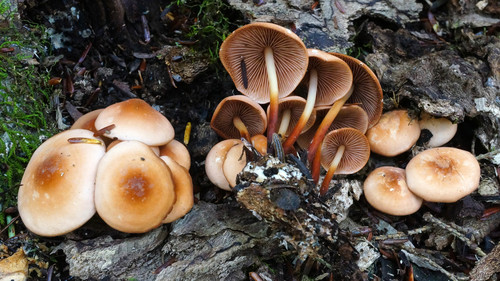
How to identify Baeospora myosura (Fr.) Singer

Baeospora myosura (Fr.) Singer

Baeospora myosura (Fr.) Singer

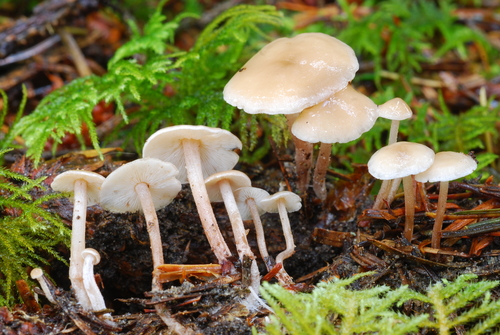
Baeospora myosura, the conifercone cap, is a common fungus that grows on decayin…

How to identify Marasmius wynneae Berk. & Broome

Marasmius wynneae Berk. & Broome

Marasmius wynneae Berk. & Broome

Marasmius wynneae is a saprobic mushroom that grows in broad-leaved European woo…

How to identify Marasmius siccus (Schwein.) Fr.

Marasmius siccus (Schwein.) Fr.

Marasmius siccus (Schwein.) Fr.

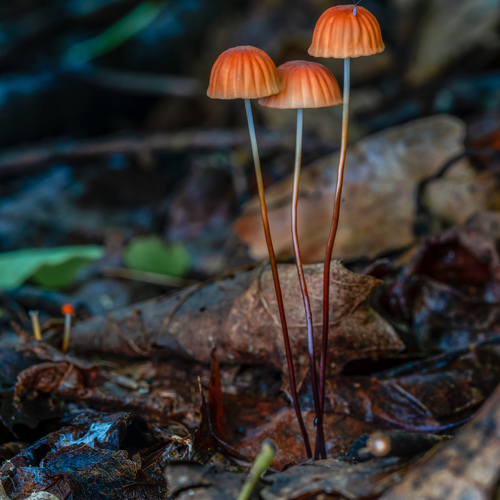
Marasmius siccus is a small orange mushroom found in hardwood forests of norther…

How to identify Clitocybula azurea Singer

Clitocybula azurea Singer

Clitocybula azurea Singer

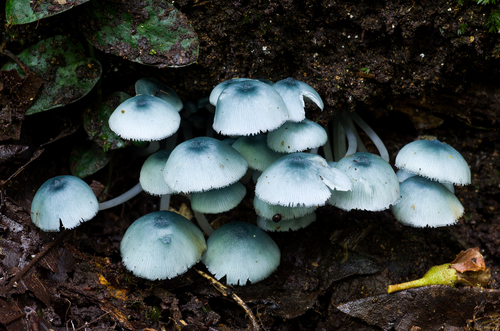
Clitocybula azurea is a native Central and South American mushroom species in ge…

How to identify Marasmius haematocephalus (Mont.) Fr.

Marasmius haematocephalus (Mont.) Fr.

Marasmius haematocephalus (Mont.) Fr.

Marasmius haematocephalus is a Marasmius fungus currently confirmed to occur onl…

How to identify Marasmius oreades (Bolton) Fr.

Marasmius oreades (Bolton) Fr.

Marasmius oreades (Bolton) Fr.

Marasmius oreades is a fungus that grows in grassy habitats across North America…

How to identify Marasmius bulliardii Quél.

Marasmius bulliardii Quél.

Marasmius bulliardii Quél.

Marasmius bulliardii is a Marasmiaceae agaric fungus first scientifically descri…

Browse all 44 Marasmiaceae species →

Frequently Asked Questions

How do you identify Marasmiaceae?

Marasmiaceae funguss belong to the Agaricales order in the Fungi kingdom. The mushroom caps are initially convex, then become centrally depressed, and feature radial furrows; they measure 2–15 mm (0. For instant identification, use the iNature app — AI-powered and works offline.

What are the key characteristics of Marasmiaceae?

Marasmiaceae is classified in the order Agaricales, class Agaricomycetes, phylum Basidiomycota. Its colour shifts from dark brown at the base to whitish at the top, with an ochraceous to reddish tone in the middle section, and it has a distinctive shiny, horny consistency.

Sources: GBIF, iNaturalist, Wikipedia · Disclaimer

Start Exploring Nature Today

Download iNature for free. 10 identifications on us. No account needed. No credit card required.

Download Free on App Store