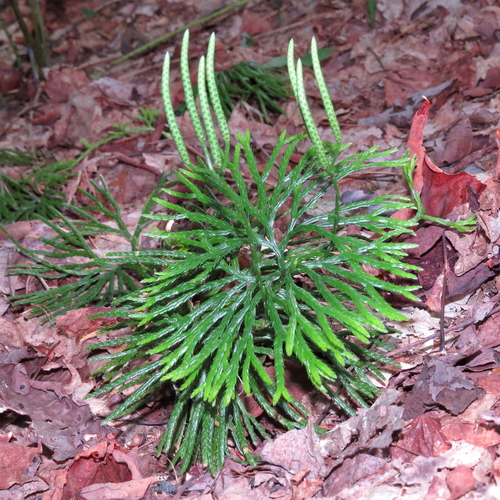
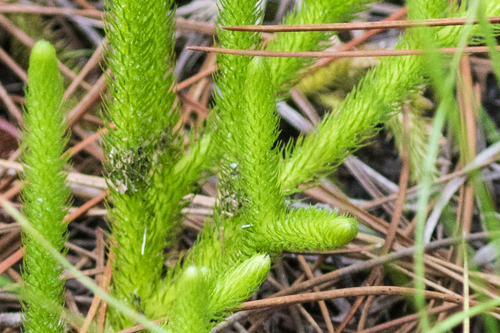
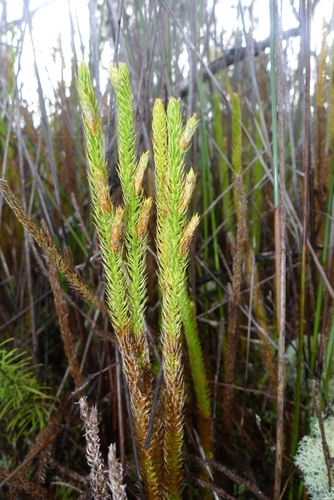
How to Identify Lycopodiaceae

Lycopodiaceae is a plant family in the Plantae kingdom, order Lycopodiales, class Lycopodiopsida. The family contains 53 accepted species worldwide. Some species in this family are toxic — exercise caution when handling unknown specimens.

Key Identification Features

For instant identification in the field, use the iNature app — AI-powered, works offline.
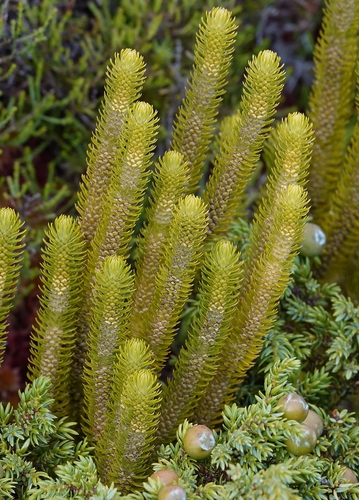
Representative Lycopodiaceae Species

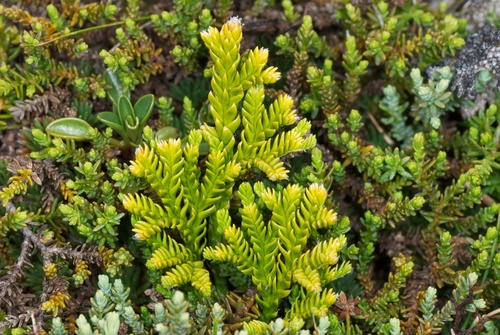
How to identify Phlegmariurus dentatus (Herter) Arana

Phlegmariurus dentatus (Herter) Arana

Phlegmariurus dentatus (Herter) Arana

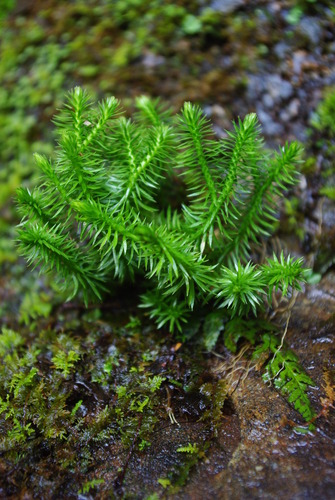
Phlegmariurus dentatus is a stout upright lycophyte native to the Azores and Mad…

How to identify Huperzia porophila (F.E.Lloyd & Underw.) Holub

Huperzia porophila (F.E.Lloyd & Underw.) Holub

Huperzia porophila (F.E.Lloyd & Underw.) Holub

Huperzia porophila, the rock clubmoss/rock firmoss, is an Appalachian-region hyb…

How to identify Diphasiastrum alpinum (L.) Holub

Diphasiastrum alpinum (L.) Holub

Diphasiastrum alpinum (L.) Holub

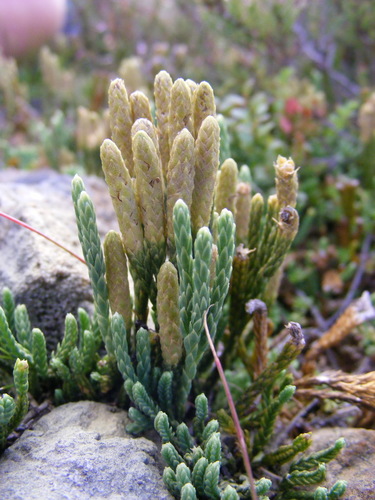
Diphasiastrum alpinum is a circumpolar northern clubmoss that grows in alpine an…

How to identify Phylloglossum drummondii Kunze

Phylloglossum drummondii Kunze

Phylloglossum drummondii Kunze

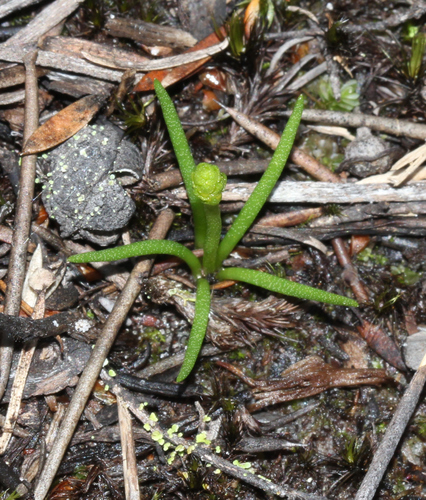
Phylloglossum drummondii, the only species in the Lycopodiaceae genus Phylloglos…

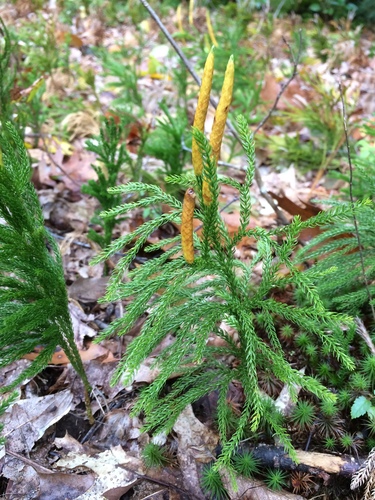
How to identify Dendrolycopodium dendroideum (Michx.) A.Haines

Dendrolycopodium dendroideum (Michx.) A.Haines

Dendrolycopodium dendroideum (Michx.) A.Haines

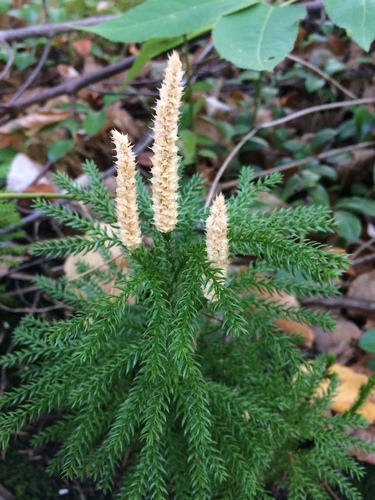
Dendrolycopodium dendroideum, tree groundpine, is a North American clubmoss also…

How to identify Diphasium scariosum (G.Forst.) Rothm.

Diphasium scariosum (G.Forst.) Rothm.

Diphasium scariosum (G.Forst.) Rothm.

Diphasium scariosum is a distinctive club moss found across parts of Oceania and…

How to identify Dendrolycopodium hickeyi (W.H.Wagner, Beitel & R.C.Moran) A.Haines

Dendrolycopodium hickeyi (W.H.Wagner, Beitel & R.C.Moran) A.Haines

Dendrolycopodium hickeyi (W.H.Wagner, Beitel & R.C.Moran) A.Haines

Dendrolycopodium hickeyi is a tree club-moss native to northeastern North Americ…

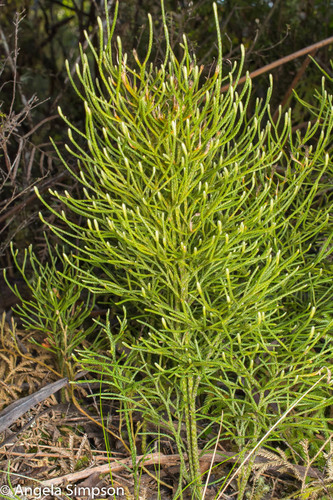
How to identify Pseudolycopodium densum (Rothm.) Holub

Pseudolycopodium densum (Rothm.) Holub

Pseudolycopodium densum (Rothm.) Holub

Pseudolycopodium densum, the bushy clubmoss, is the only species in the lycophyt…

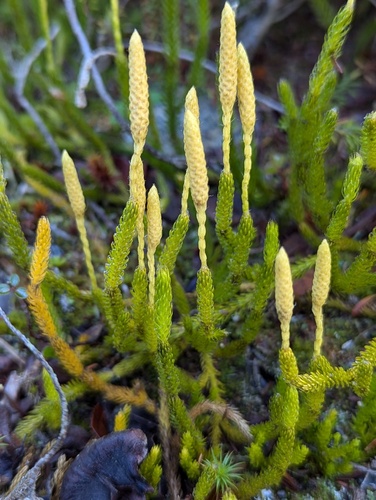
How to identify Lycopodium lagopus (Laest. ex C.Hartm.) Zinserl. ex Kuzen.

Lycopodium lagopus (Laest. ex C.Hartm.) Zinserl. ex Kuzen.

Lycopodium lagopus (Laest. ex C.Hartm.) Zinserl. ex Kuzen.

Lycopodium lagopus (one-cone club-moss) is an arctic-subarctic clubmoss that rar…

How to identify Diphasiastrum digitatum (Dill. ex A.Braun) Holub

Diphasiastrum digitatum (Dill. ex A.Braun) Holub

Diphasiastrum digitatum (Dill. ex A.Braun) Holub

Diphasiastrum digitatum is a low-growing perennial clubmoss native to eastern No…

How to identify Lycopodiella alopecuroides (L.) Cranfill

Lycopodiella alopecuroides (L.) Cranfill

Lycopodiella alopecuroides (L.) Cranfill

Lycopodiella alopecuroides, foxtail clubmoss, is a perennial clubmoss with histo…

How to identify Lateristachys lateralis (R.Br.) Holub

Lateristachys lateralis (R.Br.) Holub

Lateristachys lateralis (R.Br.) Holub

Lateristachys lateralis, the slender club moss, is a native club moss of eastern…

Browse all 53 Lycopodiaceae species →

Frequently Asked Questions

How do you identify Lycopodiaceae?

Lycopodiaceae plants belong to the Lycopodiales order in the Plantae kingdom. The underground perenniating tuber of Phylloglossum is unique within Lycopodiaceae: it is a reduced stem system that has developed into a distinct new organ. For instant identification, use the iNature app — AI-powered and works offline.

What are the key characteristics of Lycopodiaceae?

Lycopodiaceae is classified in the order Lycopodiales, class Lycopodiopsida, phylum Tracheophyta. 5 m tall and have two distinct surfaces.

⚠️ Are any Lycopodiaceae species poisonous?

Yes, some Lycopodiaceae species are toxic or poisonous. Always exercise caution with unknown specimens. View poisonous Lycopodiaceae species or browse the full poisonous species guide.

Sources: GBIF, iNaturalist, Wikipedia · Disclaimer

Start Exploring Nature Today

Download iNature for free. 10 identifications on us. No account needed. No credit card required.

Download Free on App Store