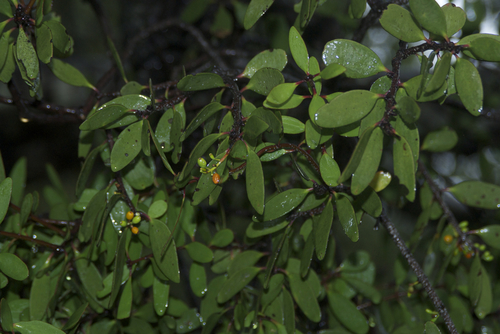
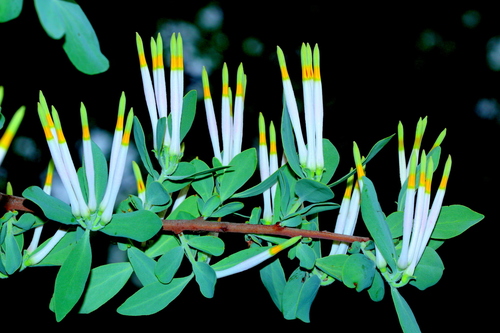
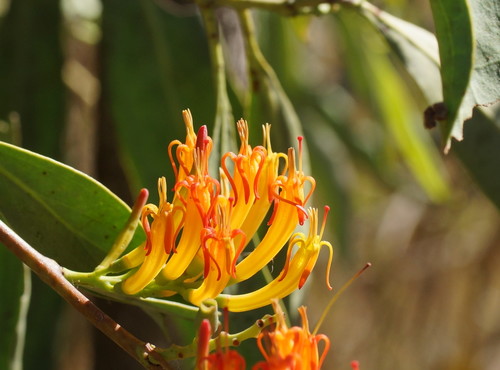
How to Identify Loranthaceae

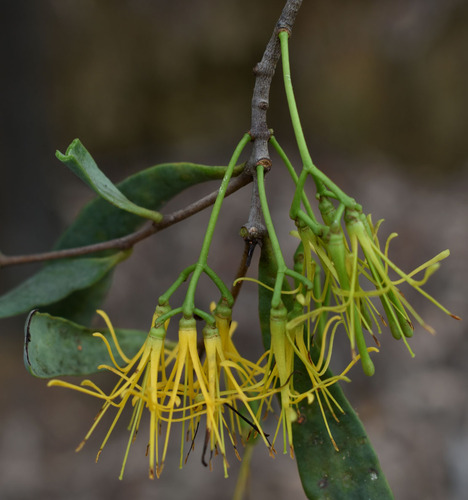
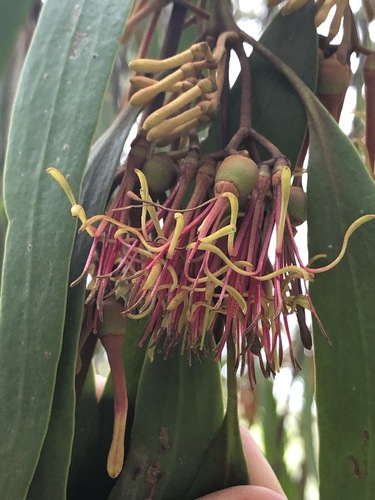
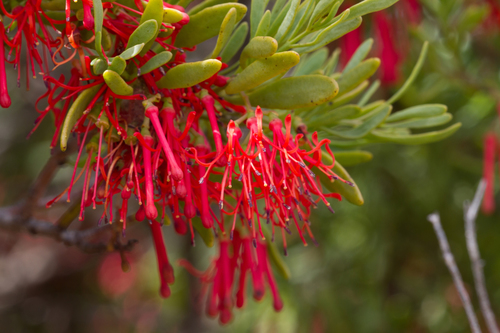
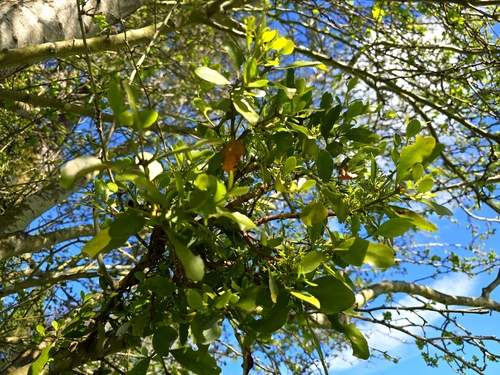
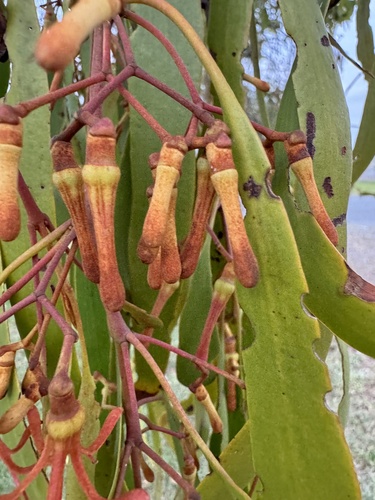
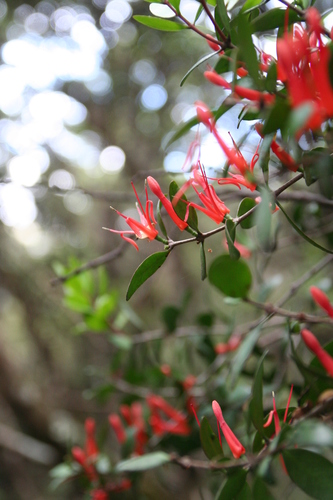
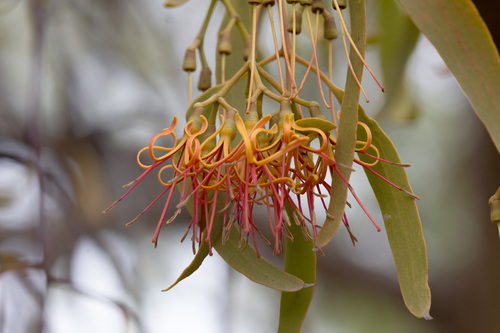
Loranthaceae is a plant family in the Plantae kingdom, order Santalales, class Magnoliopsida. The family contains 62 accepted species worldwide.

Key Identification Features

For instant identification in the field, use the iNature app — AI-powered, works offline.
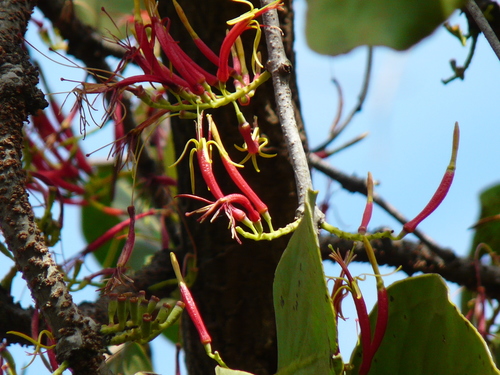
Representative Loranthaceae Species

How to identify Dendrophthoe falcata (L.fil.) Blume

Dendrophthoe falcata (L.fil.) Blume

Dendrophthoe falcata (L.fil.) Blume

Dendrophthoe falcata is a common hemiparasitic mistletoe native to India, with a…

How to identify Amyema congener (Schult. & Schult.fil.) Tiegh.

Amyema congener (Schult. & Schult.fil.) Tiegh.

Amyema congener (Schult. & Schult.fil.) Tiegh.

Amyema congener, the variable mistletoe, is an epiphytic hemiparasitic flowering…

How to identify Amyema pendula (Sieber ex DC.) Tiegh.

Amyema pendula (Sieber ex DC.) Tiegh.

Amyema pendula (Sieber ex DC.) Tiegh.

Amyema pendula, or drooping mistletoe, is an endemic hemiparasitic mistletoe fro…

How to identify Nuytsia floribunda (Labill.) R.Br.

Nuytsia floribunda (Labill.) R.Br.

Nuytsia floribunda (Labill.) R.Br.

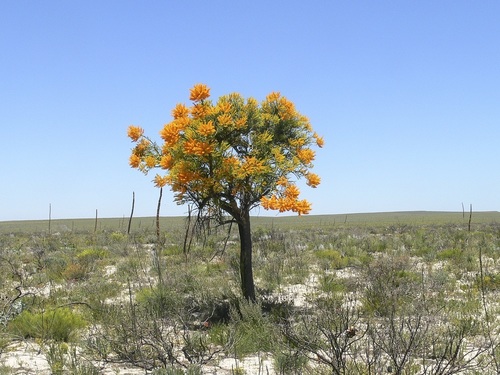
Nuytsia floribunda is a hemiparasitic Australian tree with extensive roots and s…

How to identify Amyema melaleucae (Lehm. ex Miq.) Tiegh.

Amyema melaleucae (Lehm. ex Miq.) Tiegh.

Amyema melaleucae (Lehm. ex Miq.) Tiegh.

Amyema melaleucae is a parasitic mistletoe shrub that typically grows on Melaleu…

How to identify Ileostylus micranthus (Hook.fil.) Tiegh.

Ileostylus micranthus (Hook.fil.) Tiegh.

Ileostylus micranthus (Hook.fil.) Tiegh.

Ileostylus micranthus, also called Pirita, is a generalist host mistletoe native…

How to identify Amyema bifurcata (Benth.) Tiegh.

Amyema bifurcata (Benth.) Tiegh.

Amyema bifurcata (Benth.) Tiegh.

Amyema bifurcata is a mistletoe with flat leaves that grows on multiple species …

How to identify Peraxilla tetrapetala (L.fil.) Tiegh.

Peraxilla tetrapetala (L.fil.) Tiegh.

Peraxilla tetrapetala (L.fil.) Tiegh.

Peraxilla tetrapetala (red mistletoe) is an endemic New Zealand parasitic mistle…

How to identify Amyema miquelii (Lehm. ex Miq.) Tiegh.

Amyema miquelii (Lehm. ex Miq.) Tiegh.

Amyema miquelii (Lehm. ex Miq.) Tiegh.

Amyema miquelii (box mistletoe) is the most widespread hemiparasitic epiphytic m…

How to identify Alepis flavida (Hook.fil.) Tiegh.

Alepis flavida (Hook.fil.) Tiegh.

Alepis flavida (Hook.fil.) Tiegh.

Alepis flavida is the only species in the monotypic mistletoe genus Alepis, nati…

How to identify Agelanthus natalitius (Meisn.) Polhill & Wiens

Agelanthus natalitius (Meisn.) Polhill & Wiens

Agelanthus natalitius (Meisn.) Polhill & Wiens

Agelanthus natalitius is a hemiparasitic Loranthaceae species native to multiple…

How to identify Dendrophthoe glabrescens (Blakely) Barlow

Dendrophthoe glabrescens (Blakely) Barlow

Dendrophthoe glabrescens (Blakely) Barlow

Dendrophthoe glabrescens is a hemiparasitic mistletoe found in eastern and north…

Browse all 62 Loranthaceae species →

Frequently Asked Questions

How do you identify Loranthaceae?

Loranthaceae plants belong to the Santalales order in the Plantae kingdom. An unusual feature of its seedlings is that they have four to six cotyledons, rather than the typical two. For instant identification, use the iNature app — AI-powered and works offline.

What are the key characteristics of Loranthaceae?

Loranthaceae is classified in the order Santalales, class Magnoliopsida, phylum Tracheophyta. Artist Marianne North featured the tree in an 1880 illustration titled Study of the West Australian Flame-tree or Fire-tree, now held at the Royal Botanic Gardens, Kew.

Sources: GBIF, iNaturalist, Wikipedia · Disclaimer

Start Exploring Nature Today

Download iNature for free. 10 identifications on us. No account needed. No credit card required.

Download Free on App Store