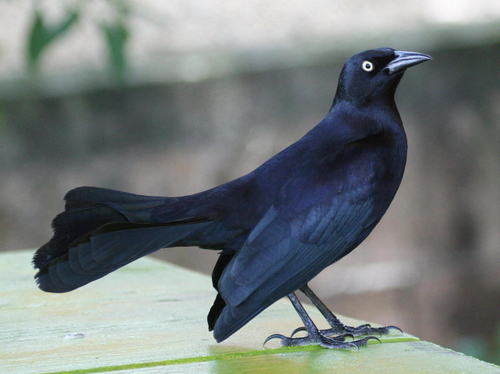
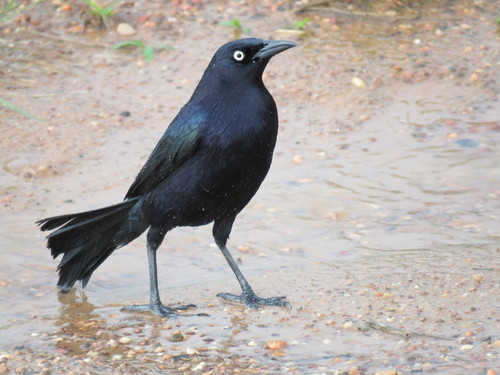
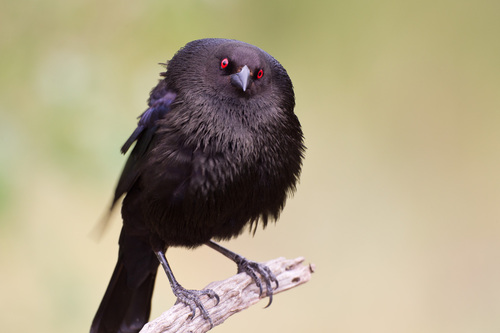
How to Identify Icteridae

Icteridae is a animal family in the Animalia kingdom, order Passeriformes, class Aves. The family contains 85 accepted species worldwide.

Key Identification Features

For instant identification in the field, use the iNature app — AI-powered, works offline.
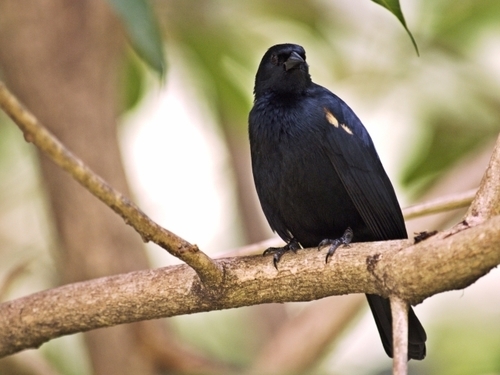
Representative Icteridae Species

How to identify Agelaius humeralis (Vigors, 1827)

Agelaius humeralis (Vigors, 1827)

Agelaius humeralis (Vigors, 1827)

Agelaius humeralis, the tawny-shouldered blackbird, is a small social black bird…

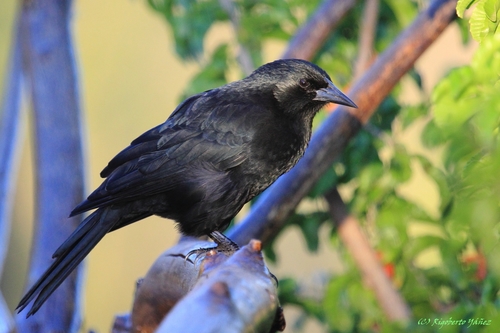
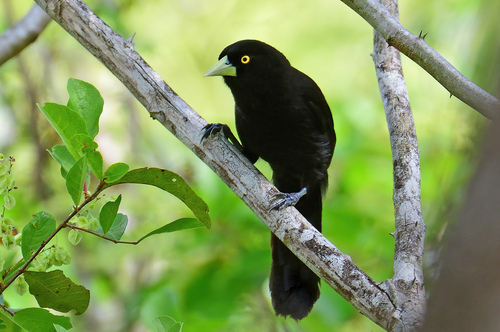
How to identify Curaeus curaeus (Molina, 1782)

Curaeus curaeus (Molina, 1782)

Curaeus curaeus (Molina, 1782)

Austral blackbird (Curaeus curaeus) is an Icteridae bird species found in Argent…

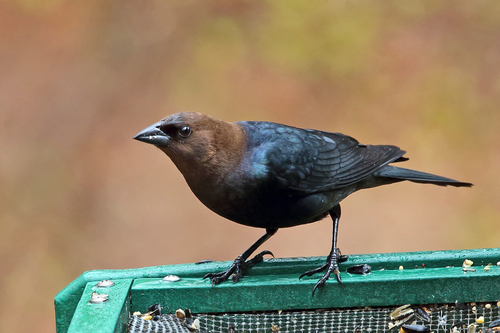
How to identify Molothrus ater (Boddaert, 1783)

Molothrus ater (Boddaert, 1783)

Molothrus ater (Boddaert, 1783)

Molothrus ater, the brown-headed cowbird, is a small North American icterid bird…

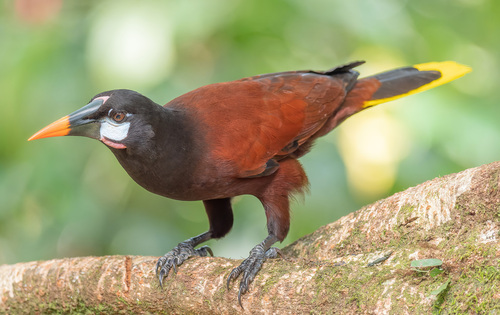
How to identify Psarocolius montezuma (Lesson, 1830)

Psarocolius montezuma (Lesson, 1830)

Psarocolius montezuma (Lesson, 1830)

Psarocolius montezuma, the Montezuma oropendola, is a highly sexually dimorphic …

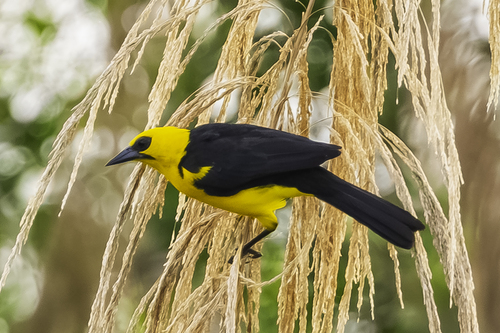
How to identify Gymnomystax mexicanus (Linnaeus, 1766)

Gymnomystax mexicanus (Linnaeus, 1766)

Gymnomystax mexicanus (Linnaeus, 1766)

Gymnomystax mexicanus, the oriole blackbird, is a yellow-and-black icterid found…

How to identify Amblycercus holosericeus (Deppe, 1830)

Amblycercus holosericeus (Deppe, 1830)

Amblycercus holosericeus (Deppe, 1830)

The yellow-billed cacique (Amblycercus holosericeus) is a monotypic Icteridae sp…

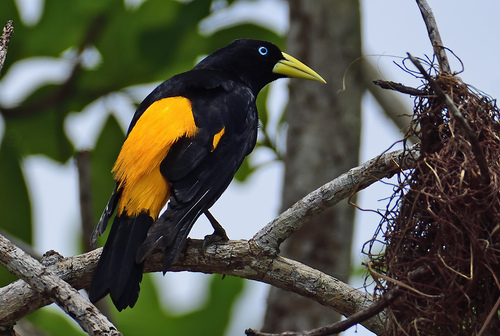
How to identify Cacicus cela (Linnaeus, 1758)

Cacicus cela (Linnaeus, 1758)

Cacicus cela (Linnaeus, 1758)

The yellow-rumped cacique (Cacicus cela) is a black-and-yellow gregarious bird f…

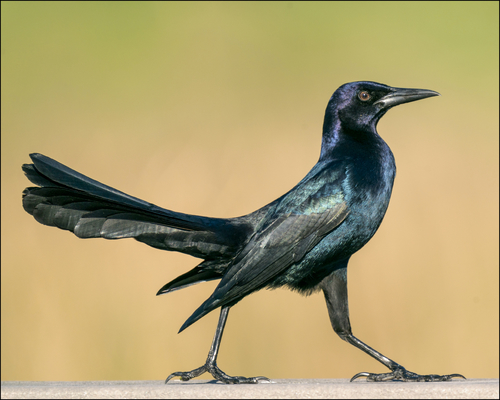
How to identify Quiscalus major Vieillot, 1819

Quiscalus major Vieillot, 1819

Quiscalus major Vieillot, 1819

Quiscalus major, the boat-tailed grackle, is a sexually dimorphic bird found in …

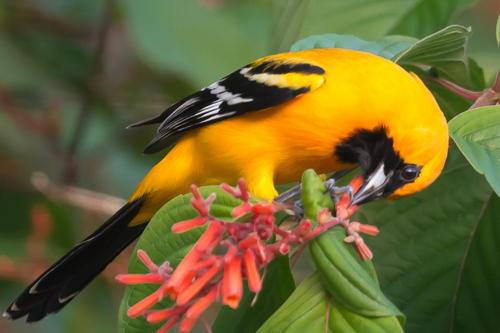
How to identify Icterus auratus Bonaparte, 1850

Icterus auratus Bonaparte, 1850

Icterus auratus Bonaparte, 1850

Icterus auratus, the orange oriole, is a non-migratory bird endemic to Mexican l…

How to identify Quiscalus niger (Boddaert, 1783)

Quiscalus niger (Boddaert, 1783)

Quiscalus niger (Boddaert, 1783)

Quiscalus niger, the Greater Antillean grackle, is a sexually dimorphic black bi…

How to identify Quiscalus lugubris Swainson, 1838

Quiscalus lugubris Swainson, 1838

Quiscalus lugubris Swainson, 1838

Quiscalus lugubris (Carib grackle) is a bird with distinct size and plumage diff…

How to identify Molothrus aeneus (Wagler, 1829)

Molothrus aeneus (Wagler, 1829)

Molothrus aeneus (Wagler, 1829)

Molothrus aeneus, the bronzed cowbird, is an obligate brood parasitic bird found…

Browse all 85 Icteridae species →

Frequently Asked Questions

How do you identify Icteridae?

Icteridae animals belong to the Passeriformes order in the Animalia kingdom. This is a highly social bird species that is entirely black, except for a distinctive brown-orange shoulder patch that gives the species its name. For instant identification, use the iNature app — AI-powered and works offline.

What are the key characteristics of Icteridae?

Icteridae is classified in the order Passeriformes, class Aves, phylum Chordata. The family contains 85 accepted species worldwide.

Sources: GBIF, iNaturalist, Wikipedia · Disclaimer

Start Exploring Nature Today

Download iNature for free. 10 identifications on us. No account needed. No credit card required.

Download Free on App Store