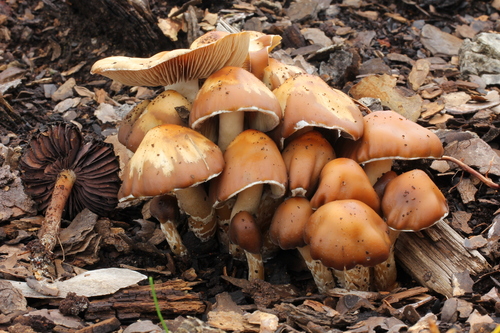
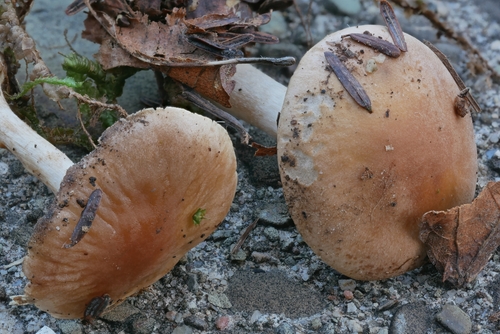
How to Identify Hymenogastraceae

Hymenogastraceae is a fungus family in the Fungi kingdom, order Agaricales, class Agaricomycetes. The family contains 66 accepted species worldwide.

Key Identification Features

For instant identification in the field, use the iNature app — AI-powered, works offline.
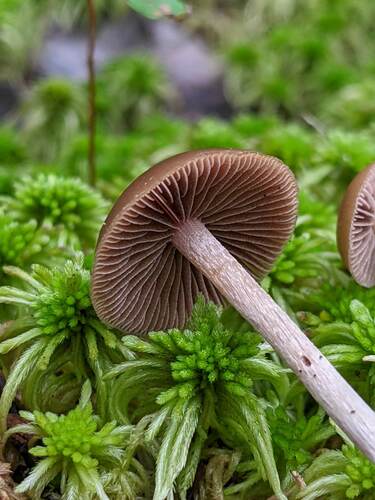
Representative Hymenogastraceae Species

How to identify Psilocybe fuscofulva Peck

Psilocybe fuscofulva Peck

Psilocybe fuscofulva Peck

Psilocybe fuscofulva is a non-psilocybin, inedible mushroom species found in pea…

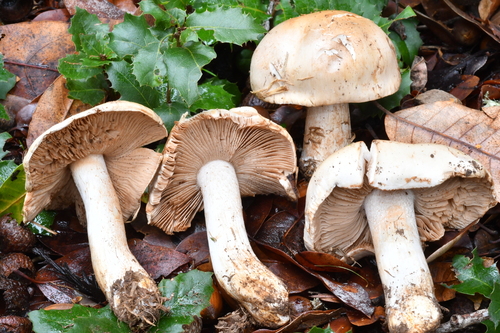
How to identify Hebeloma crustuliniforme (Bull.) Quél.

Hebeloma crustuliniforme (Bull.) Quél.

Hebeloma crustuliniforme (Bull.) Quél.

Hebeloma crustuliniforme is a common poisonous mushroom found across North Ameri…

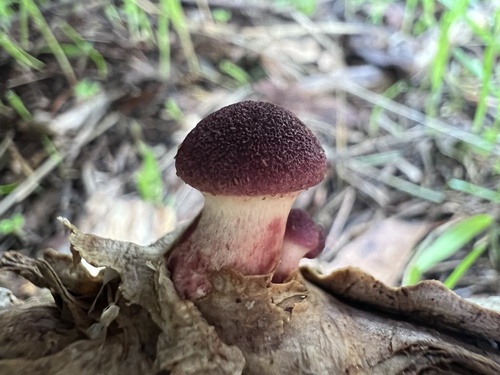
How to identify Gymnopilus purpuratus (Cooke & Massee) Singer

Gymnopilus purpuratus (Cooke & Massee) Singer

Gymnopilus purpuratus (Cooke & Massee) Singer

Gymnopilus purpuratus is a fungus with distinct cap, stem, gill, and spore chara…

How to identify Gymnopilus picreus (Pers.) P.Karst.

Gymnopilus picreus (Pers.) P.Karst.

Gymnopilus picreus (Pers.) P.Karst.

Gymnopilus picreus is a fungus that grows on conifer (and sometimes hardwood) wo…

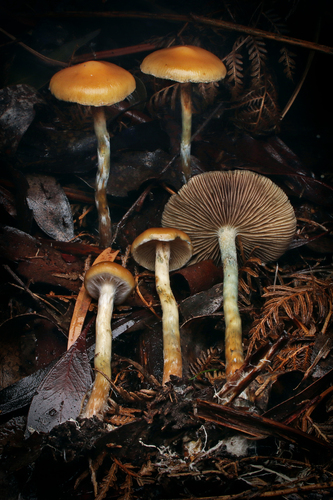
How to identify Psilocybe subaeruginosa Cleland

Psilocybe subaeruginosa Cleland

Psilocybe subaeruginosa Cleland

Psilocybe subaeruginosa Cleland is a blue-staining mushroom found in Australia a…

How to identify Psilocybe weraroa Borov., Oborník & Noordel.

Psilocybe weraroa Borov., Oborník & Noordel.

Psilocybe weraroa Borov., Oborník & Noordel.

Psilocybe weraroa is a secotioid fungus endemic to New Zealand that often grows …

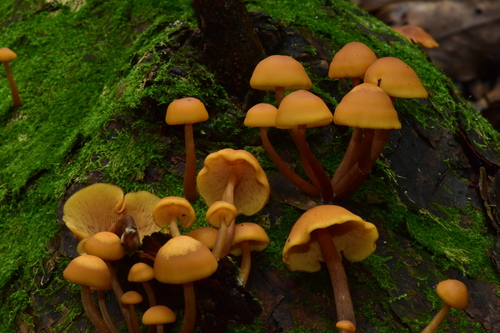
How to identify Gymnopilus liquiritiae (Pers.) P.Karst.

Gymnopilus liquiritiae (Pers.) P.Karst.

Gymnopilus liquiritiae (Pers.) P.Karst.

Gymnopilus liquiritiae is a widely distributed wood-rotting mushroom species wit…

How to identify Gymnopilus suberis (Maire) Singer

Gymnopilus suberis (Maire) Singer

Gymnopilus suberis (Maire) Singer

Gymnopilus suberis is a Hymenogastraceae mushroom species, given its current nam…

How to identify Psilocybe alutacea Y.S.Chang & A.K.Mills

Psilocybe alutacea Y.S.Chang & A.K.Mills

Psilocybe alutacea Y.S.Chang & A.K.Mills

Psilocybe alutacea is a brown-capped dung-associated mushroom found in Australia…

How to identify Phaeocollybia olivacea A.H.Sm.

Phaeocollybia olivacea A.H.Sm.

Phaeocollybia olivacea A.H.Sm.

Phaeocollybia olivacea is a mycorrhizal mushroom that grows in clusters in mixed…

How to identify Psilocybe caerulescens Murrill

Psilocybe caerulescens Murrill

Psilocybe caerulescens Murrill

Psilocybe caerulescens is a farinaceous, cucumber-scented mushroom that grows in…

How to identify Hebeloma leucosarx P.D.Orton

Hebeloma leucosarx P.D.Orton

Hebeloma leucosarx P.D.Orton

Hebeloma leucosarx P.D.Orton is a Hymenogastraceae mushroom that grows in divers…

Browse all 66 Hymenogastraceae species →

Frequently Asked Questions

How do you identify Hymenogastraceae?

Hymenogastraceae funguss belong to the Agaricales order in the Fungi kingdom. Taste: Bitter Odor: Mild or sometimes similar to raw potatoes Microscopic features: Spores are 7–8. For instant identification, use the iNature app — AI-powered and works offline.

What are the key characteristics of Hymenogastraceae?

Hymenogastraceae is classified in the order Agaricales, class Agaricomycetes, phylum Basidiomycota. 2 μm, are ellipsoid, and have a distinct germ pore.

Sources: GBIF, iNaturalist, Wikipedia · Disclaimer

Start Exploring Nature Today

Download iNature for free. 10 identifications on us. No account needed. No credit card required.

Download Free on App Store