Key Identification Features
- The flower has five distinctive sepals that can be greenish, purplish, or red, and their tips are often curved backward.
For instant identification in the field, use the iNature app — AI-powered, works offline.
Grossulariaceae is a plant family in the Plantae kingdom, order Saxifragales, class Magnoliopsida. The family contains 56 accepted species worldwide. Some species in this family are toxic — exercise caution when handling unknown specimens.
For instant identification in the field, use the iNature app — AI-powered, works offline.
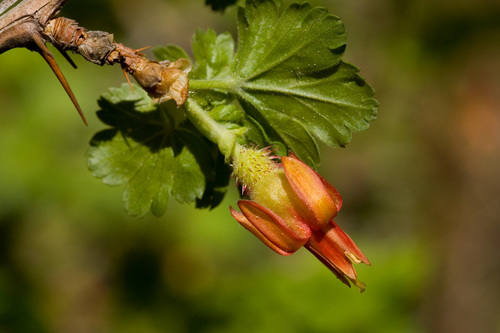
Ribes pinetorum Greene
Orange gooseberry (Ribes pinetorum) is a prickless shrub native to the southwest…
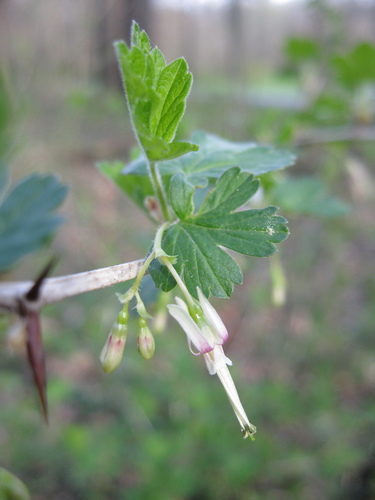
Ribes missouriense Nutt. ex Torr. & A.Gray
Ribes missouriense, or Missouri gooseberry, is a prickly native US shrub listed …
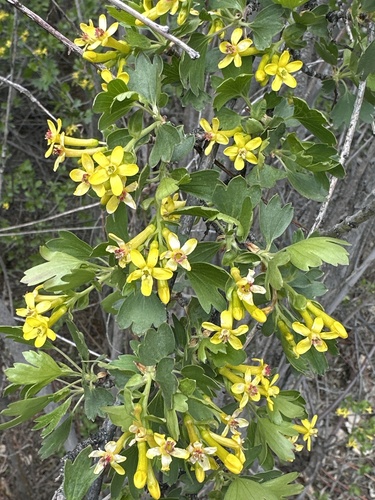
Ribes aureum Pursh
Ribes aureum Pursh is a deciduous currant shrub native to central North America,…
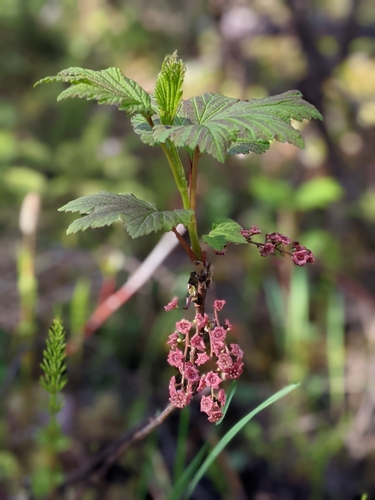
Ribes triste Pall.
Ribes triste Pall. is a sour red currant species native to North America and eas…
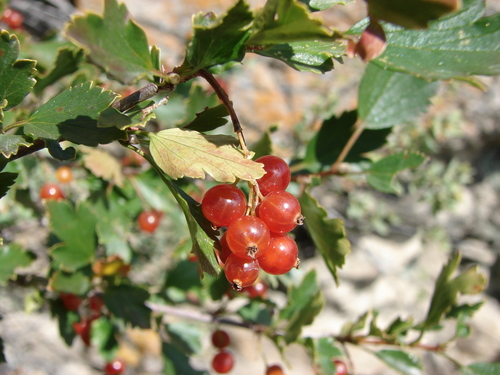
Ribes diacanthum Pall.
Ribes diacanthum (Siberian currant) is a dioecious shrub native to northeastern …
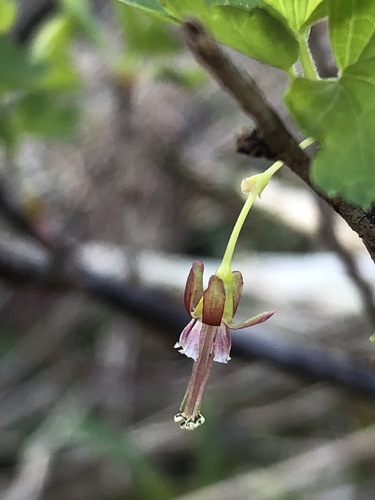
Ribes rotundifolium Michx.
Ribes rotundifolium is a North American shrub currant native to the eastern US t…
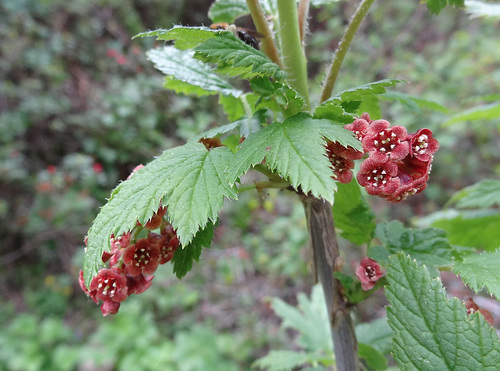
Ribes petraeum Wulfen
Ribes petraeum Wulfen, also called rock currant, is a Ribes species native to Eu…
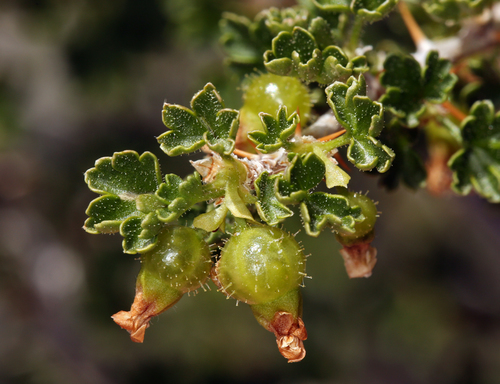
Ribes velutinum Greene
Ribes velutinum is a spiny desert shrub of the western US that produces dry, unp…
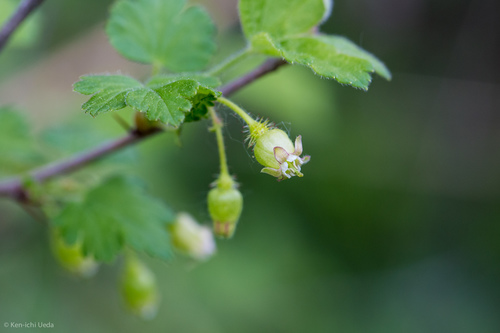
Ribes cynosbati L.
Ribes cynosbati L. is a plant with greenish-white flowers that bears pleasant-ta…
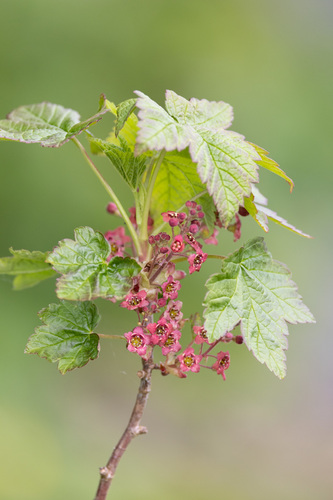
Ribes laxiflorum Pursh
Ribes laxiflorum is a North American currant shrub with edible berries and docum…
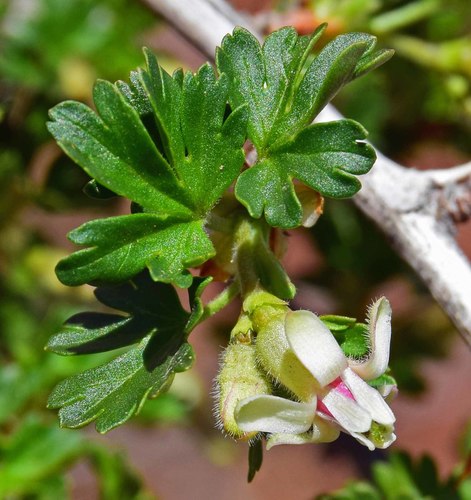
Ribes leptanthum A.Gray
Ribes leptanthum, or trumpet gooseberry, is a spiny-stemmed small-leaved goosebe…

Ribes aciculare Sm.
Ribes aciculare is a cold-hardy deciduous shrub with edible fruit, native to cen…
Grossulariaceae plants belong to the Saxifragales order in the Plantae kingdom. The flower has five distinctive sepals that can be greenish, purplish, or red, and their tips are often curved backward. For instant identification, use the iNature app — AI-powered and works offline.
Grossulariaceae is classified in the order Saxifragales, class Magnoliopsida, phylum Tracheophyta. The family contains 56 accepted species worldwide.
Yes, some Grossulariaceae species are toxic or poisonous. Always exercise caution with unknown specimens. View poisonous Grossulariaceae species or browse the full poisonous species guide.
Sources: GBIF, iNaturalist, Wikipedia · Disclaimer
Download iNature for free. 10 identifications on us. No account needed. No credit card required.
Download Free on App Store
