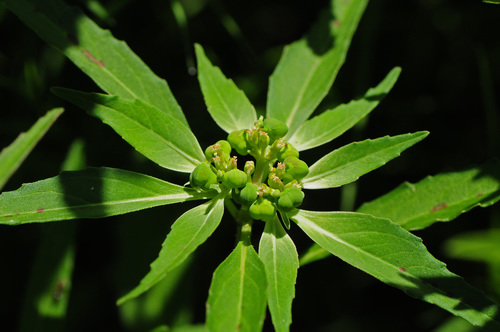
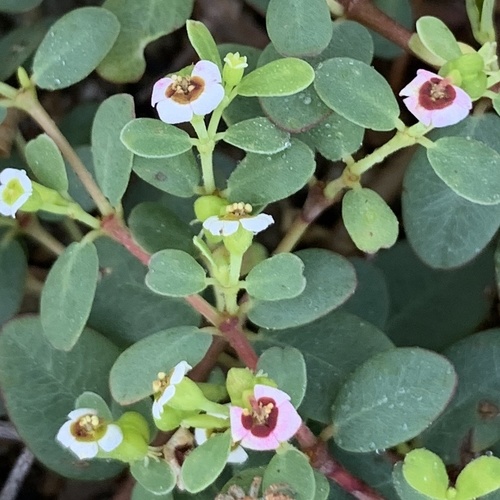
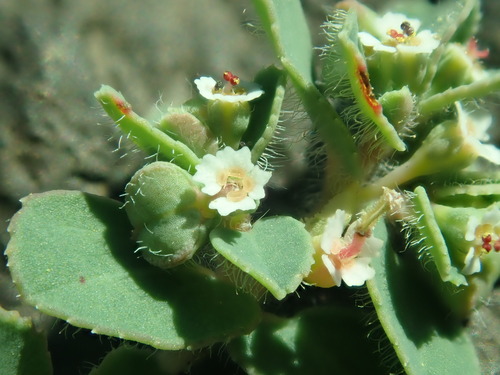
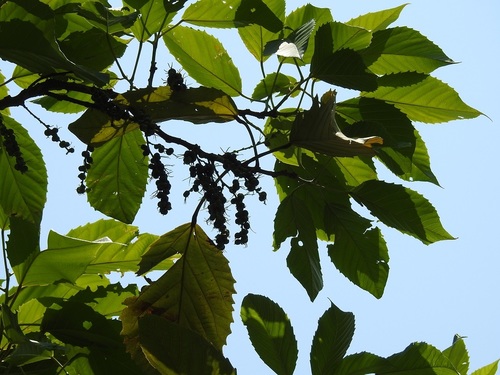
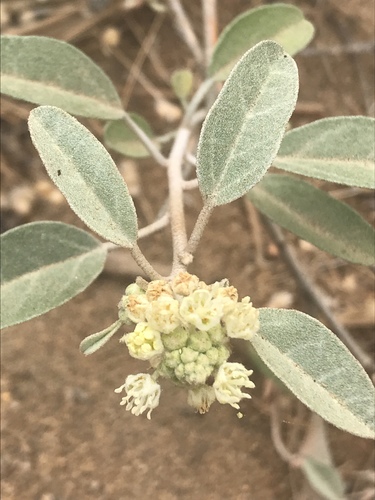
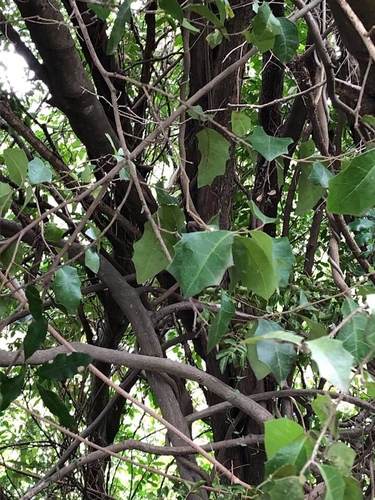
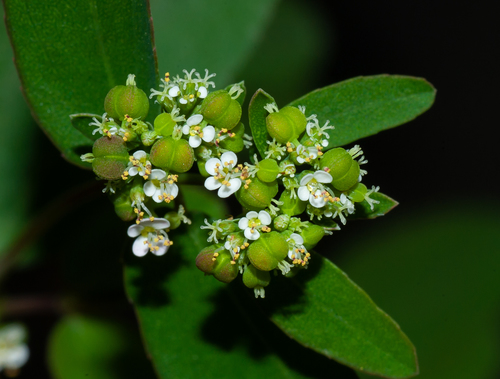
How to Identify Euphorbiaceae

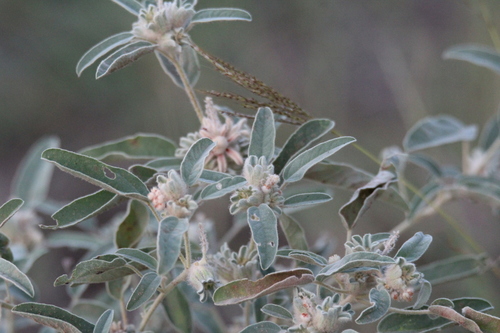
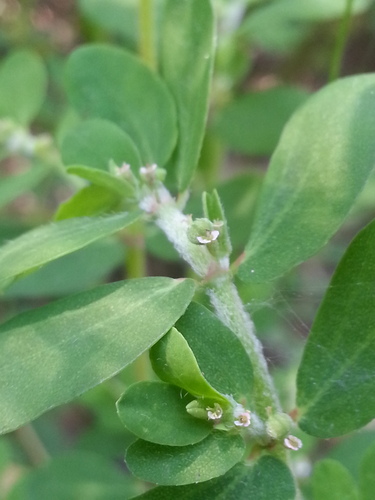
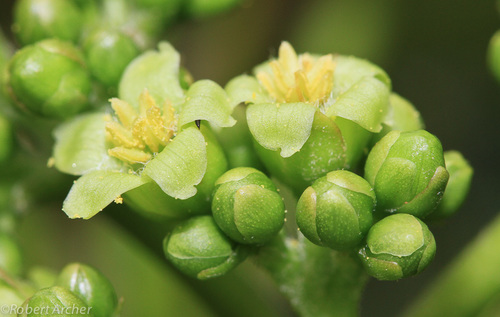
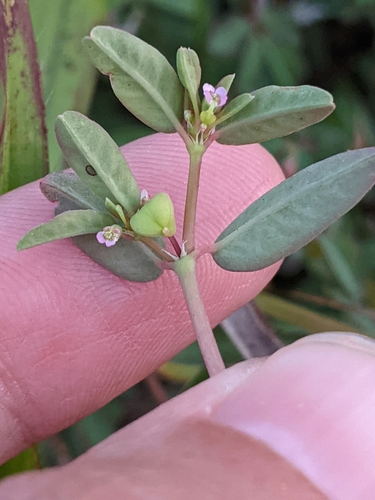
Euphorbiaceae is a plant family in the Plantae kingdom, order Malpighiales, class Magnoliopsida. The family contains 517 accepted species worldwide. Some species in this family are toxic — exercise caution when handling unknown specimens.

Key Identification Features

For instant identification in the field, use the iNature app — AI-powered, works offline.
Representative Euphorbiaceae Species

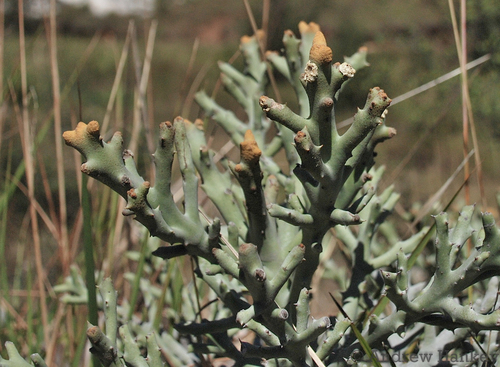
How to identify Euphorbia stenoclada Baill.

Euphorbia stenoclada Baill.

Euphorbia stenoclada Baill.

Euphorbia stenoclada is a Euphorbiaceae plant native to Madagascar and nearby is…

How to identify Euphorbia dentata Michx.

Euphorbia dentata Michx.

Euphorbia dentata Michx.

Euphorbia dentata, or toothed spurge, is an annual hairy spurge found across the…

How to identify Euphorbia magdalenae Benth.

Euphorbia magdalenae Benth.

Euphorbia magdalenae Benth.

Euphorbia magdalenae is a local endemic semi-succulent shrub from Baja Californi…

How to identify Euphorbia chamaesyce L.

Euphorbia chamaesyce L.

Euphorbia chamaesyce L.

Euphorbia chamaesyce L. is a mat-forming annual Euphorbia with two described sub…

How to identify Alchornea latifolia Sw.

Alchornea latifolia Sw.

Alchornea latifolia Sw.

Alchornea latifolia is a small evergreen tree native to the Americas, used for s…

How to identify Croton capitatus Michx.

Croton capitatus Michx.

Croton capitatus Michx.

Croton capitatus Michx. is an annual hairy plant of the eastern US that hosts th…

How to identify Euphorbia humistrata Engelm. ex A.Gray

Euphorbia humistrata Engelm. ex A.Gray

Euphorbia humistrata Engelm. ex A.Gray

Euphorbia humistrata is an annual spurge native to southern and midwestern Unite…

How to identify Jatropha curcas L.

Jatropha curcas L.

Jatropha curcas L.

Jatropha curcas L. is a multi-use shrub grown for biodiesel, with edible non-tox…

How to identify Euphorbia bombensis Jacq.

Euphorbia bombensis Jacq.

Euphorbia bombensis Jacq.

Euphorbia bombensis, the southern seaside spurge, is a spurge-family flowering p…

How to identify Croton californicus Müll.Arg.

Croton californicus Müll.Arg.

Croton californicus Müll.Arg.

Croton californicus, or California croton, is a small dioecious shrub native to …

How to identify Alchornea ilicifolia (Js.Sm.) Müll.Arg.

Alchornea ilicifolia (Js.Sm.) Müll.Arg.

Alchornea ilicifolia (Js.Sm.) Müll.Arg.

Alchornea ilicifolia (native holly) is an Australian shrub or small tree that ho…

How to identify Euphorbia hypericifolia L.

Euphorbia hypericifolia L.

Euphorbia hypericifolia L.

Euphorbia hypericifolia L. is a hairless euphorbia native to tropical Americas, …

Browse all 517 Euphorbiaceae species →

Frequently Asked Questions

How do you identify Euphorbiaceae?

Euphorbiaceae plants belong to the Malpighiales order in the Plantae kingdom. It can typically be found in desert or dry shrubland habitats, and it is distinguished by its unique leaf arrangement. For instant identification, use the iNature app — AI-powered and works offline.

What are the key characteristics of Euphorbiaceae?

Euphorbiaceae is classified in the order Malpighiales, class Magnoliopsida, phylum Tracheophyta. 5 mm, rarely reaching 11 mm by 6 mm, have blunt non-pointed tips, have a slightly to distinctly greyish glaucous appearance, and are borne on 1 mm stalks.

⚠️ Are any Euphorbiaceae species poisonous?

Yes, some Euphorbiaceae species are toxic or poisonous. Always exercise caution with unknown specimens. View poisonous Euphorbiaceae species or browse the full poisonous species guide.

Sources: GBIF, iNaturalist, Wikipedia · Disclaimer

Start Exploring Nature Today

Download iNature for free. 10 identifications on us. No account needed. No credit card required.

Download Free on App Store