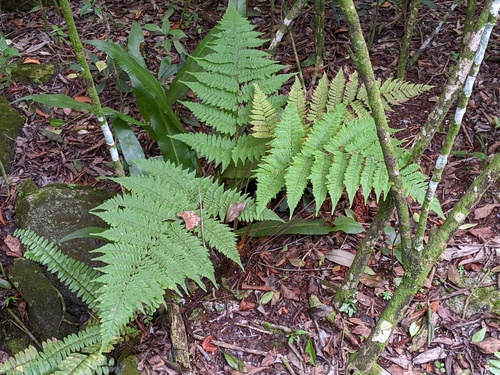
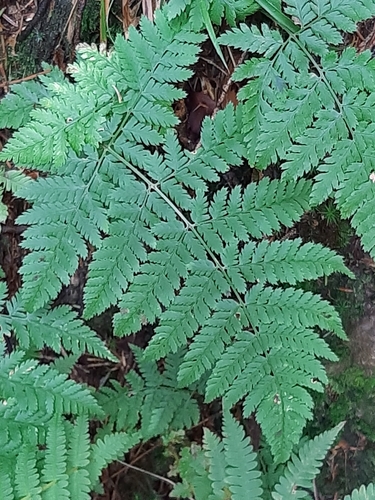
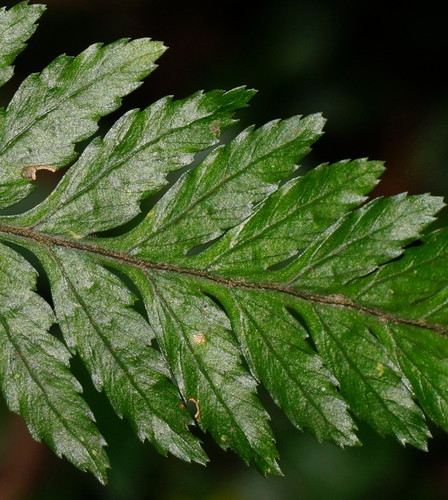
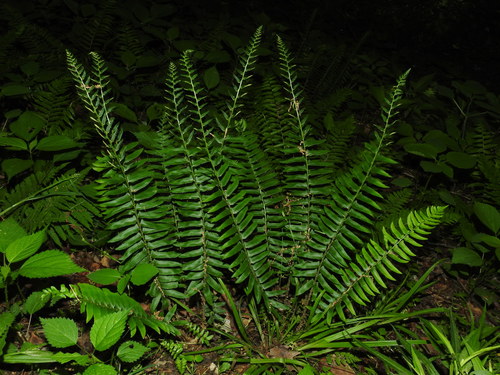
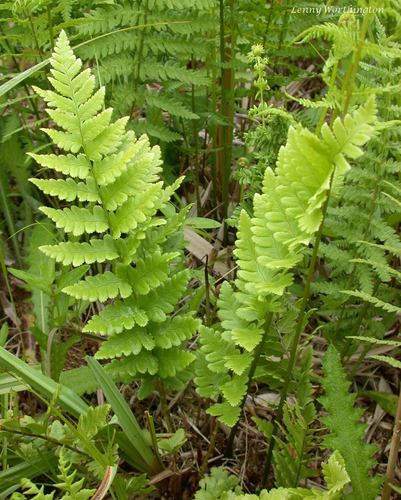
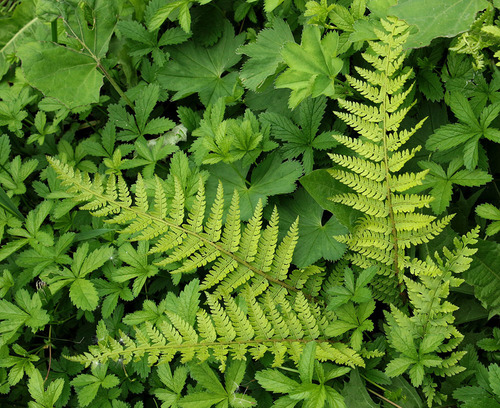
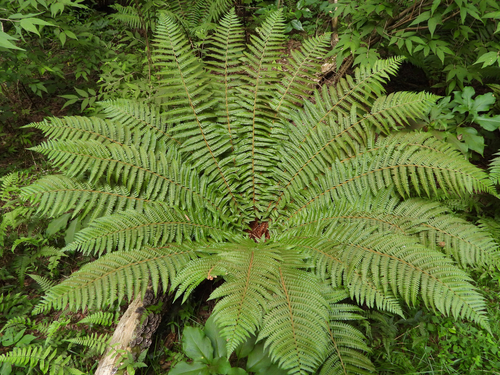
How to Identify Dryopteridaceae

Dryopteridaceae is a plant family in the Plantae kingdom, order Polypodiales, class Polypodiopsida. The family contains 110 accepted species worldwide. Some species in this family are toxic — exercise caution when handling unknown specimens.

Key Identification Features

For instant identification in the field, use the iNature app — AI-powered, works offline.
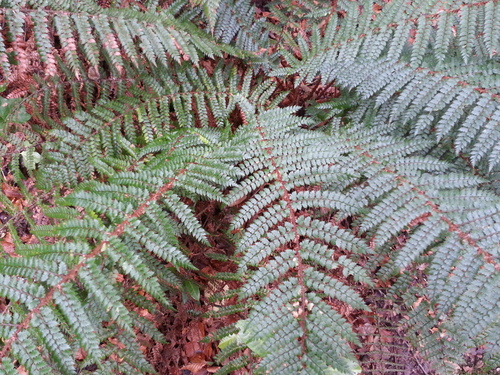
Representative Dryopteridaceae Species

How to identify Polystichum vestitum (G.Forst.) C.Presl

Polystichum vestitum (G.Forst.) C.Presl

Polystichum vestitum (G.Forst.) C.Presl

Polystichum vestitum (Prickly Shield Fern) is a terrestrial fern native to New Z…

How to identify Ctenitis sloanei (Poepp. ex Spreng.) C.V.Morton

Ctenitis sloanei (Poepp. ex Spreng.) C.V.Morton

Ctenitis sloanei (Poepp. ex Spreng.) C.V.Morton

Ctenitis sloanei is an evergreen perennial fern that grows in moist tropical ham…

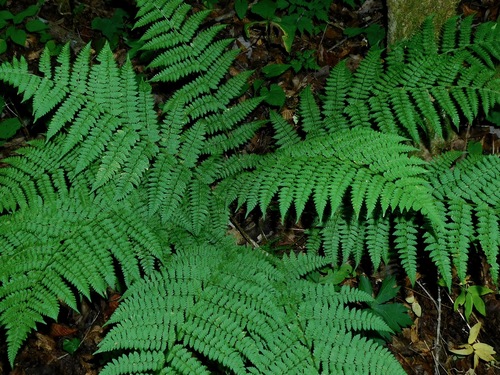
How to identify Dryopteris dilatata (Hoffm.) A.Gray

Dryopteris dilatata (Hoffm.) A.Gray

Dryopteris dilatata (Hoffm.) A.Gray

Dryopteris dilatata, the broad buckler-fern, is a robust Eurasian fern that has …

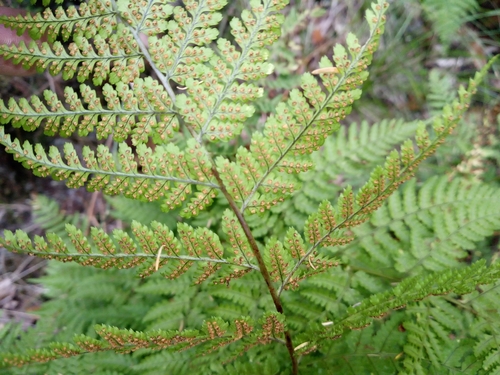
How to identify Parapolystichum acuminatum (Houlston) Labiak, Sundue & R.C.Moran

Parapolystichum acuminatum (Houlston) Labiak, Sundue & R.C.Moran

Parapolystichum acuminatum (Houlston) Labiak, Sundue & R.C.Moran

Parapolystichum acuminatum is a small widespread fern of eastern Australia, grow…

How to identify Polystichum acrostichoides (Michx.) Schott

Polystichum acrostichoides (Michx.) Schott

Polystichum acrostichoides (Michx.) Schott

Polystichum acrostichoides, the Christmas fern, is an evergreen clumping fern po…

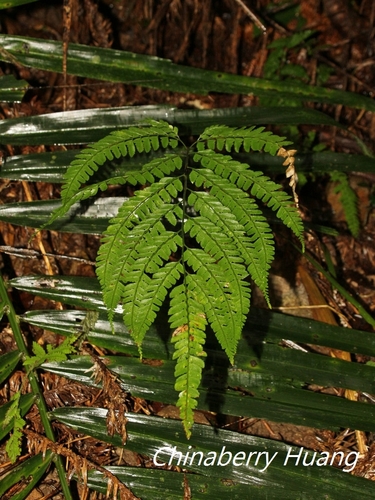
How to identify Arachniodes amabilis (Blume) Tindale

Arachniodes amabilis (Blume) Tindale

Arachniodes amabilis (Blume) Tindale

There was long - standing taxonomic confusion between Arachniodes amabilis and A…

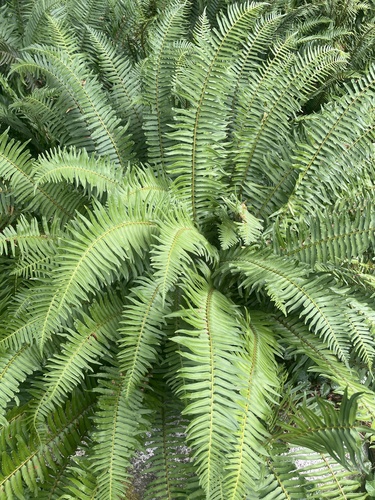
How to identify Polystichum munitum (Kaulf.) C.Presl

Polystichum munitum (Kaulf.) C.Presl

Polystichum munitum (Kaulf.) C.Presl

Polystichum munitum is a dark green clumping fern that naturally grows in low el…

How to identify Dryopteris aemula (Aiton) Kuntze

Dryopteris aemula (Aiton) Kuntze

Dryopteris aemula (Aiton) Kuntze

Dryopteris aemula is a semi-evergreen hay-scented fern found in oceanic Atlantic…

How to identify Dryopteris intermedia subsp. azorica (Christ) Jermy

Dryopteris intermedia subsp. azorica (Christ) Jermy

Dryopteris intermedia subsp. azorica (Christ) Jermy

This is a description of the perennial fern Dryopteris intermedia, including its…

How to identify Dryopteris cristata (L.) A.Gray

Dryopteris cristata (L.) A.Gray

Dryopteris cristata (L.) A.Gray

Dryopteris cristata (L.) A.Gray is a fern with short rootstock, clustered dark g…

How to identify Polystichum setiferum (Forssk.) T.Moore ex Woyn.

Polystichum setiferum (Forssk.) T.Moore ex Woyn.

Polystichum setiferum (Forssk.) T.Moore ex Woyn.

Polystichum setiferum is a soft-textured European fern widely cultivated as an o…

How to identify Dryopteris crassirhizoma Nakai

Dryopteris crassirhizoma Nakai

Dryopteris crassirhizoma Nakai

Dryopteris crassirhizoma is a semi-evergreen wood fern with biologically active …

Browse all 110 Dryopteridaceae species →

Frequently Asked Questions

How do you identify Dryopteridaceae?

Dryopteridaceae plants belong to the Polypodiales order in the Plantae kingdom. vestitum are produced in round sori protected by round indusia, which is a characteristic feature of the Polystichum genus. For instant identification, use the iNature app — AI-powered and works offline.

What are the key characteristics of Dryopteridaceae?

Dryopteridaceae is classified in the order Polypodiales, class Polypodiopsida, phylum Tracheophyta. A distinctive identifying feature is that the first pinnule closest to the main stem on the lowest pinna is shorter than the second pinnule.

⚠️ Are any Dryopteridaceae species poisonous?

Yes, some Dryopteridaceae species are toxic or poisonous. Always exercise caution with unknown specimens. View poisonous Dryopteridaceae species or browse the full poisonous species guide.

Sources: GBIF, iNaturalist, Wikipedia · Disclaimer

Start Exploring Nature Today

Download iNature for free. 10 identifications on us. No account needed. No credit card required.

Download Free on App Store