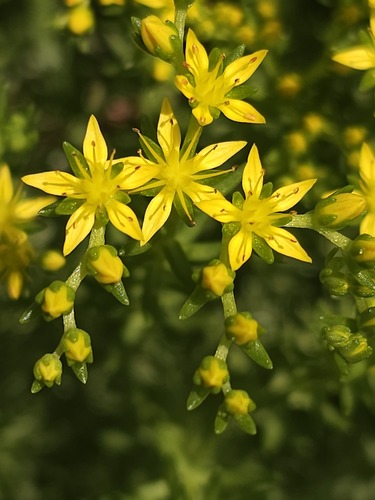
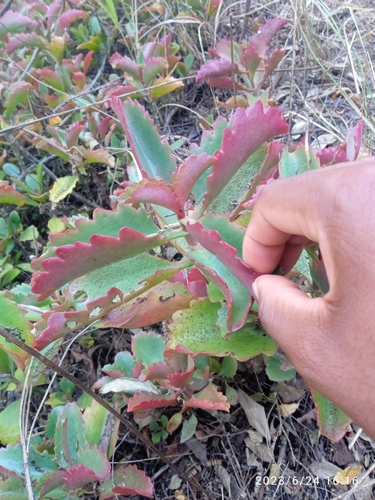
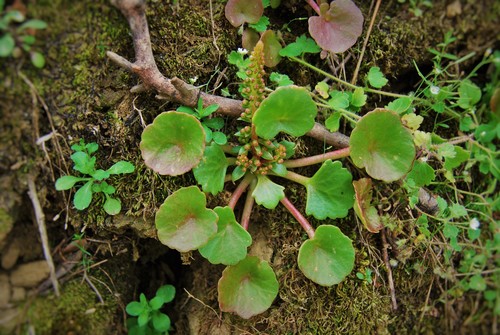
How to Identify Crassulaceae

Crassulaceae is a plant family in the Plantae kingdom, order Saxifragales, class Magnoliopsida. The family contains 392 accepted species worldwide. Some species in this family are toxic — exercise caution when handling unknown specimens.

Key Identification Features

For instant identification in the field, use the iNature app — AI-powered, works offline.
Representative Crassulaceae Species

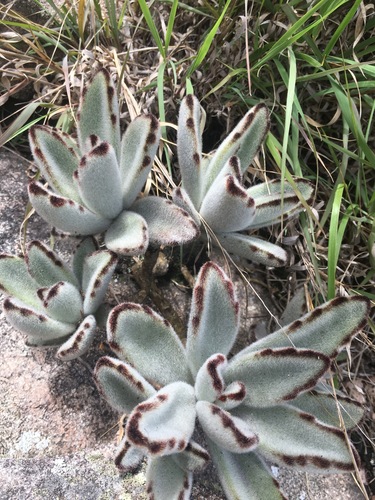
How to identify Kalanchoe tomentosa Baker

Kalanchoe tomentosa Baker

Kalanchoe tomentosa Baker

Kalanchoe tomentosa is a Madagascan succulent with red-rimmed leaves and many cu…

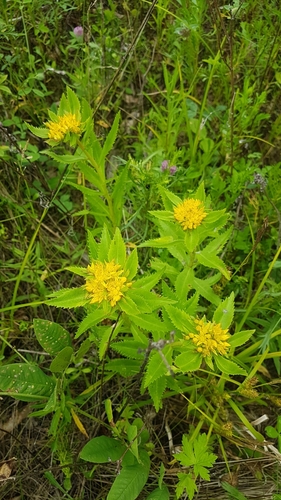
How to identify Phedimus aizoon (L.) 't Hart

Phedimus aizoon (L.) 't Hart

Phedimus aizoon (L.) 't Hart

Phedimus aizoon is an edible, medicinal, ornamental stonecrop native to Central …

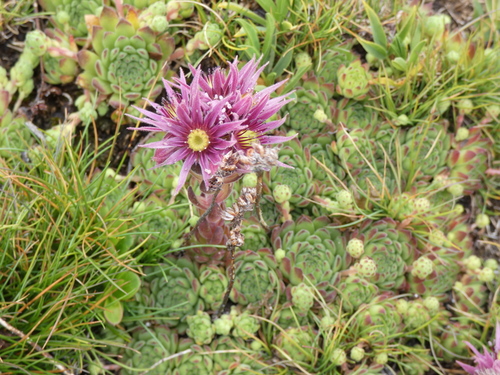
How to identify Sempervivum montanum L.

Sempervivum montanum L.

Sempervivum montanum L.

This page covers identification, habitat, growth, and human uses of the Sempervi…

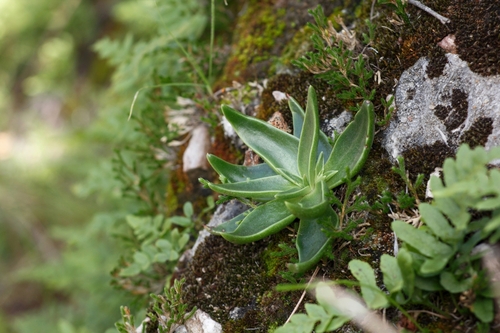
How to identify Dudleya lanceolata (Nutt.) Britton & Rose

Dudleya lanceolata (Nutt.) Britton & Rose

Dudleya lanceolata (Nutt.) Britton & Rose

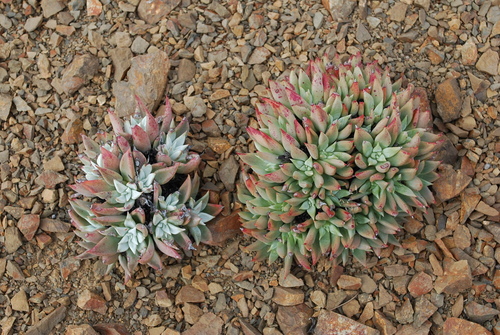
Dudleya lanceolata is a cold-sensitive succulent native to western North America…

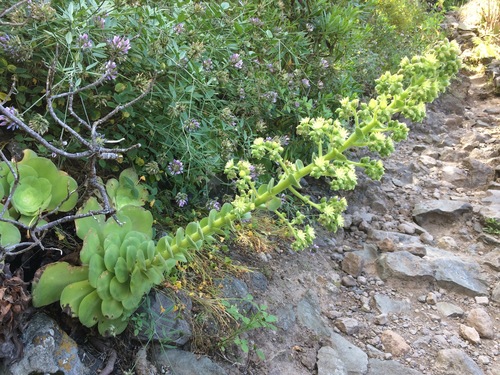
How to identify Aeonium canariense (L.) Webb & Berthel.

Aeonium canariense (L.) Webb & Berthel.

Aeonium canariense (L.) Webb & Berthel.

Aeonium canariense is a flowering crassulaceous plant endemic to the Canary Isla…

How to identify Dudleya attenuata (S.Watson) Moran

Dudleya attenuata (S.Watson) Moran

Dudleya attenuata (S.Watson) Moran

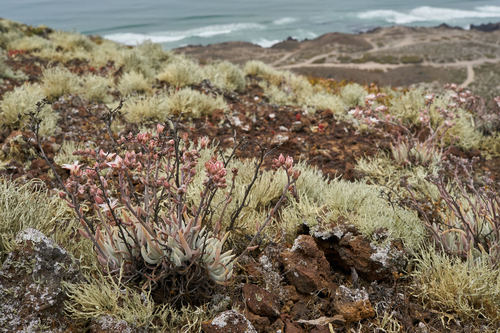
Dudleya attenuata is a diverse succulent native to coastal Baja California, with…

How to identify Dudleya albiflora Rose

Dudleya albiflora Rose

Dudleya albiflora Rose

Dudleya albiflora is a variable perennial succulent native to Baja California an…

How to identify Dudleya multicaulis (Rose) Moran

Dudleya multicaulis (Rose) Moran

Dudleya multicaulis (Rose) Moran

Dudleya multicaulis is a basal California-endemic succulent declining due to urb…

How to identify Kalanchoe delagoensis Eckl. & Zeyh.

Kalanchoe delagoensis Eckl. & Zeyh.

Kalanchoe delagoensis Eckl. & Zeyh.

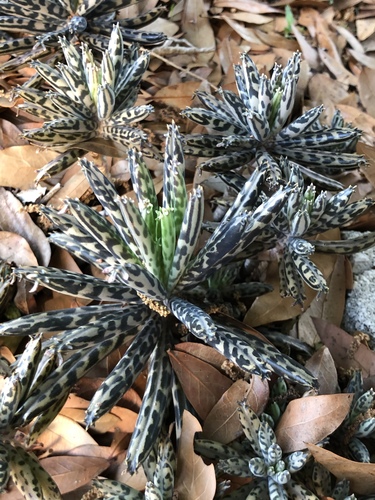
Kalanchoe delagoensis is a robust biennial or perennial succulent with toothed l…

How to identify Sedum mexicanum Britton

Sedum mexicanum Britton

Sedum mexicanum Britton

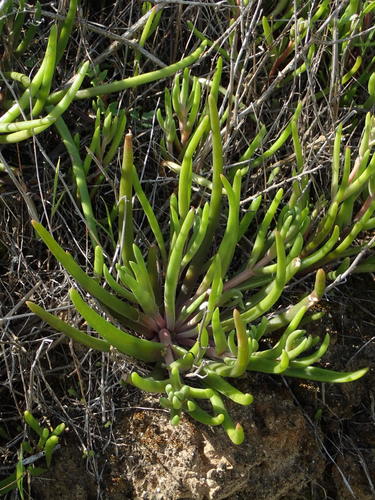
Sedum mexicanum Britton is a Crassulaceae flowering plant commonly called Mexica…

How to identify Kalanchoe sexangularis N.E.Br.

Kalanchoe sexangularis N.E.Br.

Kalanchoe sexangularis N.E.Br.

Kalanchoe sexangularis is a perennial succulent native to southern African bushl…

How to identify Umbilicus horizontalis (Guss.) DC.

Umbilicus horizontalis (Guss.) DC.

Umbilicus horizontalis (Guss.) DC.

Umbilicus horizontalis, the horizontal navelwort, is a succulent perennial flowe…

Browse all 392 Crassulaceae species →

Frequently Asked Questions

How do you identify Crassulaceae?

Crassulaceae plants belong to the Saxifragales order in the Plantae kingdom. aizoon to be a single highly variable species, but today the two are recognized as distinct species within a large species complex. For instant identification, use the iNature app — AI-powered and works offline.

What are the key characteristics of Crassulaceae?

Crassulaceae is classified in the order Saxifragales, class Magnoliopsida, phylum Tracheophyta. They have a distinctive flattened, yet thick and fleshy structure.

⚠️ Are any Crassulaceae species poisonous?

Yes, some Crassulaceae species are toxic or poisonous. Always exercise caution with unknown specimens. View poisonous Crassulaceae species or browse the full poisonous species guide.

Sources: GBIF, iNaturalist, Wikipedia · Disclaimer

Start Exploring Nature Today

Download iNature for free. 10 identifications on us. No account needed. No credit card required.

Download Free on App Store