How to Identify Ciconiidae

Ciconiidae is a animal family in the Animalia kingdom, order Ciconiiformes, class Aves. The family contains 20 accepted species worldwide.

Key Identification Features

For instant identification in the field, use the iNature app — AI-powered, works offline.
Representative Ciconiidae Species

How to identify Ciconia abdimii Lichtenstein, 1823

Ciconia abdimii Lichtenstein, 1823

Ciconia abdimii Lichtenstein, 1823

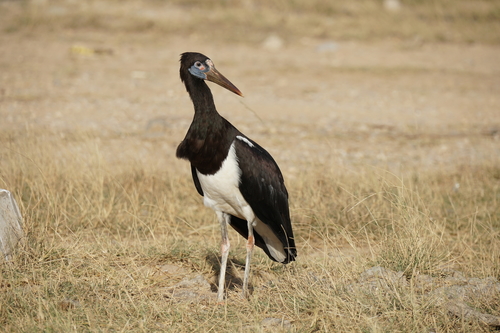
Ciconia abdimii, or Abdim's stork, is the smallest stork species native to Afric…

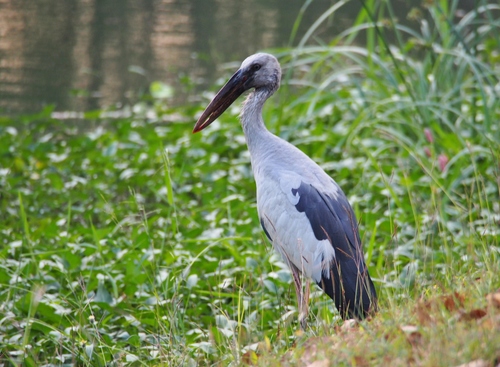
How to identify Anastomus oscitans (Boddaert, 1783)

Anastomus oscitans (Boddaert, 1783)

Anastomus oscitans (Boddaert, 1783)

Anastomus oscitans, the Asian openbill stork, is a small stork native to South a…

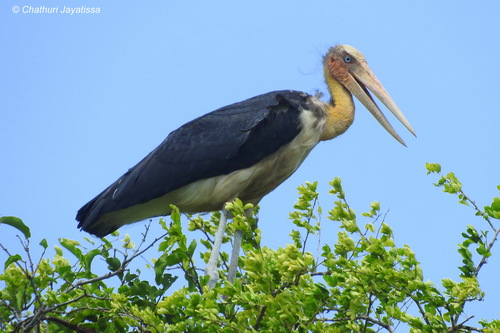
How to identify Leptoptilos javanicus (Horsfield, 1821)

Leptoptilos javanicus (Horsfield, 1821)

Leptoptilos javanicus (Horsfield, 1821)

Leptoptilos javanicus, the lesser adjutant, is a large stork found across South …

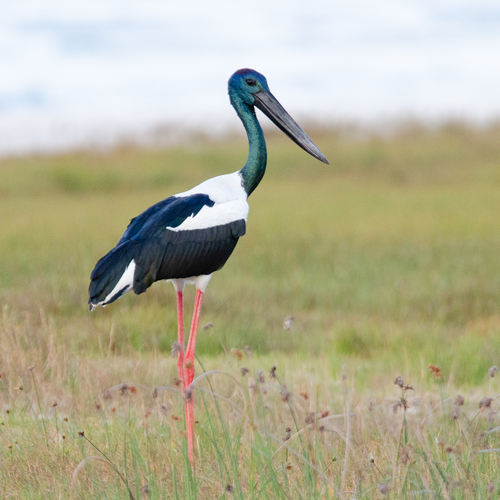
How to identify Ephippiorhynchus asiaticus (Latham, 1790)

Ephippiorhynchus asiaticus (Latham, 1790)

Ephippiorhynchus asiaticus (Latham, 1790)

Ephippiorhynchus asiaticus, the black-necked stork, is a large wetland stork fou…

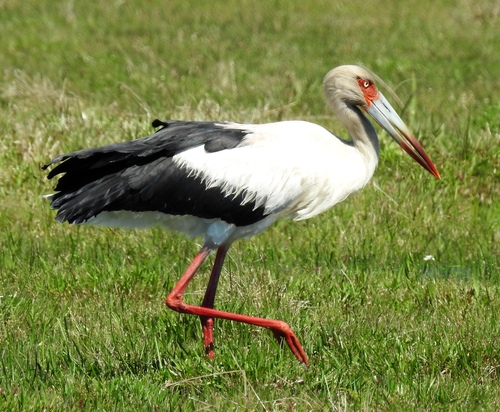
How to identify Ciconia maguari (Gmelin, 1789)

Ciconia maguari (Gmelin, 1789)

Ciconia maguari (Gmelin, 1789)

The maguari stork is a large South American wetland stork, one of three New Worl…

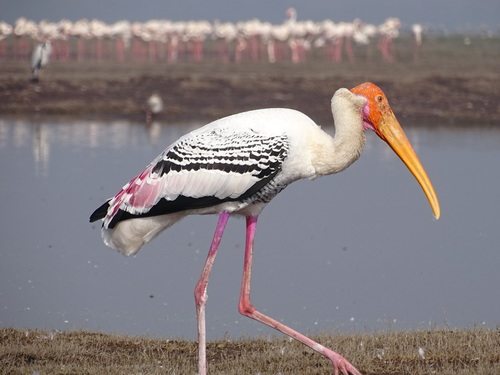
How to identify Mycteria leucocephala (Pennant, 1769)

Mycteria leucocephala (Pennant, 1769)

Mycteria leucocephala (Pennant, 1769)

Mycteria leucocephala, the painted stork, is a medium-large Asian stork that liv…

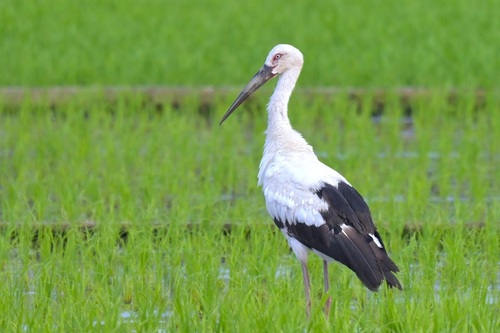
How to identify Ciconia boyciana Swinhoe, 1873

Ciconia boyciana Swinhoe, 1873

Ciconia boyciana Swinhoe, 1873

Ciconia boyciana, the Oriental stork, is a large stork species found across East…

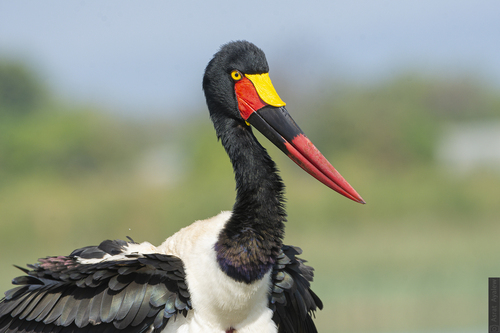
How to identify Ephippiorhynchus senegalensis (Shaw, 1800)

Ephippiorhynchus senegalensis (Shaw, 1800)

Ephippiorhynchus senegalensis (Shaw, 1800)

The saddle-billed stork, Ephippiorhynchus senegalensis, is a large African stork…

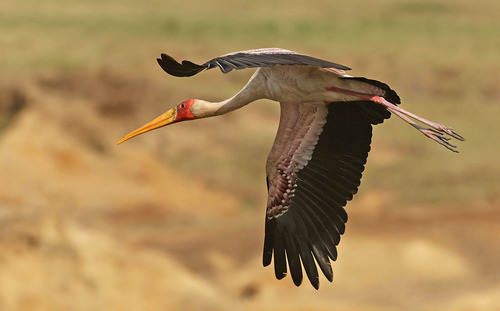
How to identify Mycteria ibis (Linnaeus, 1766)

Mycteria ibis (Linnaeus, 1766)

Mycteria ibis (Linnaeus, 1766)

Mycteria ibis, the yellow-billed stork, is a medium-sized African stork with dis…

How to identify Mycteria americana Linnaeus, 1758

Mycteria americana Linnaeus, 1758

Mycteria americana Linnaeus, 1758

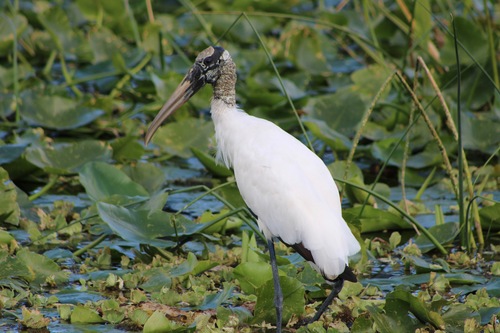
Mycteria americana, the wood stork, is a large wading bird found across the Amer…

How to identify Ciconia nigra (Linnaeus, 1758)

Ciconia nigra (Linnaeus, 1758)

Ciconia nigra (Linnaeus, 1758)

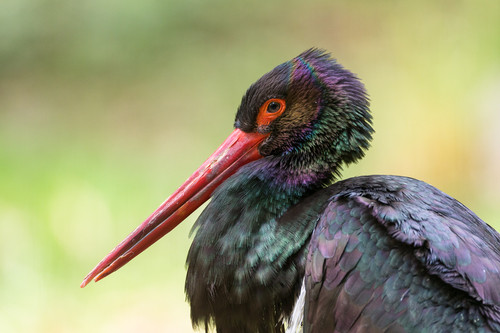
Ciconia nigra, the black stork, is a large migratory bird with distinct black pl…

How to identify Jabiru mycteria (Lichtenstein, 1819)

Jabiru mycteria (Lichtenstein, 1819)

Jabiru mycteria (Lichtenstein, 1819)

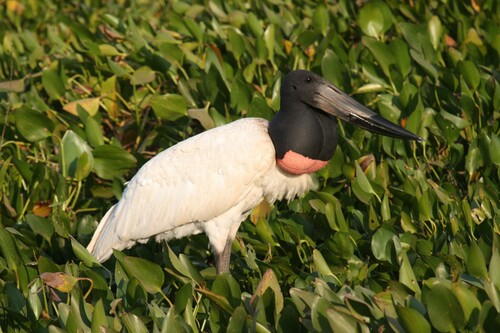
Jabiru mycteria is the tallest flying bird of Central and South America, an oppo…

Browse all 20 Ciconiidae species →

Frequently Asked Questions

How do you identify Ciconiidae?

Ciconiidae animals belong to the Ciconiiformes order in the Animalia kingdom. The species gets its name from the distinctive gap between the recurved lower mandible and arched upper mandible of the beak that forms in adult birds; young birds do not have this gap. For instant identification, use the iNature app — AI-powered and works offline.

What are the key characteristics of Ciconiidae?

Ciconiidae is classified in the order Ciconiiformes, class Aves, phylum Chordata. Plumage patterns are distinct, and younger birds differ in appearance from adults.

Sources: GBIF, iNaturalist, Wikipedia · Disclaimer

Start Exploring Nature Today

Download iNature for free. 10 identifications on us. No account needed. No credit card required.

Download Free on App Store