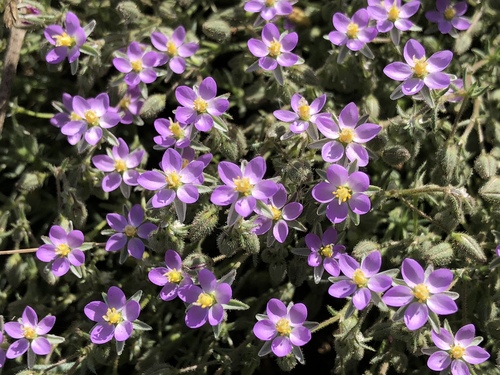
How to Identify Caryophyllaceae

Caryophyllaceae is a plant family in the Plantae kingdom, order Caryophyllales, class Magnoliopsida. The family contains 413 accepted species worldwide. Some species in this family are toxic — exercise caution when handling unknown specimens.

Key Identification Features

For instant identification in the field, use the iNature app — AI-powered, works offline.
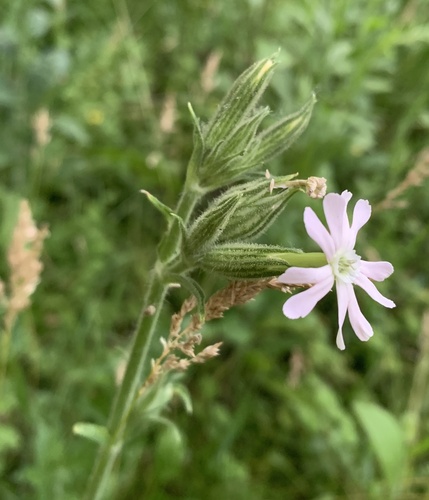
Representative Caryophyllaceae Species

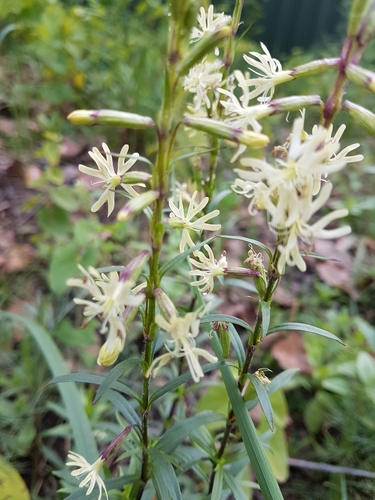
How to identify Silene noctiflora L.

Silene noctiflora L.

Silene noctiflora L.

Silene noctiflora L., or night-flowering catchfly, is a nocturnal-flowered annua…

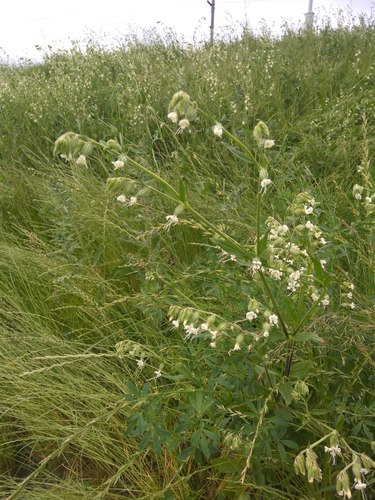
How to identify Silene L.

Silene L.

Silene L.

Silene latifolia (white campion) is a dioecious flowering plant native to Eurasi…

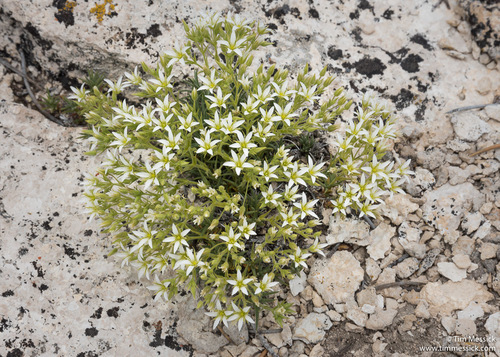
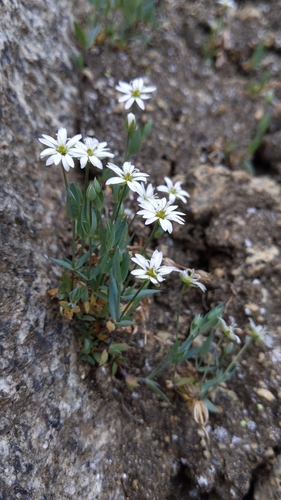
How to identify Sabulina nuttallii (Pax) Dillenb. & Kadereit

Sabulina nuttallii (Pax) Dillenb. & Kadereit

Sabulina nuttallii (Pax) Dillenb. & Kadereit

Sabulina nuttallii is a low-growing rhizomatous perennial herb with hairy mats, …

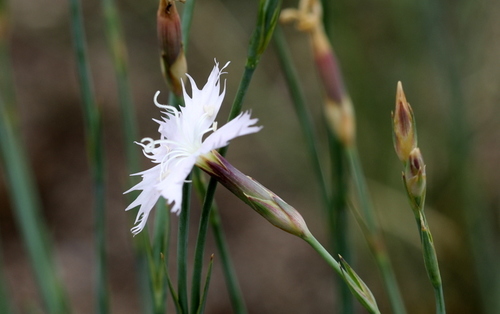
How to identify Dianthus mooiensis B.S.Williams

Dianthus mooiensis B.S.Williams

Dianthus mooiensis B.S.Williams

Dianthus mooiensis is a herbaceous perennial with white small frilly-petaled flo…

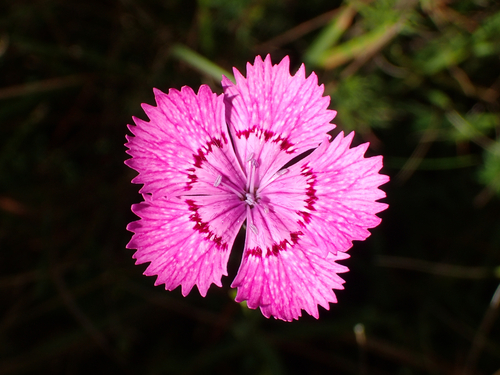
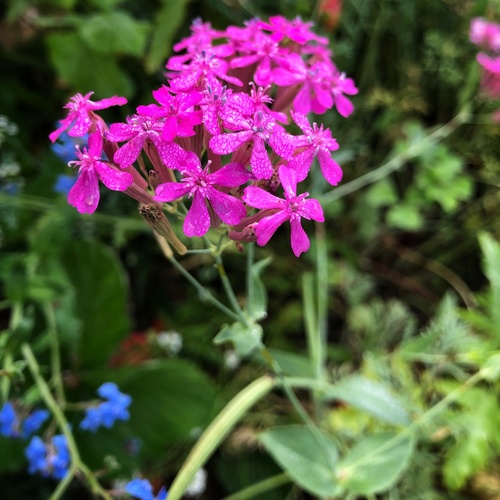
How to identify Dianthus seguieri Vill.

Dianthus seguieri Vill.

Dianthus seguieri Vill.

Dianthus seguieri is a flowering carnation species native to central and souther…

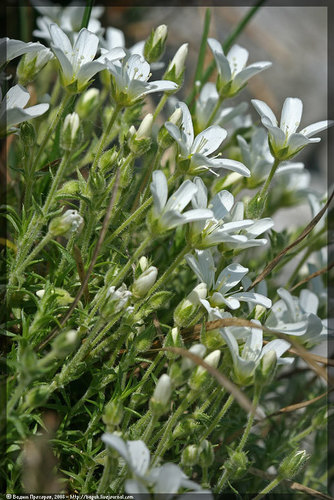
How to identify Arenaria grandiflora L.

Arenaria grandiflora L.

Arenaria grandiflora L.

Arenaria grandiflora L. is a Caryophyllaceae plant native to parts of Europe and…

How to identify Stellaria cuspidata Willd. ex D.F.K.Schltdl.

Stellaria cuspidata Willd. ex D.F.K.Schltdl.

Stellaria cuspidata Willd. ex D.F.K.Schltdl.

How to identify Silene tatarica (L.) Pers.

Silene tatarica (L.) Pers.

Silene tatarica (L.) Pers.

Silene tatarica (Tartarian catchfly) is a riparian flowering plant in genus Sile…

How to identify Silene dichotoma Ehrh.

Silene dichotoma Ehrh.

Silene dichotoma Ehrh.

Silene dichotoma, or forked catchfly, is an annual flowering Caryophyllaceae her…

How to identify Atocion armeria (L.) Raf.

Atocion armeria (L.) Raf.

Atocion armeria (L.) Raf.

Atocion armeria is a flowering plant native to Europe, introduced and invasive i…

How to identify Stellaria longipes Goldie

Stellaria longipes Goldie

Stellaria longipes Goldie

Stellaria longipes is a variable perennial caryophyllaceous flowering plant with…

How to identify Spergularia macrotheca (Hornem. ex Cham. & Schltdl.) Heynh.

Spergularia macrotheca (Hornem. ex Cham. & Schltdl.) Heynh.

Spergularia macrotheca (Hornem. ex Cham. & Schltdl.) Heynh.

Spergularia macrotheca, common name sticky sandspurry, is a Caryophyllaceae pere…

Browse all 413 Caryophyllaceae species →

Frequently Asked Questions

How do you identify Caryophyllaceae?

Caryophyllaceae plants belong to the Caryophyllales order in the Plantae kingdom. They have a distinct inflated calyx, five deeply notched white petals, and bloom from late spring to early autumn. For instant identification, use the iNature app — AI-powered and works offline.

What are the key characteristics of Caryophyllaceae?

Caryophyllaceae is classified in the order Caryophyllales, class Magnoliopsida, phylum Tracheophyta. The plant can grow up to 60 cm tall and features a slender stem with opposite, lance-shaped leaves that have pointed tips.

⚠️ Are any Caryophyllaceae species poisonous?

Yes, some Caryophyllaceae species are toxic or poisonous. Always exercise caution with unknown specimens. View poisonous Caryophyllaceae species or browse the full poisonous species guide.

Sources: GBIF, iNaturalist, Wikipedia · Disclaimer

Start Exploring Nature Today

Download iNature for free. 10 identifications on us. No account needed. No credit card required.

App Store
Scan to download from App Store

Scan with iPhone camera

Google Play
Scan to download from Google Play

Scan with Android camera