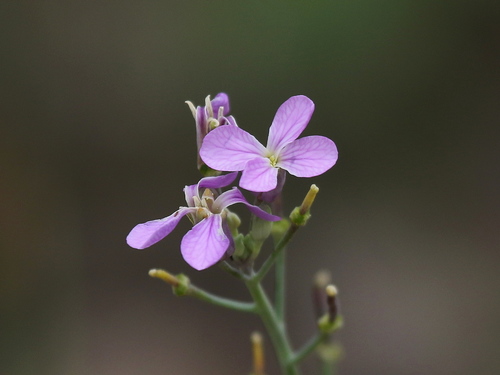
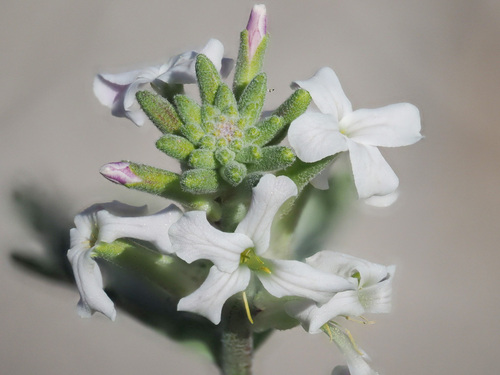
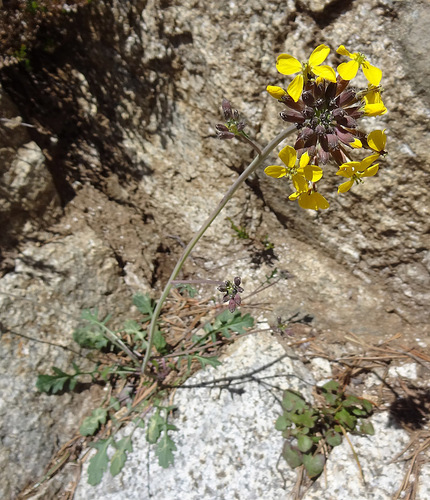
How to Identify Brassicaceae — Mustard Family

Brassicaceae (Mustard Family) is a plant family in the Plantae kingdom, order Brassicales, class Magnoliopsida. The family contains 541 accepted species worldwide. Some species in this family are toxic — exercise caution when handling unknown specimens.

Key Identification Features

For instant identification in the field, use the iNature app — AI-powered, works offline.
Representative Brassicaceae Species

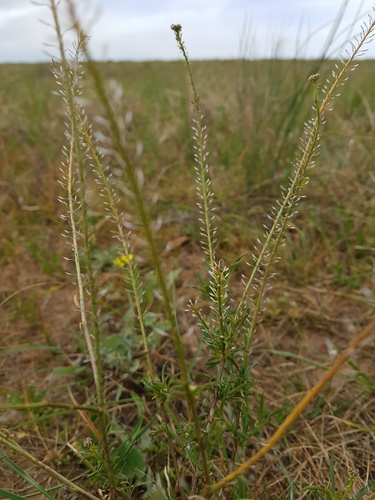
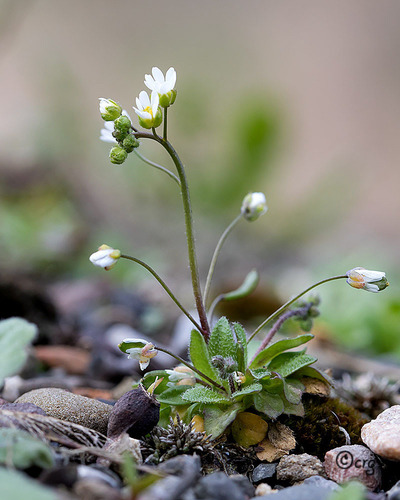
How to identify Draba verna L.

Draba verna L.

Draba verna L.

Draba verna, or common whitlowgrass, is a small spring-flowering annual mustard …

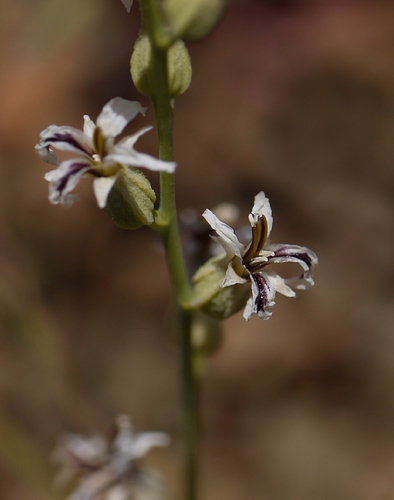
How to identify Streptanthus barbiger Greene

Streptanthus barbiger Greene

Streptanthus barbiger Greene

Streptanthus barbiger, or bearded jewelflower, is an annual mustard-family flowe…

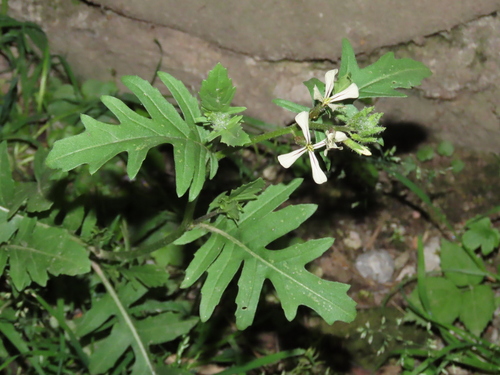
How to identify Eruca vesicaria (L.) Cav.

Eruca vesicaria (L.) Cav.

Eruca vesicaria (L.) Cav.

Eruca vesicaria is a distinct Eruca species native to western Mediterranean Nort…

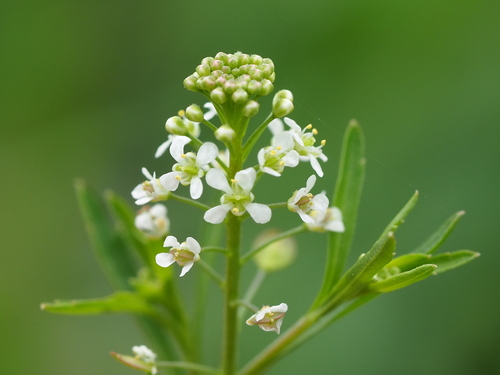
How to identify Lepidium virginicum L.

Lepidium virginicum L.

Lepidium virginicum L.

Lepidium virginicum is an edible herbaceous annual or biennial with a peppery ta…

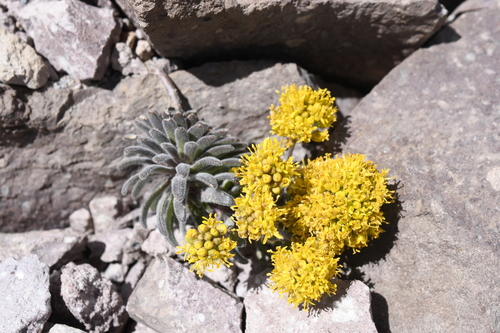
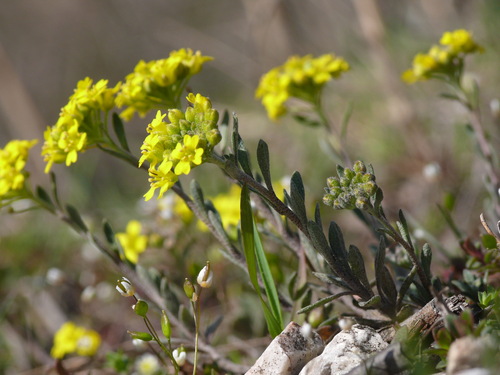
How to identify Draba aureola S.Watson

Draba aureola S.Watson

Draba aureola S.Watson

Draba aureola is a perennial yellow-flowering mustard native to rocky high eleva…

How to identify Lepidium africanum (Burm.f.) DC.

Lepidium africanum (Burm.f.) DC.

Lepidium africanum (Burm.f.) DC.

Lepidium africanum is an annual/perennial flowering plant in Brassicaceae found …

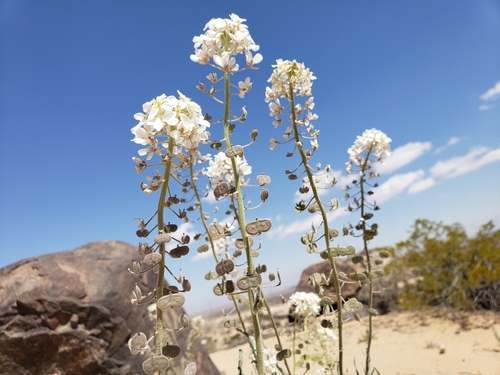
How to identify Dimorphocarpa wislizenii (Engelm.) Rollins

Dimorphocarpa wislizenii (Engelm.) Rollins

Dimorphocarpa wislizenii (Engelm.) Rollins

Dimorphocarpa wislizenii, commonly called spectacle pod, is an annual herb with …

How to identify Alyssum gmelinii Jord. & Fourr.

Alyssum gmelinii Jord. & Fourr.

Alyssum gmelinii Jord. & Fourr.

Alyssum gmelinii is a synonym for a subspecies of flowering plant in Brassicacea…

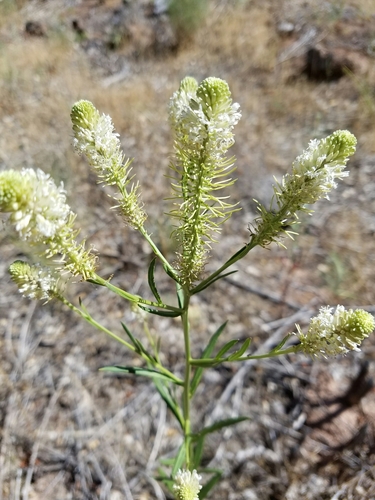
How to identify Thelypodium integrifolium (Nutt.) Endl.

Thelypodium integrifolium (Nutt.) Endl.

Thelypodium integrifolium (Nutt.) Endl.

Thelypodium integrifolium is a tall biennial herb with waxy foliage and spikelik…

How to identify Hesperidanthus linearifolius (A.Gray) Rydb.

Hesperidanthus linearifolius (A.Gray) Rydb.

Hesperidanthus linearifolius (A.Gray) Rydb.

Hesperidanthus linearifolius is a perennial mustard herb with purple flowers, na…

How to identify Dithyrea californica Harv.

Dithyrea californica Harv.

Dithyrea californica Harv.

Dithyrea californica is an annual Brassicaceae plant found in Southwestern Unite…

How to identify Coincya monensis (L.) Greuter & Burdet

Coincya monensis (L.) Greuter & Burdet

Coincya monensis (L.) Greuter & Burdet

Coincya monensis is a Brassicaceae plant native to western Europe and Morocco, i…

Browse all 541 Brassicaceae species →

Frequently Asked Questions

How do you identify Brassicaceae?

Brassicaceae plants belong to the Brassicales order in the Plantae kingdom. Leaves are usually smooth-edged, but sometimes have a single tooth on one or both margins, and taper gradually into a more-or-less distinct petiole. For instant identification, use the iNature app — AI-powered and works offline.

What are the key characteristics of Brassicaceae?

Brassicaceae is classified in the order Brassicales, class Magnoliopsida, phylum Tracheophyta. However, the two taxa differ in many morphological features, including sepal persistence, silique shape, and growth habit.

⚠️ Are any Brassicaceae species poisonous?

Yes, some Brassicaceae species are toxic or poisonous. Always exercise caution with unknown specimens. View poisonous Brassicaceae species or browse the full poisonous species guide.

Sources: GBIF, iNaturalist, Wikipedia · Disclaimer

Start Exploring Nature Today

Download iNature for free. 10 identifications on us. No account needed. No credit card required.

Download Free on App Store