How to Identify Apocynaceae

Apocynaceae is a plant family in the Plantae kingdom, order Gentianales, class Magnoliopsida. The family contains 426 accepted species worldwide. Some species in this family are toxic — exercise caution when handling unknown specimens.

Key Identification Features

For instant identification in the field, use the iNature app — AI-powered, works offline.
Representative Apocynaceae Species

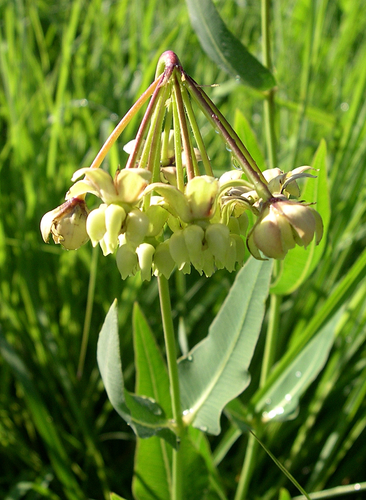
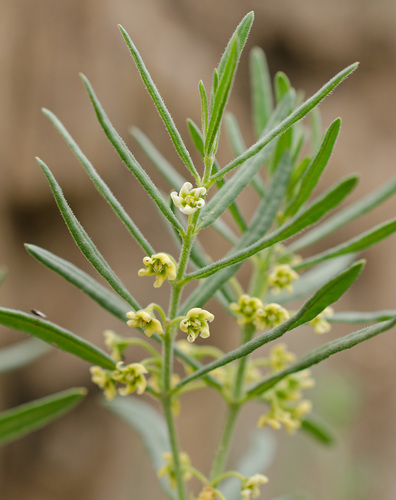
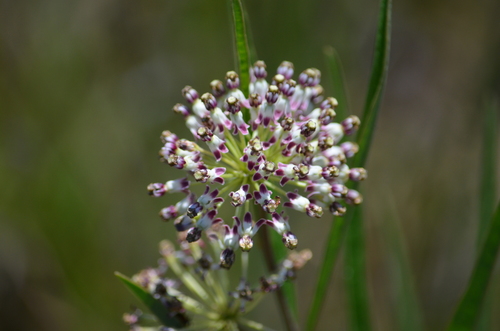
How to identify Asclepias longifolia Michx.

Asclepias longifolia Michx.

Asclepias longifolia Michx.

Asclepias longifolia (longleaf milkweed) is a rare flowering plant native to the…

How to identify Asclepias meadii Torr. ex A.Gray

Asclepias meadii Torr. ex A.Gray

Asclepias meadii Torr. ex A.Gray

Asclepias meadii is a rare long-lived milkweed native to the US Midwest, threate…

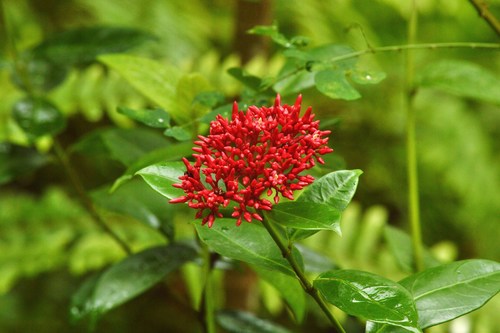
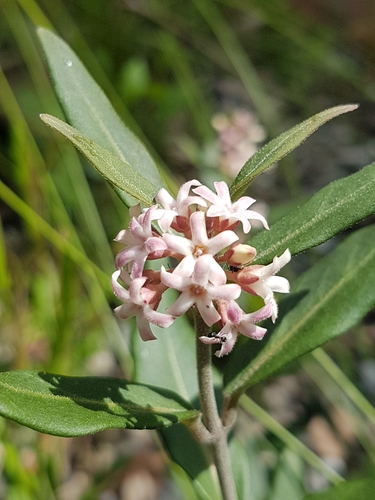
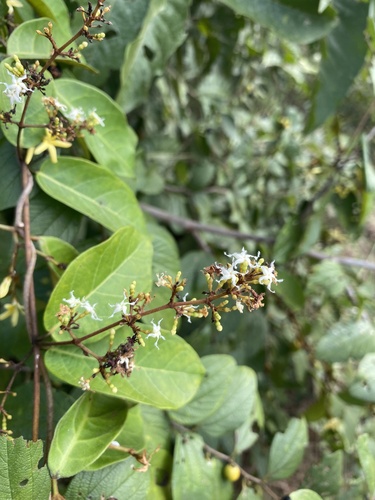
How to identify Pinochia corymbosa (Jacq.) M.E.Endress & B.F.Hansen

Pinochia corymbosa (Jacq.) M.E.Endress & B.F.Hansen

Pinochia corymbosa (Jacq.) M.E.Endress & B.F.Hansen

Pinochia corymbosa is an Apocynaceae flowering plant native to the Greater Antil…

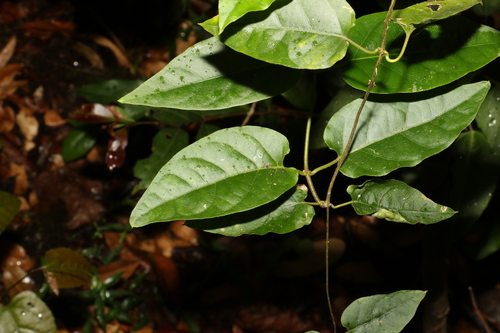
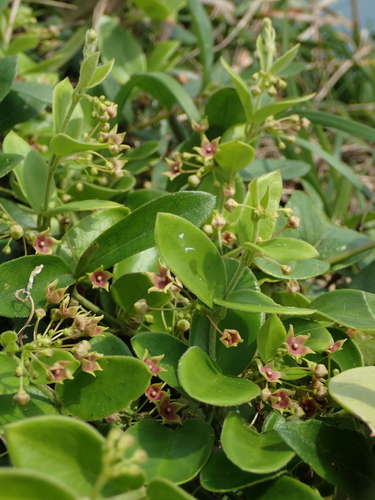
How to identify Parsonsia velutina R.Br.

Parsonsia velutina R.Br.

Parsonsia velutina R.Br.

Parsonsia velutina R.Br. is a climbing plant with hairy opposite leaves, small m…

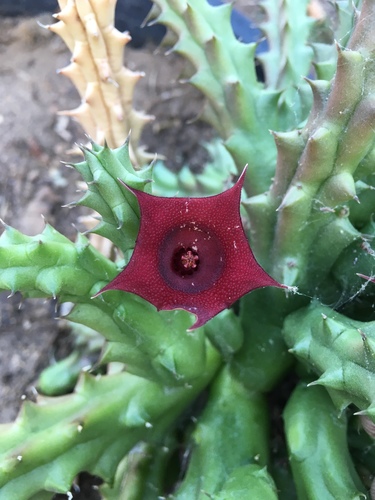
How to identify Huernia schneideriana A.Berger

Huernia schneideriana A.Berger

Huernia schneideriana A.Berger

Huernia schneideriana is a clumping succulent commonly grown as a decorative hou…

How to identify Leichhardtia suaveolens (R.Br.) P.I.Forst.

Leichhardtia suaveolens (R.Br.) P.I.Forst.

Leichhardtia suaveolens (R.Br.) P.I.Forst.

Leichhardtia suaveolens is an Australian milkweed vine or shrub that grows in ea…

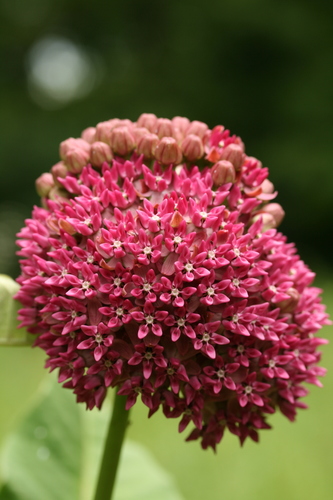
How to identify Asclepias purpurascens L.

Asclepias purpurascens L.

Asclepias purpurascens L.

Purple milkweed (Asclepias purpurascens) is a shade-preferring milkweed native t…

How to identify Cynanchum thesioides (Freyn) K.Schum.

Cynanchum thesioides (Freyn) K.Schum.

Cynanchum thesioides (Freyn) K.Schum.

Cynanchum thesioides is a perennial herb with white latex, growing from a creepi…

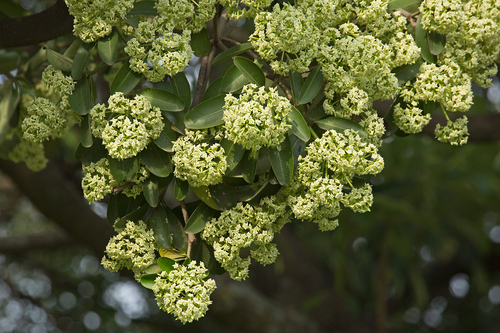
How to identify Alstonia scholaris (L.) R.Br.

Alstonia scholaris (L.) R.Br.

Alstonia scholaris (L.) R.Br.

Alstonia scholaris is a large toxic tree native to tropical and subtropical Asia…

⚠️ Poisonous
How to identify Ichnocarpus frutescens (L.) W.T.Aiton

Ichnocarpus frutescens (L.) W.T.Aiton

Ichnocarpus frutescens (L.) W.T.Aiton

Ichnocarpus frutescens, or black creeper, is a flowering lianous woody shrub nat…

How to identify Vincetoxicum hirsutum (Decne.) Kuntze

Vincetoxicum hirsutum (Decne.) Kuntze

Vincetoxicum hirsutum (Decne.) Kuntze

Vincetoxicum hirsutum is a climbing medicinal perennial vine native to Eastern a…

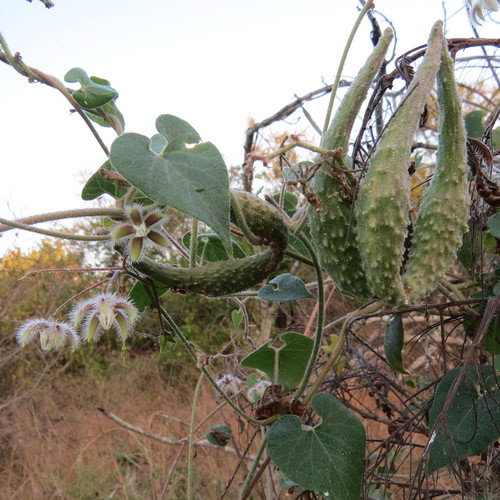
How to identify Pergularia daemia (Forssk.) Chiov.

Pergularia daemia (Forssk.) Chiov.

Pergularia daemia (Forssk.) Chiov.

Pergularia daemia is a flowering plant found across Africa, South Asia and the A…

Browse all 426 Apocynaceae species →

Frequently Asked Questions

How do you identify Apocynaceae?

Apocynaceae plants belong to the Gentianales order in the Plantae kingdom. It bears broad, opposite leaves covered in brown hairs, a feature that gives the plant its common name. For instant identification, use the iNature app — AI-powered and works offline.

What are the key characteristics of Apocynaceae?

Apocynaceae is classified in the order Gentianales, class Magnoliopsida, phylum Tracheophyta. They are most often dark crimson or burgundy, with a velvety texture, and frequently feature a darker ring in their center.

⚠️ Are any Apocynaceae species poisonous?

Yes, some Apocynaceae species are toxic or poisonous. Always exercise caution with unknown specimens. View poisonous Apocynaceae species or browse the full poisonous species guide.

Sources: GBIF, iNaturalist, Wikipedia · Disclaimer

Start Exploring Nature Today

Download iNature for free. 10 identifications on us. No account needed. No credit card required.

Download Free on App Store