Key Identification Features
- spongiosa, and can be distinguished from that species by key features: A.
For instant identification in the field, use the iNature app — AI-powered, works offline.
Amaranthaceae is a plant family in the Plantae kingdom, order Caryophyllales, class Magnoliopsida. The family contains 329 accepted species worldwide. Some species in this family are toxic — exercise caution when handling unknown specimens.
For instant identification in the field, use the iNature app — AI-powered, works offline.
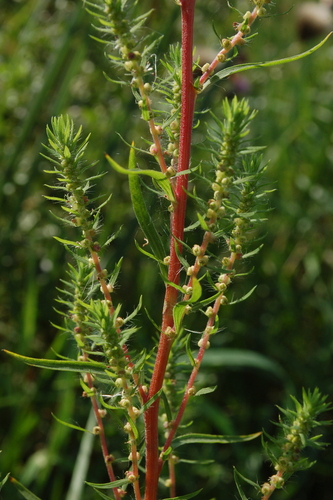
Bassia scoparia (L.) A.J.Scott
Bassia scoparia is a widespread tumbleweed plant, invasive in many areas but wit…

Maireana oppositifolia (F.Muell.) Paul G.Wilson
Maireana oppositifolia, or heathy bluebush, is a compact branched shrub native t…
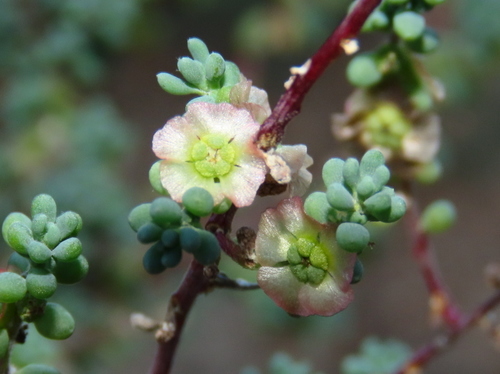
Maireana brevifolia (R.Br.) Paul G.Wilson
Maireana brevifolia, or cotton bush, is a short-lived Australian shrub naturalis…
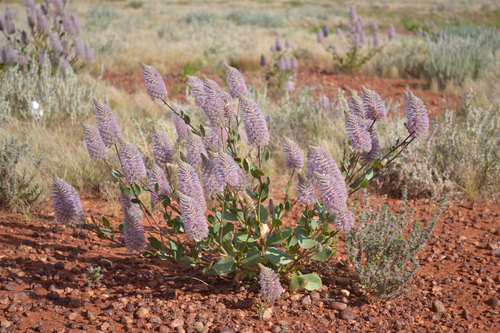
Ptilotus exaltatus Nees
Ptilotus exaltatus (pink mulla mulla) is an Australian native herb popular in ho…
⚠️ Poisonous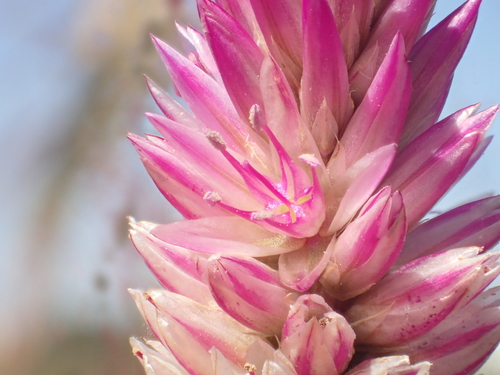
Celosia argentea L.
Celosia argentea L. is an ornamental and edible plant cultivated worldwide, with…
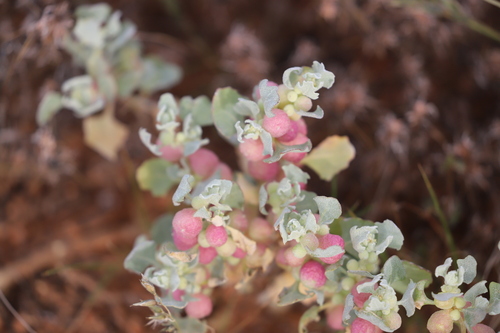
Atriplex holocarpa F.Muell.
Atriplex holocarpa is a short-lived Australian halophytic saltbush tolerant of s…
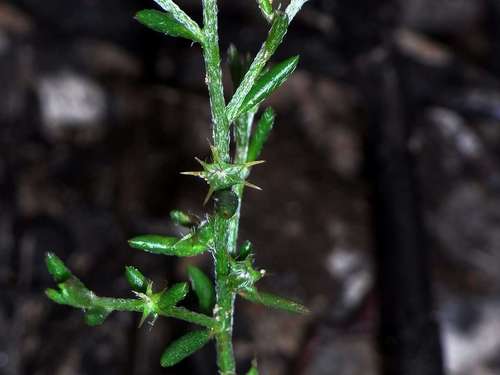
Sclerolaena parviflora (R.H.Anderson) A.J.Scott
Sclerolaena parviflora is a flowering amaranth found in central and southern mai…
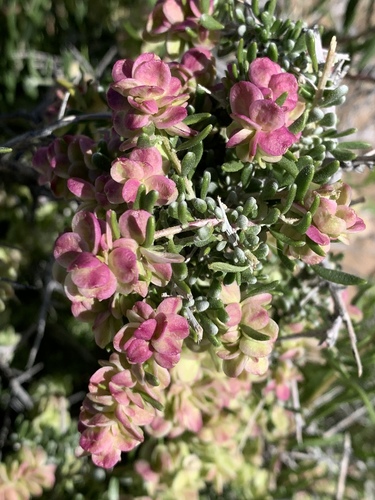
Grayia spinosa (Hook.) Moq.
Grayia spinosa is a small, often colorful dioecious shrub native to dry areas of…
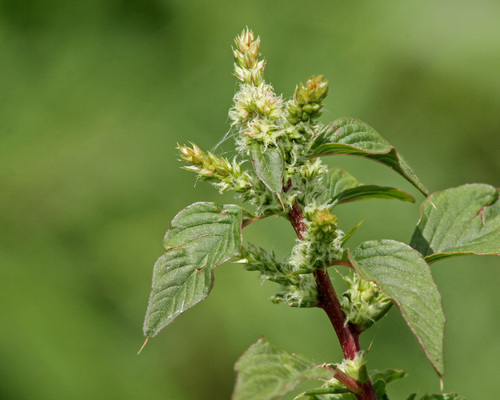
Amaranthus spinosus L.
Amaranthus spinosus L. is a spiny amaranth used globally for food, dye, and trad…
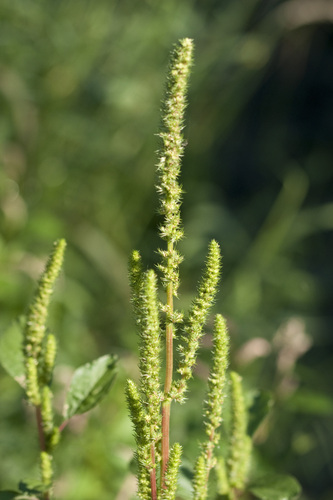
Amaranthus powellii S.Watson
Amaranthus powellii S.Watson is an erect annual herb with distinct leaf shapes, …
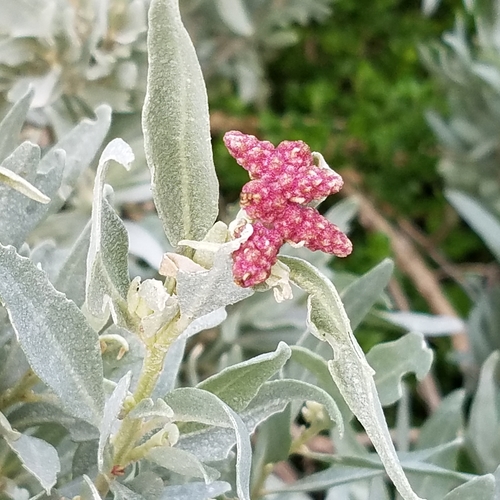
Atriplex cinerea Poir.
Atriplex cinerea Poir. is a salt-tolerant coastal shrub native to Australia with…
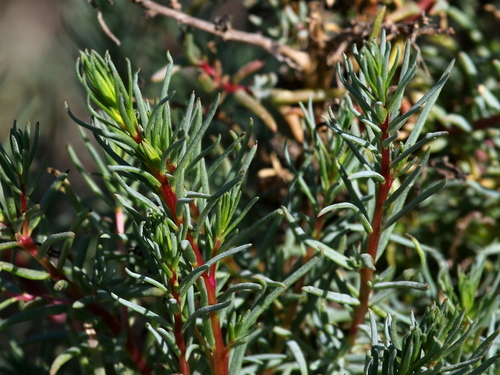
Suaeda esteroa Ferren & S.A.Whitmore
Suaeda esteroa is a succulent-leaved subshrub of flowering plant native to coast…
Amaranthaceae plants belong to the Caryophyllales order in the Plantae kingdom. spongiosa, and can be distinguished from that species by key features: A. For instant identification, use the iNature app — AI-powered and works offline.
Amaranthaceae is classified in the order Caryophyllales, class Magnoliopsida, phylum Tracheophyta. The family contains 329 accepted species worldwide.
Yes, some Amaranthaceae species are toxic or poisonous. Always exercise caution with unknown specimens. View poisonous Amaranthaceae species or browse the full poisonous species guide.
Sources: GBIF, iNaturalist, Wikipedia · Disclaimer
Download iNature for free. 10 identifications on us. No account needed. No credit card required.
Download Free on App Store
