Butterflies and moths (order Lepidoptera) are among the most beautiful insects on Earth. With their colorful wings and fascinating life cycles, they captivate nature lovers worldwide. This guide covers species across multiple families.
🦋 Insect Guide
Butterflies & Moths — Lepidoptera Identification Guide
1
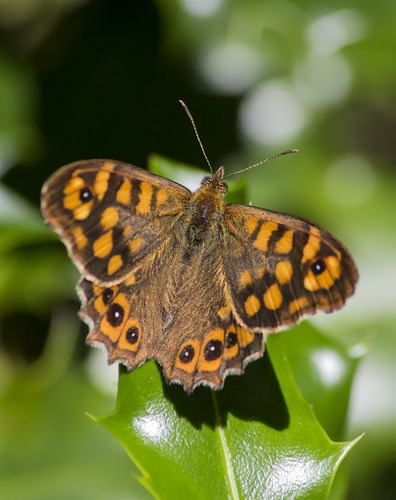
Pararge aegeria is a Palearctic butterfly with four subspecies and morphology varying along a north-south geographic cline.
Pararge aegeria (Linnaeus, 1758), commonly called the speckled wood butterfly, has an average wingspan of 5.1 cm (2 in) for both males and females, though males are usually slightly smaller than females. Males have a row of grayish-brown scent scales on their forewings that females do not possess, and females have brighter, more distinct markings than males. Four subspecies are recognized, with di...
View full details → 2
Pararge petropolitana (Fabricius, 1787)
Pararge petropolitana (Fabricius, 1787)
🦋 Animalia Nymphalidae
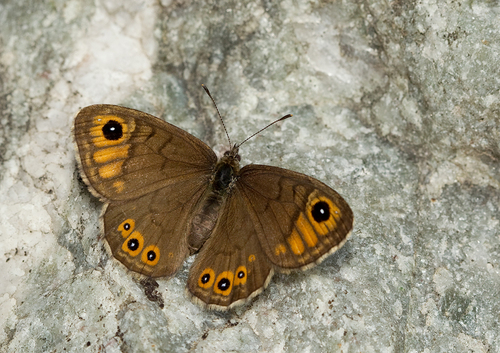
Pararge petropolitana is a Eurasian butterfly species whose larvae feed on various grasses.
This species was described as Pararge hiera F. (45 d) in Seitz's work. Adults are very similar in upperside appearance to the related species Pararge maera, but are always black-brown, matching the color of the darkest form of maera. Their forewings are less pointed and have a straighter distal margin. On the underside of the forewing, the russet-yellow distal band does not extend uninterrupted to...
View full details → 3
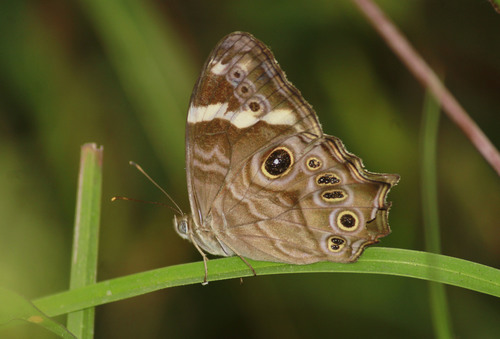
Lethe rohria is a butterfly species with distinct male and female wing markings found across the Himalayas to China.
Lethe rohria, formally described by Fabricius in 1787, has shared and sex-specific wing traits for both males and females. On the upperside of the wings, both sexes are van Dyke brown, with color darkening slightly towards the apex of the forewing, particularly in females. For males, the forewing has one costal and two preapical white spots. On the male hindwing, the underside's eyespots (ocelli) ...
View full details → 4
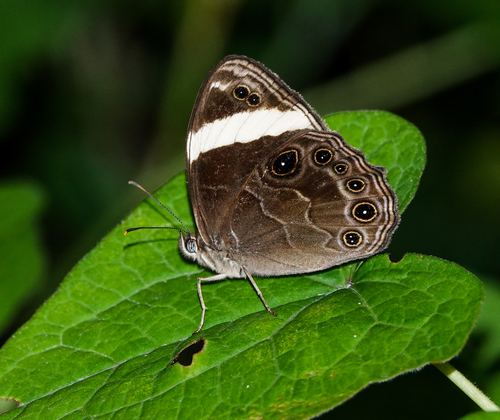
Lethe verma, the straight-banded treebrown, is a Satyrinae butterfly species found in the Indomalayan realm.
Lethe verma, commonly known as the straight-banded treebrown, is a species of butterfly that belongs to the Satyrinae subfamily. This species is found in the Indomalayan realm. Its binomial name is Lethe verma (Kollar, 1844).
View full details → 5
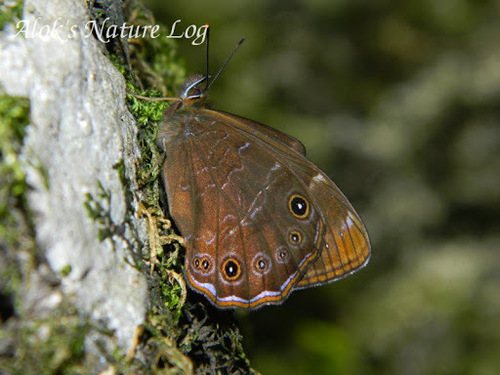
Lethe sidonis (common woodbrown) is a Satyrinae butterfly found in parts of the Indomalayan realm.
Lethe sidonis, commonly known as the common woodbrown, is a species of Satyrinae butterfly. It occurs in the Indomalayan realm, with recorded locations including Tibet, the region from Kulu to Sikkim in the Eastern Himalayas, North-East India, and the South Shan States.
View full details → 6
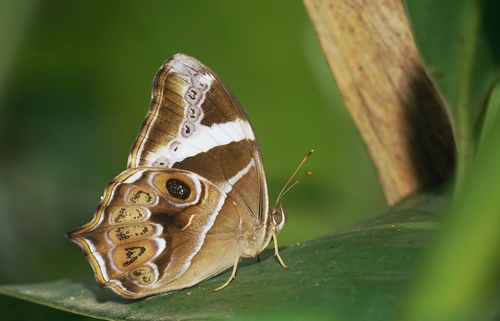
This is a detailed description of the butterfly species Lethe europa, including its subspecies from the Nicobar Islands.
Lethe europa was named by Fabricius in 1775. For this species, the inner third of the hindwing is covered in long brown hairs. Males have a rich dark brown upperside. On the male forewing, the oblique short white discal fascia from the underside shows through the upperside, with two unclear black spots or ocelli, followed by two prominent white spots; the upper of these two spots is double. Along ...
View full details → 7
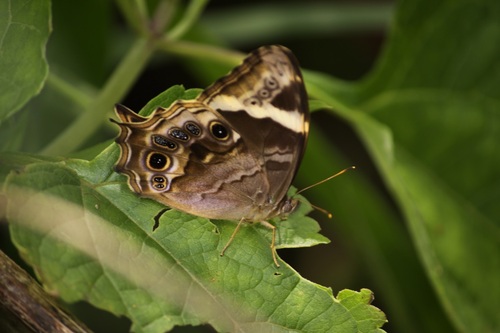
Lethe drypetis is a brown butterfly species with 64–68mm wingspan, found in southern India and Sri Lanka.
Lethe drypetis (Hewitson, 1863) has distinct appearance traits for males and females. For males: The upper side of the wings is a very dark Vandyke brown. The forewing is uniformly colored, while the hindwing has a postdiscal series of three or four blind black ocellar spots. The underside of the wings is brown. On the forewing underside, the area below vein 2 and the terminal margin are paler. A ...
View full details → 8
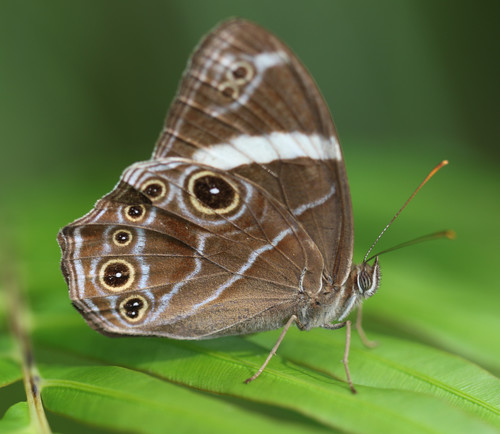
Lethe confusa Aurivillius, 1897 is a butterfly species ranging from the Himalayas to Java, with a 54–64 mm wingspan.
Lethe confusa Aurivillius, 1897 can be described by the following morphological characteristics. The apex of vein 4 on the hindwing has a dentate, or toothed, edge. The ground color of the upperside of the wings is Vandyke brown. An oblique, slightly curved discal white band crosses the forewing; the margins of this band are more even and regular than the equivalent band found on female Lethe rohr...
View full details → 9
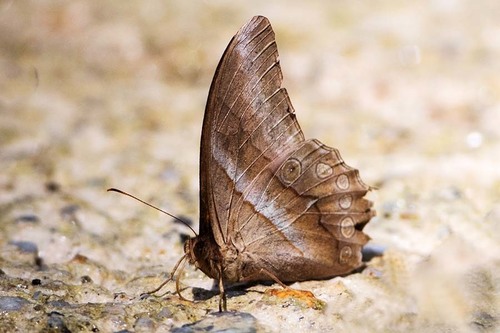
Common red forester (Lethe mekara) is a Satyrinae butterfly found in India and Southeast Asia.
Lethe mekara, commonly called the common red forester, is a species of Satyrinae butterfly. This species is found in India and Southeast Asia.
View full details → 10
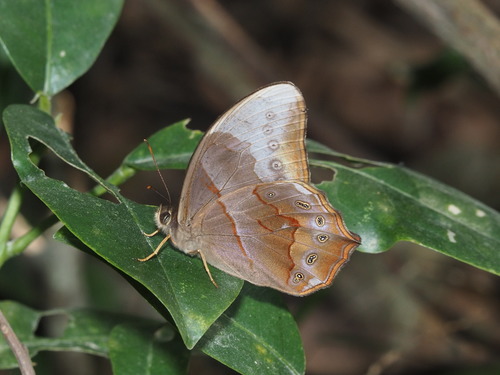
Lethe chandica, the angled red forester, is a Satyrinae butterfly found in the Indomalayan realm.
Lethe chandica, commonly known as the angled red forester, is a species of butterfly that belongs to the Satyrinae subfamily. It is found in the Indomalayan realm. Its accepted scientific name is Lethe chandica (Moore, 1857).
View full details → 11
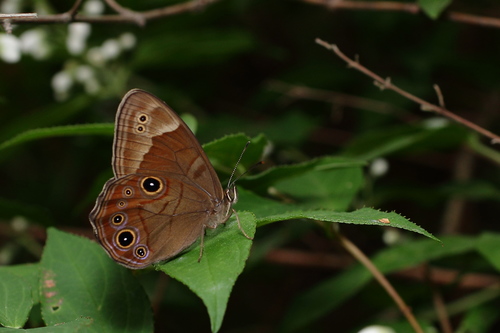
Lethe diana is a brown butterfly found in East Asia that feeds on tree and bamboo tissues and carrion fluids.
Lethe diana (Butler, 1866) has a wingspan ranging from 45 to 55 mm. Both its forewings and hindwings are dark brown. Forewings sometimes have white belt-like patterns, which are more distinct on female individuals. Darker brown veins are clearly noticeable across the wings. One or two small eyespots are found on the forewings, while the hindwing has six eyespots that vary in size; eyespot patterns...
View full details → 12
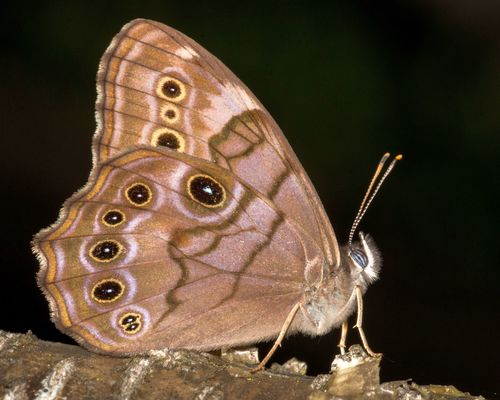
Lethe anthedon is a butterfly species with specific feeding habits and overwintering as larvae.
Lethe anthedon has a wingspan ranging from 1 1/2 to 2 1/2 inches (43 to 67 mm). Both the upperside and underside of its wings are brown; the upperside also features dark eyespots. Adult individuals of this species feed on dung, fungi, carrion, and sap that comes from willows, poplars, and birches. Its larvae feed on a variety of grasses: these include Leersia virginica, species from the genera Eri...
View full details → 13
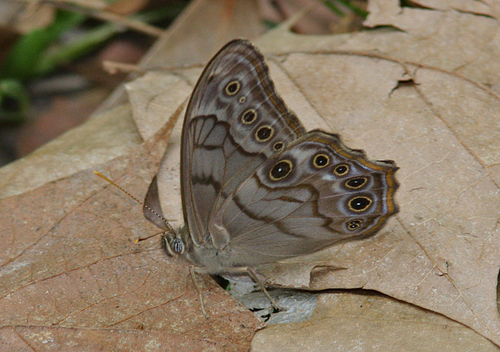
The creole pearly-eye (Lethe creola) is a brush-footed butterfly species found in the southeastern United States.
Lethe creola, commonly known as the creole pearly-eye, is a species of brush-footed butterfly belonging to the family Nymphalidae. This species is found in the United States, ranging from North Carolina and central Georgia westward to eastern Oklahoma and eastern Texas. Some taxonomic authorities reclassify this species into the genus Enodia, under the scientific name Enodia creola. The MONA (also...
View full details → 14
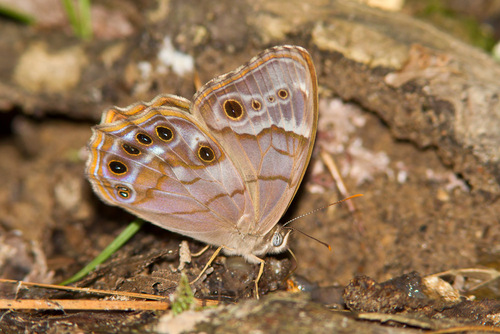
Enodia portlandia is a Nymphalidae butterfly found in the southeastern United States with a 56–70 mm wingspan.
Enodia portlandia, commonly known as the southern pearly eye, Portland pearlyeye, or simply pearly eye, is a butterfly species belonging to the family Nymphalidae. This species is found in the United States, ranging from eastern Oklahoma and eastern Texas eastward through the country’s southeastern region. The wingspan of adult Enodia portlandia measures between 56 and 70 mm. Adult butterflies fee...
View full details → 15
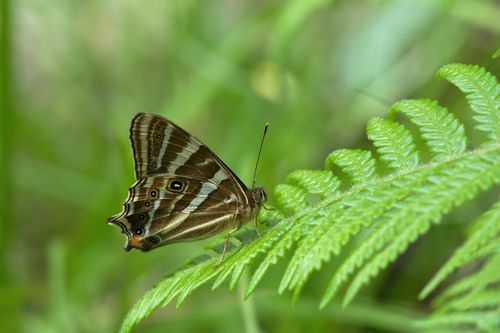
Lethe baladeva is an uncommon locally resident Himalayan butterfly ranging from Uttarakhand to Sikkim in India.
Lethe baladeva (Moore, 1865) reaches 50 to 77 mm in size. It is a fast flier that is quick to settle in undergrowth and on clumps of bamboo. Individuals fly between April and October, at elevations from 1500 up to 2700 metres in the Himalayas. In India, this species is found from Uttarakhand east to Sikkim. It is an uncommon butterfly, but it is locally resident in its habitats.
View full details → 16
Lethe eurydice appalachia Chermock, 1947
Lethe eurydice appalachia Chermock, 1947
🦋 Animalia Nymphalidae
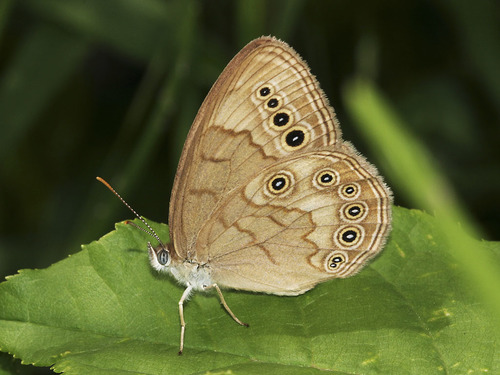
Satyrodes eurydice, the eyed brown, is a North American Satyrinae butterfly with specific Carex-feeding larvae.
Satyrodes eurydice, commonly known as the eyed brown or marsh eyed brown, is a species of Satyrinae butterfly native to North America. This species has two recognized subspecies: the nominate subspecies S. e. eurydice, and the smokey eyed brown S. e. fumosa, first described by Leussler in 1916. The wingspan of this butterfly ranges from 38 to 48 mm. It produces one brood per year, with a flight pe...
View full details → 17
Lethe eurydice, the eyed brown, is a North American Satyrinae butterfly with larvae that feed on Carex sedges.
This butterfly species, currently cited as Lethe eurydice Linnaeus, 1763, is also known under the synonym Satyrodes eurydice. It is commonly called the eyed brown or marsh eyed brown, and is a member of the Satyrinae subfamily of butterflies native to North America. This species has two recognized subspecies: the nominate subspecies Lethe eurydice eurydice, commonly called the eyed brown, and Leth...
View full details → 18
Neope goschkevitschii (Ménétriés, 1857)
Neope goschkevitschii (Ménétriés, 1857)
🦋 Animalia Nymphalidae
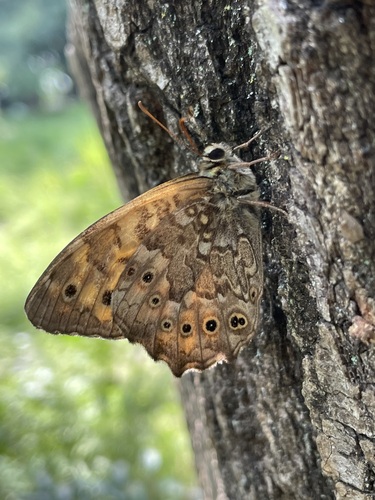
Neope goschkevitschii is an East Asian Nymphalidae butterfly long confused with the similar species Neope niphonica.
Neope goschkevitschii is a butterfly species belonging to the Nymphalidae family that is found in East Asia. It strongly resembles another related species, Neope niphonica, and the two were classified as a single species for a long period of time.
View full details → 19
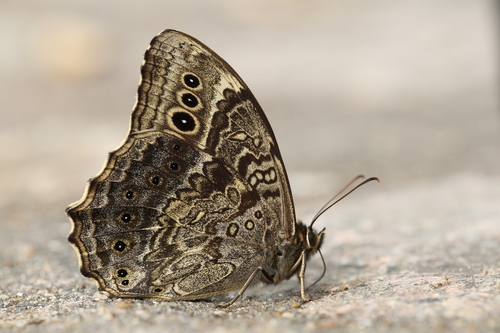
Neope muirheadii, the black-spotted labyrinth, is a Nymphalidae butterfly found in China, Southeast Asia, and Taiwan.
Neope muirheadii, commonly known as the black-spotted labyrinth, is a butterfly species that belongs to the Nymphalidae family. This species can be found in western and central China, Southeast Asia, and Taiwan. Its accepted scientific name is Neope muirheadii (Felder, 1862).
View full details → 20
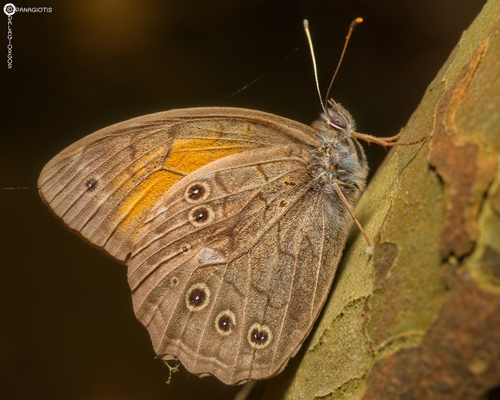
Kirinia roxelana, the lattice brown, is a butterfly found in southeastern Europe and the Near East with one annual generation.
This species, known as the lattice brown butterfly, has a scientific name of Kirinia roxelana (Cramer, 1777). Forewing length measures 29 to 31 mm, or 1.1 to 1.2 inches. In Seitz's description, it is the largest species in the Pararge group, with strongly dentate hindwing margins that are especially pronounced in females. Males are black-brown, while females are grey-brown with a reddish-yellow fo...
View full details → 21
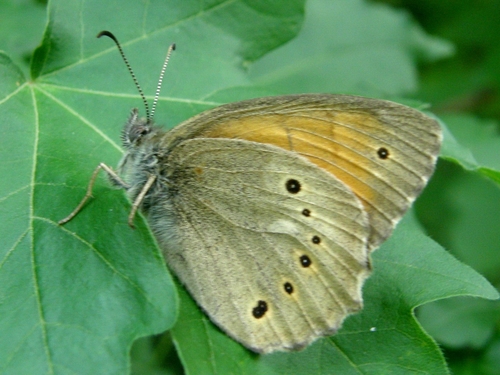
Kirinia climene is a small steppe-dwelling butterfly species found across parts of Eastern Europe and Western/Central Asia.
This species, originally documented by Esper in 1783, is classified as Kirinia climene, with the synonyms P. climene Esp. (misspelled clymene), synclimene Hbn. It is significantly smaller than the closely related species Kirinia roxelana. Compared to forewing size, its hindwing is smaller than it is in K. roxelana, and the hindwing’s distal margin is not dentate. The ocelli on the underside of the...
View full details → 22
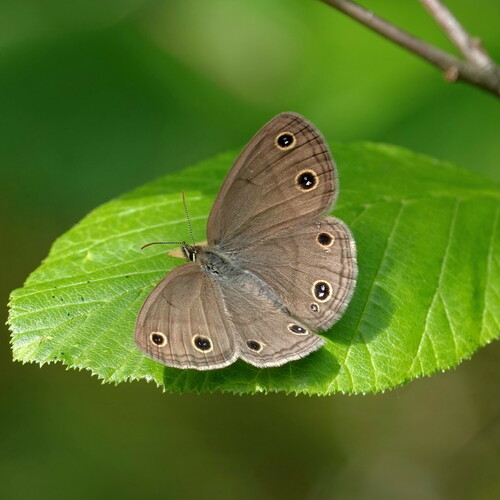
Euptychia cymela (Little Wood Satyr) is a butterfly found in eastern North America with distinct wing markings and specific woodland habitat preferences.
Adults of Euptychia cymela Cramer, 1779 (Little Wood Satyr) have a wingspan of 29–48 mm. The forewing has two black eyespots rimmed with yellow on both the dorsal and ventral sides. The hindwing has two spots on the dorsal side, and smaller spots on the ventral side. All other parts of the wings are light brown. While it has similar markings, the Little Wood Satyr is slightly larger than Hermeupty...
View full details → 23
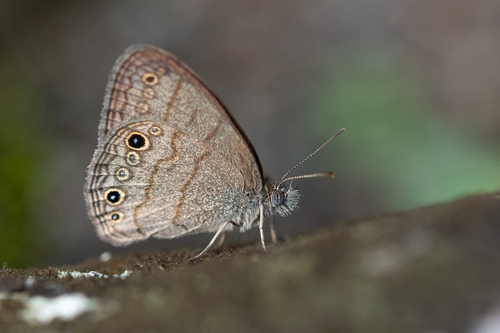
Hermeuptychia hermes, the Hermes satyr, is a Nymphalidae butterfly found from southern Texas to Bolivia and Brazil.
Hermeuptychia hermes, commonly known as the Hermes satyr, is a butterfly species belonging to the genus Hermeuptychia in the Nymphalidae family. This species has a distribution that ranges from southern Texas in the United States, through Mexico, and extends to Brazil (occurring in Rio de Janeiro and Mato Grosso do Sul), Suriname, and Bolivia. Its natural habitat includes forest edges and shaded l...
View full details → 24
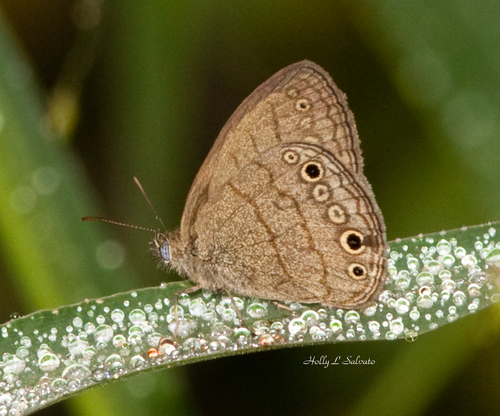
Hermeuptychia hermybius is a nymphalid butterfly found in southern Texas and adjacent Mexico, with larvae feeding on Panicum maximus.
Hermeuptychia hermybius Grishin, 2014 is a butterfly species that belongs to the family Nymphalidae. Its confirmed recorded range spans southern North America. In the United States, it occurs in the lower Rio Grande Valley region of Texas, along the Rio Grande between Laredo and the Gulf coast. It is also found in adjacent northern Mexico, specifically in the states of Tamaulipas and San Luis Poto...
View full details → 25
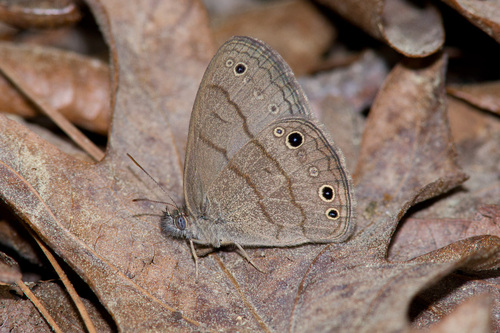
The intricate satyr (Hermeuptychia intricata) is a nymphalid butterfly found on the US eastern coastal plain, with 16.5 mm long forewings.
Hermeuptychia intricata, commonly known as the intricate satyr, is a butterfly species belonging to the family Nymphalidae. It has been recorded on the coastal plains of the eastern United States, and is currently documented from the states of Texas, Louisiana, Florida, South Carolina, and North Carolina. The forewings of this species measure 16.5 mm in length.
View full details → 26
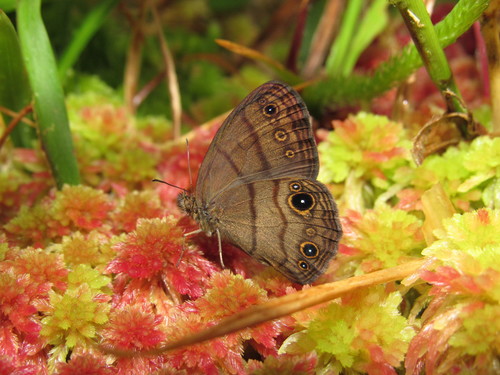
Hermeuptychia harmonia is a Nymphalidae butterfly species found from Costa Rica to northern South America, with larvae feeding on Cyperus luzulae.
Hermeuptychia harmonia is a butterfly species that belongs to the Nymphalidae family. Arthur Gardiner Butler first described this species in 1867. Its native range extends from Costa Rica to the South American countries of Ecuador, Colombia, and Peru. The larvae of Hermeuptychia harmonia feed on Cyperus luzulae.
View full details → 27
Argyreuptychia penelope Fabricius, 1775
Argyreuptychia penelope Fabricius, 1775
🦋 Animalia Nymphalidae
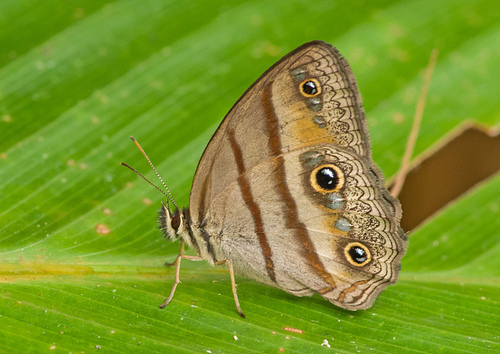
Penelope's ringlet (Cissia penelope, also called Argyreuptychia penelope) is a butterfly species in the genus Cissia.
Argyreuptychia penelope Fabricius, 1775 is also referred to as Cissia penelope. It bears the common name Penelope's ringlet, and it is a butterfly species that belongs to the genus Cissia.
View full details → 28
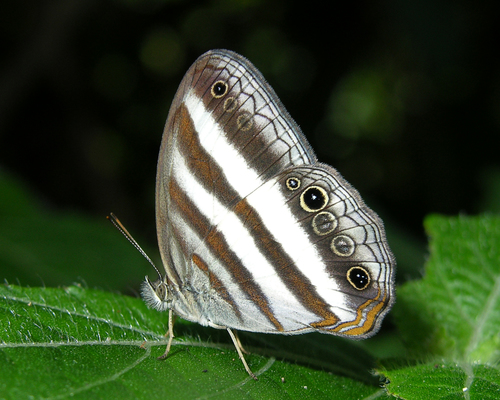
Pareuptychia ocirrhoe is a Nymphalidae butterfly found from Mexico to northern Argentina that feeds on Eleusine as larvae.
Pareuptychia ocirrhoe, commonly known as the two-banded satyr or banded white ringlet, is a butterfly species that belongs to the family Nymphalidae. This species occurs in the geographic range from Mexico to the Guyanas, Paraguay, and northern Argentina. Its native habitat is forests. The wingspan of this butterfly reaches approximately 37 mm. The larvae of Pareuptychia ocirrhoe feed on plants fr...
View full details → 29
Pareuptychia metaleuca Boisduval, 1870
Pareuptychia metaleuca Boisduval, 1870
🦋 Animalia Nymphalidae
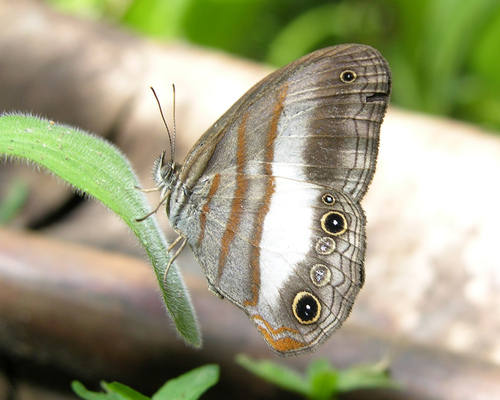
The one-banded satyr, Pareuptychia metaleuca, is a Nymphalidae butterfly found from Mexico to Brazil.
Pareuptychia metaleuca, commonly called the one-banded satyr, is a butterfly species that belongs to the Nymphalidae family. This species was first described by Boisduval in 1870, and its scientific name is Pareuptychia metaleuca Boisduval, 1870. It can be found across a range that extends from Mexico to Brazil.
View full details → 30
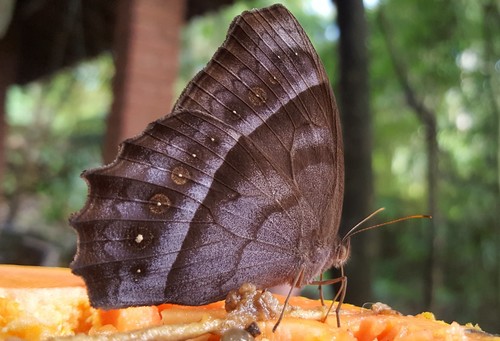
The Andromeda satyr (Taygetis thamyra) is a Nymphalidae butterfly found across northern South America.
Taygetis thamyra Cramer, 1782, commonly known as the Andromeda satyr, is a species of butterfly that belongs to the Nymphalidae family. This species can be found in Suriname, Colombia, Brazil (the states of Amazonas, Rio de Janeiro, and Rondônia), and the Guyanas.
View full details →Frequently Asked Questions
How many species are in the Nymphalidae family?
This guide features 30 representative species from the Nymphalidae family. The full family contains many more species worldwide — explore them all on iNature.
How to identify Nymphalidae species?
Nymphalidae species share common features in their flowers, leaves, and growth patterns. This guide provides photos and descriptions for 30 species. For instant field identification, use the iNature app.
Sources: GBIF, iNaturalist, Wikipedia · Disclaimer
Identify any species instantly — even offline
iNature uses on-device AI to identify plants, animals, fungi and more. No internet needed.
Download iNature — FreeStart Exploring Nature Today
Download iNature for free. 10 identifications on us. No account needed. No credit card required.
Download Free on App Store
